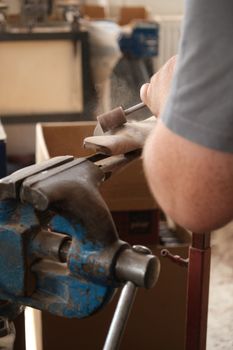
The role of a tool and die maker is a crucial element in modern manufacturing, responsible for creating the specialized tools required to produce mass-manufactured parts. By understanding the intricacies of this trade, aspiring professionals can uncover new career opportunities and contribute to innovative manufacturing processes. Known for precision and skilled craftsmanship, tool and die makers play a vital role in industries ranging from automotive to aerospace.
Understanding the Role of a Tool and Die Maker
Becoming a tool and die maker involves mastering the art of designing and constructing dies, molds, and other tooling devices. These professionals work with computer-aided design (CAD) software and manual machining equipment, ensuring each component meets exact specifications.
The job requires a mix of creativity and technical aptitude. Tool and die makers must comprehend blueprints and engineering specifications and possess practical knowledge of materials like metals and plastics. Their work ensures that production processes are efficient and cost-effective.
The Path to Becoming a Tool and Die Maker
Typically, pursuing a career in this field starts with a high school diploma, followed by an apprenticeship or formal training program. During this period, students learn about machining, metallurgy, and CAD software. On-the-job training is crucial, as it provides hands-on experience with the various tools and techniques used in the industry.
Further education, such as an associate degree in tool and die technology, can enhance one’s skills and employability. Many educational programs offer insights into advanced machining processes, quality control, and safety practices, equipping aspiring professionals with the knowledge needed to succeed.
Some institutions offer certifications that can bolster a resume. For those interested in online learning, free online certification courses are available and can provide foundational knowledge in related fields.
Career Opportunities and Job Outlook
The demand for tool and die makers is influenced by various factors, including advancements in manufacturing technology and economic shifts. As companies invest in new manufacturing processes, the need for skilled workers in this trade remains steady.
Tool and die makers can find employment in diverse industries, such as automotive, defense, aviation, and consumer electronics. The ability to work with precision tooling and complex machinery gives these professionals a competitive edge in the job market.
According to the Bureau of Labor Statistics, employment for machinists and tool and die makers is expected to grow in line with demands of the manufacturing sector. Those with extensive experience and a strong understanding of advanced manufacturing techniques are best positioned for long-term career growth.
Challenges Faced by Tool and Die Makers
Even though this career offers rewarding challenges, it also poses some hurdles. The evolution of technologies like 3D printing and CNC machinery continuously changes the landscape, requiring constant learning and adaptation.
Tool and die makers must also navigate physical demands, as the job often involves standing for long periods, as well as handling heavy materials and components. Despite these challenges, many find the work satisfying due to its precision and impact on large-scale manufacturing efforts.
The Future of Tool and Die Making
As industries lean towards automation and smart manufacturing, the expertise of tool and die makers becomes even more valuable. Their ability to create intricate, precise, and efficient components aligns well with modern manufacturing goals.
Enthusiasts looking to advance in this career should focus on continuous learning—particularly in areas like CAD software updates and machine operation enhancements. This adaptability not only makes professionals fit for current technologies but also prepares them for future innovations.
For more insights into potential pathways for career progression as a tool and die maker, explore resources like the Machinist Wikipedia page, which provides an extensive overview of related trades and skills.
How to Stand Out in the Field
To excel as a tool and die maker, one must develop a keen eye for detail, exceptional problem-solving skills, and strong analytical abilities. Continuous professional development, networking within industry circles, and pursuing additional certifications can further enhance one’s career prospects.
Gaining expertise in specialized sectors, such as automotive tooling or robotics, can offer even greater career opportunities. As the manufacturing landscape evolves, those who position themselves as leaders in precision and innovative tooling techniques will find ample opportunities for advancement.
In conclusion, a career as a tool and die maker is both challenging and rewarding, offering a blend of technical expertise and creative problem-solving. This field not only sustains modern production lines but also pushes the boundaries of what is possible in manufacturing.
Takeaways
- Tool and die makers play a crucial role in manufacturing by creating precision tools and dies.
- Career pathways typically begin with an apprenticeship and can be enhanced with further education.
- Job opportunities are steady due to the ongoing need for skilled tradespeople in various industries.
- Adapting to technological changes is essential for long-term career success.
- Professional development and specialization can enhance employability and advancement opportunities.
FAQ
What does a tool and die maker do?
A tool and die maker designs and creates precision tools, dies, and molds that are used to manufacture parts and products. They work with various materials and machinery to ensure components meet specified tolerances.
How long does it take to become a tool and die maker?
Becoming a tool and die maker typically involves a 4-year apprenticeship or a combination of technical schooling and on-the-job training. Formal education programs can take 2 years.
What is the job outlook for tool and die makers?
The job outlook is steady, with demand tied to the manufacturing sector’s health. As industries continue to modernize and expand, skilled tool and die makers will remain essential.
What skills are important for tool and die makers?
Key skills include attention to detail, mechanical aptitude, problem-solving, and proficiency in CAD software and machining tools. Continuous learning and adaptation to technological advancements are also crucial.
Where can tool and die makers find employment?
They can find work in various sectors like automotive, aerospace, electronics, and defense. Opportunities exist in any industry that requires precision manufacturing processes.