
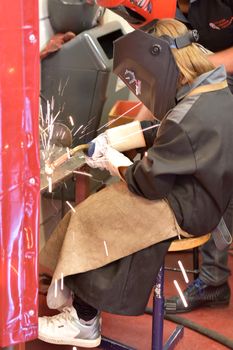
Are you considering diving into a trade career that promises steady employment, skill development, and financial reward? If so, searching for a welding apprenticeship near me could be the perfect step to kickstart your journey. Welding apprenticeships not only offer hands-on experience but also provide the education and credentials necessary for a successful career in this dynamic field.
What is a Welding Apprenticeship?
A welding apprenticeship is a structured program combining on-the-job training with classroom instruction. As an apprentice, you will work alongside experienced welders, gaining practical skills while also studying safety protocols, welding techniques, and materials science. This dual approach ensures a comprehensive understanding of both the theoretical and practical aspects of welding.
Typically, these programs are overseen by trade unions, technical colleges, or industry associations. They last between two to four years, during which apprentices are paid for their work, providing a fantastic opportunity to earn while you learn.
Benefits of a Welding Apprenticeship Near Me
When considering options for a welding apprenticeship near me, you are tapping into several benefits:
- Local Industry Connections: Apprenticeships often connect you with local industries, enhancing job prospects after completion.
- Hands-On Experience: Learn by doing. Gain practical skills that are immediately applicable in real-world scenarios.
- Financial Incentives: Earn a salary while learning, minimizing student debt concerns.
- Certifications: Upon completion, receive certifications that are recognized nationally and internationally.
Finding the Right Apprenticeship Program
Locating the best program is crucial for your career advancement. Here’s how you can find suitable opportunities:
Research Local Trade Schools and Unions
Checking local trade schools and unions can be a good starting point. Many institutions have established partnerships with industries, helping place apprentices in reputable companies.
Utilize Online Resources
The internet is a powerful tool. Websites dedicated to apprenticeships provide listings sorted by location and industry. Look for programs that detail both their curriculum and the potential career paths post-completion.
Network with Industry Professionals
Attending trade shows, industry seminars, or workshops can expand your network. Conversations with industry professionals can lead to valuable insights and recommendations for reputable apprenticeships.
Career Prospect After Apprenticeship
Once you’ve completed your apprenticeship, numerous career paths become available. Welders are in demand across various sectors, including construction, automotive, aerospace, and energy. Some may choose to specialize in fields like robotic welding or underwater welding, both of which offer attractive salaries.
Advanced positions such as welding inspectors or supervisors are options for those looking to move beyond the hands-on work. With experience, welders can transition into roles like project managers or instructors, sharing their knowledge with the next generation of welders.
Continuing Education and Certification
The field of welding is ever-evolving, with new technologies and methods frequently emerging. Continuing education is crucial, whether through additional certifications, workshops, or advanced courses. Many welders pursue certifications from organizations like the American Welding Society (AWS) to enhance their credentials and open doors to more advanced roles.
For those considering leadership roles or specialization, further education, such as a degree in welding engineering or technology, may be beneficial.
Current Trends in Welding
Welding technology continues to advance, making it essential for professionals to stay updated. Key trends include:
- Automation: The integration of robotics in welding processes is on the rise.
- New Materials: The demand for welders familiar with innovative materials like carbon composites is increasing.
- Sustainability: Techniques that reduce waste and improve energy efficiency are becoming standard practice.
Staying informed about industry trends not only helps enhance your skills but also makes you a more attractive candidate to potential employers.
Conclusion: Embrace the Path to a Rewarding Career
Considering a welding apprenticeship near me provides a wealth of opportunities for building a stable and rewarding career. With the hands-on training, educational opportunities, and real-world experience gained, apprentices are well-equipped to enter a field that values skilled, dedicated professionals.
For more details on the education pathways and resources for aspiring welders, you can visit Education on Wikipedia for broader information about vocational training.
Takeaways
- Welding apprenticeships combine practical and theoretical learning.
- Local programs offer the added benefit of industry connections.
- Upon completion, career opportunities abound in several sectors.
- Continuing education is vital for advancement and skill enhancement.
- Staying informed about trends keeps skills relevant and marketable.
FAQs
What qualifications are needed to start a welding apprenticeship?
Typically, a high school diploma or GED is required. Some programs might also ask for basic math proficiency and mechanical aptitude.
How long does a welding apprenticeship take?
Most programs last two to four years, depending on the specialization and complexity of skills being developed.
Are welding apprenticeships paid?
Yes, apprentices earn a salary during their training, which increases as they advance through the program stages.
Can I specialize in a particular type of welding during my apprenticeship?
Many programs offer the chance to specialize in areas such as MIG welding, TIG welding, or under-water welding, allowing for tailored career paths.
What certifications can I earn after completing an apprenticeship?
Upon completion, apprentices can achieve certifications from bodies like the American Welding Society, enhancing employability and potential income.

