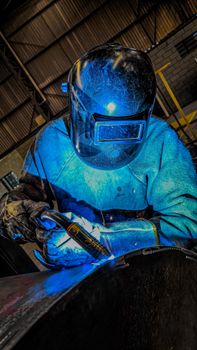
If you picture a welder simply lowering a helmet and creating a shower of sparks, you are seeing only one part of the job. Long before the arc is struck, a welder may study a blueprint, measure materials, choose the correct process and prepare a joint. Afterward, the worker must inspect the weld and confirm that it meets the project’s requirements. So, what do welders do? They join, repair, shape and sometimes cut metal components used in products and structures ranging from household appliances to bridges, ships and pipelines.
What are a welder’s main responsibilities?
A welder uses heat, pressure or a combination of the two to create a permanent bond between metal parts. The exact routine depends on the employer, material and project, but the work usually involves much more than operating a welding torch.
Common responsibilities include:
- Reading blueprints, technical drawings, sketches and welding symbols
- Measuring and marking metal components
- Inspecting materials for damage, contamination or defects
- Cleaning, cutting, grinding and positioning parts before welding
- Selecting suitable welding equipment, filler material and settings
- Joining components according to specifications
- Monitoring heat and controlling the welding arc
- Checking completed welds for cracks, gaps, weak points or incorrect dimensions
- Repairing damaged metal parts and structures
- Cleaning, maintaining and troubleshooting equipment
- Following workplace safety procedures and documenting completed work
Accuracy matters because a weld may need to support weight, contain pressure or withstand vibration and extreme temperatures. A poor-quality joint can affect the safety, appearance or useful life of the finished product.
What does a typical welding project involve?
Planning and preparation
Before beginning, the welder reviews the project specifications to understand where each component belongs and what type of joint is required. The worker may calculate dimensions, identify the metals being used and determine the correct order for assembling the pieces.
The surfaces must then be prepared. Paint, rust, oil and dirt can interfere with the weld, so the welder may clean or grind the joint area. Parts are aligned and secured with clamps or temporary tack welds to prevent movement.
Creating the weld
During welding, the worker controls factors such as travel speed, heat, arc length and torch angle. These details influence how deeply the weld penetrates the metal and whether the finished joint is smooth and strong.
Welders use several processes. Shielded metal arc welding uses an electrode that melts as the weld is formed. Gas metal arc welding feeds a continuous wire into the joint, while gas tungsten arc welding uses a nonconsumable tungsten electrode and is often selected for precise work. Other projects may involve flux-cored, submerged arc, resistance or oxy-fuel welding.
Inspection and finishing
A welder does not assume that a joint is acceptable simply because it looks complete. The worker visually checks the bead for signs of porosity, cracking, undercutting or incomplete fusion. Depending on the project, inspectors may also use specialized testing methods to find defects that cannot be seen from the surface.
The completed area may be ground, polished, cleaned or coated to create the required appearance and help protect the metal against corrosion.
Where do welders work?
Welders are employed wherever metal products are manufactured, installed, maintained or repaired. Manufacturing plants are common workplaces, but opportunities also exist in construction, transportation, utilities, energy production and repair services.
Typical work settings include:
- Factories and metal fabrication shops
- Construction sites
- Automotive and heavy-equipment facilities
- Shipyards and docks
- Railroad maintenance operations
- Power plants and utility sites
- Oil, gas and pipeline projects
- Aerospace manufacturing facilities
- Farms and agricultural repair shops
- Military installations
Some welders remain at one workstation and repeatedly produce similar components. Others travel between job sites and work on a different repair or installation each day. Outdoor welding can involve heat, cold, wind or rain, while industrial work may take place in noisy buildings. Certain assignments require climbing, working from platforms or entering confined areas.
Underwater welding is a highly specialized path that combines commercial diving with welding and marine construction skills. Readers considering this demanding field can learn more about the earning potential for underwater welders and the factors that influence compensation.
What skills do welders need?
Technical understanding
Welders need to understand how different metals react to heat. They must know how to interpret welding symbols, set up equipment and select the appropriate process. Shop mathematics and basic knowledge of electricity are also useful for calculating measurements and understanding how welding machines operate.
Attention to detail
Small errors in joint alignment, equipment settings or torch movement can reduce weld quality. Welders must notice changes in the molten weld pool and recognize visible signs of a developing problem.
Hand-eye coordination
Creating a consistent weld requires controlled, steady movement. A welder may have to guide the torch along a narrow joint while maintaining the correct distance and angle, sometimes with limited visibility.
Physical stamina and spatial awareness
Welders frequently stand for extended periods, lift equipment and work while bending, kneeling or reaching overhead. Spatial awareness helps them understand how two-dimensional drawings relate to three-dimensional assemblies.
Problem-solving and communication
Repair work is not always predictable. A welder may need to determine why a joint failed, adapt to an unusual component or coordinate with engineers, supervisors, inspectors and other tradespeople. Clear communication helps prevent mistakes and keeps projects moving safely.
Is welding dangerous?
Welding involves real occupational hazards, but training, ventilation, protective equipment and careful work practices can reduce risk. Potential hazards include metal fumes, ultraviolet radiation, hot materials, sparks, electrical current, intense light and noise. Burns and eye injuries are particular concerns when suitable protection is not used. OSHA’s guidance on welding hazards and controls explains common exposures and ways workplaces can manage them.
Depending on the task, welders may wear a properly shaded helmet, safety glasses, flame-resistant clothing, heat-resistant gloves, hearing protection and protective footwear. Some jobs also require respiratory protection, fall-arrest equipment or special procedures for confined spaces. Welders must keep flammable materials away from hot work and confirm that ventilation is appropriate for the metal, coating and welding process involved.
How does welding work affect everyday life?
Welding can be physically demanding, and work schedules vary. Manufacturing facilities may operate multiple shifts, so evening, overnight and weekend work is possible. Construction and repair assignments may involve travel, overtime or schedule changes when equipment must be restored quickly.
At the same time, welders can take satisfaction in producing visible, practical results. Their work supports the vehicles people drive, the buildings they use, the machinery that manufactures goods and the infrastructure that delivers energy and water.
Is welding a good career fit?
Welding may suit someone who enjoys hands-on work, mechanical problem-solving and learning technical procedures. Successful welders are comfortable following precise instructions while adapting to changing materials and job conditions. Training is commonly available through technical schools, community colleges, apprenticeships, military programs and employer-based instruction.
Ultimately, the answer to “what do welders do?” is broader than joining pieces of metal. Welders plan, measure, prepare, operate specialized equipment, inspect their work and solve practical construction and repair problems. Their combination of technical knowledge, physical skill and attention to safety makes them essential across many industries.