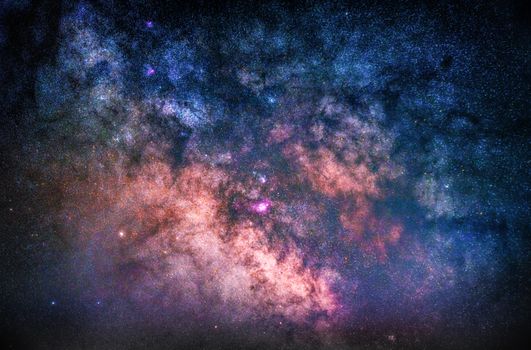
You look up at a clear night sky and imagine an astrophysicist spending every evening peering through a telescope. In reality, the job is often less about watching stars directly and more about analyzing data, writing computer code, testing mathematical models, and working with other scientists. Telescopes are important, but much of the discovery happens at a desk.
So, what is an astrophysicist? An astrophysicist is a scientist who uses physics, mathematics, and computing to understand objects and events in the universe. They investigate questions about how stars form, what happens around black holes, how galaxies evolve, whether distant planets could support life, and how the universe began.
What Does an Astrophysicist Do?
If you are wondering what an astrophysicist does from day to day, there is no single routine. The work depends on the scientist’s specialty, employer, and current research project. An astrophysicist may study information collected by a space telescope, simulate a supernova on a computer, help design a scientific instrument, or teach university students.
Common responsibilities include:
- Developing theories and mathematical models to explain cosmic phenomena
- Analyzing images, measurements, and other data from telescopes and spacecraft
- Writing software to process large datasets or simulate physical events
- Preparing research papers for scientific journals
- Applying for grants, telescope access, or supercomputer time
- Presenting findings at conferences and public lectures
- Collaborating with engineers, programmers, technicians, and other scientists
- Teaching or supervising students in colleges and universities
Because distant stars and galaxies cannot usually be placed in a laboratory, astrophysicists rely heavily on observation. They study light, radio waves, X-rays, gravitational waves, and other signals that reach Earth or space-based instruments. They then use known physical laws to determine what may have produced those signals.
Major Types of Astrophysics Work
Observational astrophysics
Observational astrophysicists gather and interpret information from telescopes, detectors, satellites, and spacecraft. They may study a planet passing in front of its star, measure the movement of galaxies, or examine radiation from a black hole. Although some observations occur at night, many modern instruments collect information automatically, allowing scientists to analyze it later.
Theoretical astrophysics
Theoretical astrophysicists use mathematics and established physical principles to explain how the universe behaves. They might develop a model of star formation or explore how matter acts under extreme gravity. Their predictions can guide future observations and help other researchers interpret unexpected findings.
Computational astrophysics
Some cosmic processes are too large, distant, slow, or violent to reproduce directly. Computational astrophysicists create computer simulations to investigate them. Coding, statistics, and numerical methods are central to this work, which may involve vast datasets and powerful computing systems.
Instrumentation and applied research
Other astrophysicists help develop cameras, sensors, telescope components, and data-processing systems. This work often overlaps with engineering and may support space missions, observatory operations, navigation, imaging, and communications. Fields such as astrochemistry also connect the study of space with laboratory science, making it useful to explore career paths available with a chemistry degree if you are interested in how different sciences intersect.
Where Do Astrophysicists Work?
Astrophysicists work in universities, government agencies, national laboratories, observatories, aerospace companies, research institutes, and science museums. Their working environment may include an office, computer laboratory, classroom, instrument-development facility, or telescope site.
University astrophysicists commonly divide their time among research, teaching, mentoring, and administrative duties. Scientists at government laboratories or aerospace organizations may concentrate more on missions, instruments, data archives, or applied research. Some positions require travel to conferences or specialized observatories, but an astrophysicist does not normally spend every working day at a telescope.
How Astrophysics Affects Everyday Life
Research about distant objects can seem disconnected from ordinary life, but astrophysics depends on solving difficult problems involving signals, images, materials, and enormous amounts of data. Methods and technologies developed for scientific observations can contribute to advances in imaging, computing, sensors, communications, and data analysis.
Astrophysicists also help society understand phenomena that can affect satellites and other technology. More broadly, their research tests fundamental laws of nature under conditions that cannot be created easily on Earth. The field also supports science education and gives people an evidence-based way to explore questions about the universe and humanity’s place within it.
Education Needed to Become an Astrophysicist
The usual starting point is a bachelor’s degree in physics, astronomy, astrophysics, mathematics, or a closely related subject. Undergraduate students generally study mechanics, electricity and magnetism, thermodynamics, quantum physics, calculus, linear algebra, differential equations, statistics, and laboratory methods.
Computer science is increasingly important. Learning a widely used programming language, working with databases, and understanding statistical analysis can prepare students for research as well as careers outside academia.
A bachelor’s or master’s degree may qualify someone for certain technical, software, observatory support, aerospace, education, or government positions. However, independent research and university faculty roles usually require a doctorate in physics, astronomy, astrophysics, or a related discipline. The U.S. Bureau of Labor Statistics profile for physicists and astronomers explains that research and academic positions typically require a Ph.D.
After earning a doctorate, many researchers complete one or more temporary postdoctoral appointments. These positions allow them to build a publication record, develop specialized expertise, and take greater responsibility for research projects before seeking a permanent role.
Steps You Can Take to Enter the Field
- Build a strong foundation in high school mathematics and physics.
- Choose an undergraduate program with rigorous physics and mathematics courses.
- Learn programming, data visualization, and statistical analysis.
- Join a research project, summer program, or internship when possible.
- Ask faculty members about mentoring and laboratory opportunities.
- Practice explaining technical ideas through reports and presentations.
- Research graduate programs based on faculty expertise and research interests.
- Develop transferable skills in teamwork, project management, and scientific writing.
Students do not need to know their exact specialty immediately. Exposure to different courses and research projects can help reveal whether they prefer observation, theory, computing, instrumentation, or science communication.
Skills That Matter Beyond Mathematics
Strong mathematical ability is essential, but astrophysics also requires patience, curiosity, precision, and creative problem-solving. Scientists must question assumptions, identify possible errors, and remain comfortable when evidence does not provide an immediate answer.
Communication is equally important. Astrophysicists write papers and funding proposals, present complex results, and collaborate with people from different technical backgrounds. Since research projects may last for years, organization and self-discipline also matter.
Is Astrophysics the Right Career for You?
Astrophysics may be a good fit if you enjoy physics, mathematics, coding, and unanswered questions. It can be intellectually rewarding, but the academic route requires extensive education, and permanent research positions can be competitive. Students should consider both traditional research careers and related opportunities in aerospace, software development, data science, education, policy, and technical communication.
Ultimately, understanding what is an astrophysicist means looking beyond the popular image of someone at a telescope. It is a career built around evidence, calculation, technology, and collaboration. For people who want to investigate how the universe works while developing broadly useful analytical skills, astrophysics offers a demanding but fascinating path.