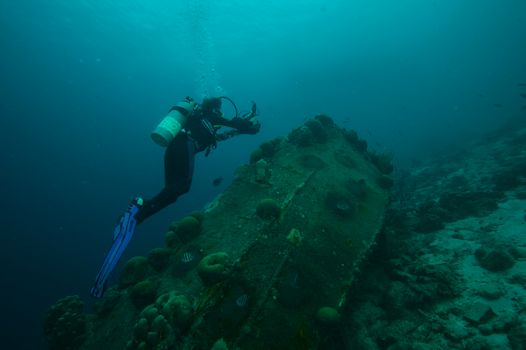
You may picture an oceanographer spending every workday on a ship, collecting mysterious creatures from the deep sea. Some oceanographers do join research expeditions, but many spend far more time analyzing data, running computer models, working in laboratories, or explaining findings to decision-makers. So, what is an oceanographer, and what does this career actually involve?
An oceanographer is a scientist who studies the ocean’s physical, chemical, biological, or geological features. Their work helps society understand weather and climate, protect coastlines, manage marine resources, track pollution, improve navigation, and prepare for hazards. Because the ocean influences food supplies, transportation, recreation, and conditions on land, oceanography affects everyday life even for people who live far from the coast.
What Does an Oceanographer Study?
Oceanography is an interdisciplinary science, meaning it combines knowledge from several fields. Oceanographers use biology, chemistry, geology, physics, mathematics, and technology to investigate how marine systems function and change.
The field is commonly divided into four main specialties:
- Biological oceanography: Examines marine organisms, food webs, habitats, and the ways living things interact with ocean conditions.
- Chemical oceanography: Studies the composition of seawater, nutrient cycles, pollutants, dissolved gases, and chemical exchanges between the ocean, atmosphere, and seafloor.
- Geological oceanography: Investigates seafloor formations, sediments, underwater volcanoes, plate tectonics, and the history of ocean basins.
- Physical oceanography: Focuses on waves, tides, currents, circulation, temperature, salinity, coastal erosion, and interactions between the ocean and atmosphere.
These areas frequently overlap. For example, research into a declining fish population might require biological data about the species, chemical measurements of oxygen levels, and physical information about water temperature and currents. The National Oceanic and Atmospheric Administration’s overview of oceanography explains how these connected disciplines contribute to understanding the world ocean.
What Does a Typical Workday Look Like?
There is no single routine for an oceanographer. Daily responsibilities depend on the scientist’s specialty, employer, experience, and current project. One day might involve preparing instruments for a coastal survey, while another may be devoted entirely to computer analysis.
Common responsibilities include:
- Collecting water, sediment, plant, or animal samples
- Operating sensors, buoys, sonar systems, and remotely operated vehicles
- Analyzing satellite images and long-term environmental datasets
- Creating computer models of currents, storms, ecosystems, or climate patterns
- Designing experiments and following careful quality-control procedures
- Writing reports, scientific papers, grant proposals, and technical guidance
- Presenting results to researchers, government officials, businesses, or the public
- Collaborating with engineers, technicians, meteorologists, chemists, and marine biologists
Fieldwork can be exciting, but it is only one part of the job. A short research cruise may generate months of laboratory and computer work. Oceanographers must document how information was collected, check results for errors, interpret patterns, and communicate what the evidence does and does not show.
Where Do Oceanographers Work?
Oceanographers commonly divide their time among offices, laboratories, classrooms, coastal sites, and research vessels. Some positions involve regular travel, while others are largely land-based.
Research vessels and field locations
During field projects, oceanographers may work aboard ships or smaller boats, on beaches, around wetlands, or at remote monitoring stations. Expeditions can involve long days and irregular schedules because sampling may depend on tides, weather, equipment availability, or the ship’s route. Certain deep-sea projects use robotic vehicles rather than sending scientists underwater.
Laboratories and offices
Laboratory-based oceanographers examine water chemistry, microorganisms, sediments, and other samples. Office work may include statistical analysis, mapping, computer programming, report writing, and virtual collaboration. Physical oceanographers and climate researchers may work extensively with satellite observations and numerical models without frequently going to sea.
Universities, government, and industry
Colleges and universities employ oceanographers to teach and conduct research. Government agencies hire them for environmental monitoring, weather and climate research, coastal planning, fisheries management, mapping, and navigation services. Opportunities also exist with environmental consulting firms, engineering companies, nonprofit organizations, aquariums, energy companies, and organizations developing marine technology.
What Education Does an Oceanographer Need?
A bachelor’s degree can provide entry into some technician, data, field-support, government, or general geoscience positions. However, independent research roles commonly require a master’s degree or doctorate. University teaching and leadership of original research projects generally require a Ph.D.
Students may major in oceanography, marine science, earth science, geology, chemistry, biology, physics, environmental science, meteorology, mathematics, or engineering. The best choice depends on the intended specialty. A future chemical oceanographer, for instance, needs a strong foundation in laboratory chemistry. Students considering that route may also benefit from exploring career paths available with a chemistry degree.
Useful college courses often include:
- Biology and marine ecology
- General, organic, and analytical chemistry
- Physics and fluid dynamics
- Geology and earth systems
- Calculus, statistics, and data analysis
- Computer programming and geographic information systems
- Meteorology and climate science
- Scientific writing and research methods
Hands-on experience is especially valuable. Internships, undergraduate research, laboratory assistantships, field courses, and volunteer projects allow students to practice using instruments and managing real data. They also help students decide whether they prefer field science, laboratory research, computing, education, or policy-related work.
Which Skills Matter Most?
Scientific knowledge is essential, but successful oceanographers also need practical and interpersonal abilities.
- Analytical thinking: Ocean data can be incomplete, variable, and influenced by many interacting processes.
- Mathematics and computing: Statistics, coding, databases, and modeling are central to many modern oceanography roles.
- Attention to detail: Small mistakes in instrument calibration or sample labeling can affect an entire project.
- Communication: Scientists must explain technical results clearly to colleagues and nonspecialists.
- Teamwork: Research expeditions and large monitoring programs depend on cooperation among people from different disciplines.
- Adaptability: Equipment failures, changing weather, and unexpected findings may require quick adjustments.
- Patience: Collecting enough information to identify a reliable pattern can take months or years.
Is Oceanography the Same as Marine Biology?
Not exactly. Marine biology concentrates on living organisms in marine environments. Oceanography covers a broader range of ocean processes, including currents, seawater chemistry, seafloor geology, and marine ecosystems. A biological oceanographer may conduct work similar to that of a marine biologist, but often examines how organisms relate to large-scale ocean conditions and cycles.
Could This Career Be a Good Fit?
Oceanography may appeal to someone who enjoys science, problem-solving, technology, and questions that do not have simple answers. It can offer a mixture of practical fieldwork and detailed analysis, although not every position includes travel or deep-sea exploration.
The clearest answer to “what is an oceanographer?” is that this professional uses scientific evidence to understand one of Earth’s most influential systems. Whether predicting currents, studying pollution, mapping the seafloor, or examining marine ecosystems, oceanographers turn observations into knowledge that supports safer communities and better-informed decisions.