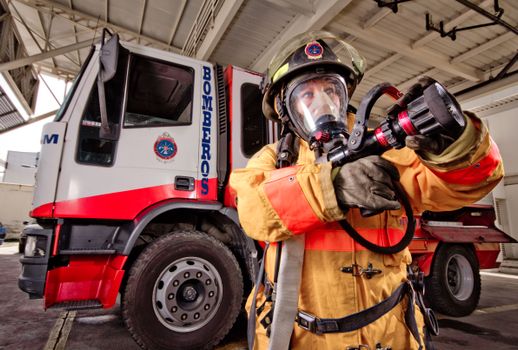
You arrive at a fire station for a community event and hear several titles within minutes: firefighter, engineer, captain and battalion chief. Who is actually in charge, and does every promotion mean moving away from emergency response? The answer depends on the department. Firefighter ranks create a chain of command, but titles, duties and promotion requirements vary among municipal, county, federal, industrial and volunteer agencies.
Do all fire departments use the same ranks?
No. There is no single fire service ranking system followed by every department in the United States. Department size, local government rules, labor agreements and operational needs all influence the structure.
A small volunteer department may have firefighters, captains, an assistant chief and a fire chief. A large city department may include lieutenants, captains, battalion chiefs, division chiefs and several executive chief positions. Some agencies use “engineer” as a formal rank, while others treat it as an assignment or certification.
The ranks of the fire service also should not be confused with temporary incident-command roles. At an emergency, a qualified officer may serve as incident commander and assign personnel to operations, safety or other functions. Command can then be transferred as senior or specially qualified officers arrive.
Common firefighter ranks and responsibilities
Probationary firefighter
A probationary firefighter, sometimes called a recruit or “probie,” is a new department member completing an evaluation period. After academy training, probationary personnel work under close supervision while learning local procedures, equipment, station routines and response expectations.
They participate in emergency calls but may have additional training assignments, skills evaluations and restrictions. Successfully completing probation generally leads to regular firefighter status.
Firefighter
Firefighters perform the department’s front-line work. Their responsibilities can include suppressing fires, searching buildings, rescuing occupants, responding to medical emergencies, handling hazardous conditions and maintaining equipment. They also train regularly and may conduct inspections, public education visits or community risk-reduction activities.
Many career departments require firefighters to hold emergency medical technician or paramedic credentials because medical calls make up a significant part of modern emergency response. Exact requirements depend on the state and employing agency.
Driver, engineer or apparatus operator
The person driving a fire engine or ladder truck may be known as a driver, engineer, chauffeur or fire equipment operator. In some departments this is a promotional rank; in others it is a qualified assignment held by a firefighter.
Apparatus operators must position vehicles safely, operate pumps or aerial devices, understand water supply systems and inspect complex equipment. Although they may not supervise the entire crew, their technical decisions are critical to safe and effective operations.
Lieutenant
A lieutenant is commonly the first formal supervisory rank. The lieutenant may lead a company or crew during a shift, assign daily work, oversee training and evaluate firefighters. At an incident, the lieutenant directs tactical tasks and reports to a captain or chief officer.
This promotion marks an important change. A lieutenant remains involved in emergency work but is also responsible for communication, accountability, decision-making and crew safety.
Captain
A captain typically commands a fire company, station or shift, although some departments place lieutenants in that role. Captains supervise personnel, coordinate training, review reports and help ensure that vehicles, equipment and facilities remain ready.
On emergency scenes, captains may lead an operational group, manage multiple crews or establish initial command. They often mentor firefighters and lieutenants who are preparing for greater leadership responsibilities.
Battalion chief
A battalion chief generally oversees several stations or companies within a geographic area during an assigned shift. Rather than supervising one vehicle, the battalion chief coordinates a larger collection of people and resources.
Battalion chiefs commonly respond to significant incidents, assume or support command, monitor safety and arrange additional resources. Administrative duties may include staffing decisions, performance management, policy implementation and coordination with other agencies.
Division chief, deputy chief or assistant chief
Upper-level chief titles differ considerably among departments. A division chief might manage training, emergency medical services, operations, prevention or another major function. Deputy and assistant chiefs usually oversee multiple divisions, shifts or geographic areas while helping develop policy and long-term plans.
These officers spend more time on budgeting, labor relations, planning, compliance and organizational leadership. They may still respond to major emergencies, especially incidents requiring extensive resources or coordination across jurisdictions.
Fire chief or chief of department
The fire chief is usually the department’s senior operational or executive leader. This person is responsible for organizational performance, personnel, budgeting, strategic planning and relationships with elected officials, partner agencies and the public.
Some cities also employ a fire commissioner or public safety director. That position may be a civilian appointment above the uniformed chain of command, so it is not always part of the traditional firefighter promotion ladder.
Specialized titles are not always higher ranks
Titles such as fire marshal, inspector, investigator, training officer, safety officer and public information officer often describe specialized duties rather than a universal place in the hierarchy. A fire marshal may supervise an entire prevention bureau in one jurisdiction but serve as an investigator under a chief in another.
Wildland, airport, military and industrial fire organizations may use different titles because their hazards and missions differ. Volunteer departments may also elect officers or use qualification-based leadership positions. The department’s official organization chart is the best guide to its particular structure.
How promotion through firefighter ranks works
A typical career path might move from probationary firefighter to firefighter, lieutenant, captain, battalion chief and executive chief. However, an apparatus-operator position or specialized assignment may appear between those stages.
Promotion commonly depends on a combination of:
- Minimum years of service or time in the current rank
- Written examinations and practical skills evaluations
- Structured interviews or assessment-center exercises
- Performance history and disciplinary record
- Required fire officer, incident command or EMS certifications
- Leadership experience and continuing education
- College coursework or a degree for certain senior positions
Requirements can change from one department to another. Civil service rules may determine who can test and how eligibility lists are created, while other departments allow the chief or a selection panel to choose among qualified candidates.
Firefighters interested in advancement should study their department’s policies early, seek varied assignments and practice supervising, teaching and writing reports. The U.S. Fire Administration’s fire and emergency services professional development matrix illustrates how education, training, certification and experience can work together in officer development.
Does a higher rank mean less emergency work?
Usually, but not immediately. Lieutenants and captains often work alongside their crews while directing operations. Battalion chiefs respond to larger incidents and coordinate several units. Executive chiefs typically focus more heavily on administration, although they may take command or provide strategic support during major emergencies.
Promotion also brings greater accountability. Officers must consider not only the immediate task but also crew welfare, resource use, policy compliance and the effect of decisions on the wider community.
Choosing a fire service career path
Not every firefighter wants to become a chief. Some prefer apparatus operation, technical rescue, hazardous materials response, investigation, prevention, instruction or emergency medicine. These routes can offer increasing expertise and responsibility without following a strictly administrative track.
Anyone comparing firefighting with related public service fields may also find it useful to explore career opportunities in criminal justice and public safety. Fire departments regularly work with law enforcement, emergency management and investigative agencies, making communication across these professions important.
Ultimately, firefighter ranks are less about prestige than responsibility. Each level helps establish clear supervision, safe decision-making and dependable coordination. Understanding the local chain of command allows applicants, new recruits and community members to see how a fire department turns many specialized roles into one organized emergency response system.