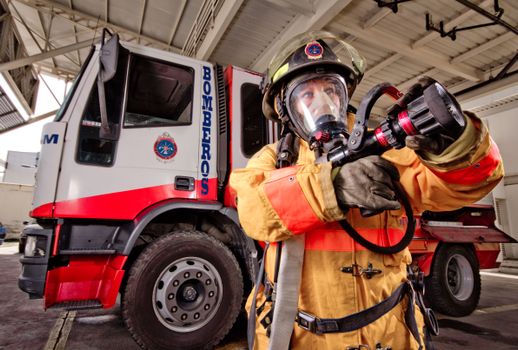
You see a firefighter job posting and wonder whether courage and physical fitness are enough to qualify. Then you notice references to EMT certification, written testing, a medical examination, an academy, and a long hiring process. The list can feel overwhelming, especially because firefighter requirements are not identical across the United States.
Most departments require applicants to be legal adults with a high school diploma or equivalent, a valid driver’s license, acceptable background and driving records, and the ability to pass several examinations. Candidates commonly complete written, physical ability, medical, drug, background, and interview stages before entering a fire academy. However, the local department’s current job announcement is always the final authority.
Basic firefighter requirements
Applicants generally must be at least 18 years old by the application, appointment, or academy date. Some departments set a higher minimum age or an upper age limit where permitted by law. A department may also require U.S. citizenship, permanent residency, or other proof that the applicant is legally authorized to work.
Common entry requirements include:
- A high school diploma or General Educational Development credential
- A valid state driver’s license and satisfactory driving history
- The ability to pass a criminal background investigation
- Successful completion of written and physical ability tests
- A job-related medical examination and drug screening
- Emergency medical training, either before hiring or during the academy
- Availability for weekends, holidays, overnight shifts, and emergency call-backs
A criminal record does not automatically produce the same result everywhere. Departments may consider the type of offense, how long ago it occurred, whether it relates to the job, and whether the applicant was honest about it. Falsifying an application can be more damaging than disclosing an issue and providing accurate information.
How much education does a firefighter need?
A high school diploma or equivalent is the usual academic starting point. According to the U.S. Bureau of Labor Statistics overview of firefighter education and training, firefighters typically need a high school diploma, emergency medical services training, and fire academy instruction.
A college degree is not universally required for an entry-level position. Nevertheless, coursework or a degree in fire science, emergency management, public administration, biology, communications, or a related subject may make an applicant more competitive. Higher education can also become important when pursuing promotion to officer, administrative, inspection, investigation, or leadership positions.
Applicants interested in other public safety occupations may also benefit from learning about career opportunities in criminal justice, particularly roles involving investigations, emergency response, corrections, or community safety.
EMT and paramedic qualifications
Modern fire departments respond to many medical emergencies, so emergency medical qualifications are a major part of firefighter requirements. Some departments accept applications from candidates without an Emergency Medical Technician credential and provide the necessary instruction during training. Others require a current state or nationally recognized EMT certification before a person may apply, take an examination, or receive an appointment.
Paramedic certification can be especially valuable in departments that provide advanced life support. Certain agencies hire firefighter-paramedics separately or give preference to applicants who already hold a paramedic license. Because certification rules differ by state, candidates should confirm required courses, examinations, clinical experience, and continuing education with the hiring department and applicable EMS authority.
Physical ability testing
Firefighting requires climbing stairs, handling charged hoses, raising ladders, carrying tools, moving through confined spaces, and helping people who cannot move independently. For that reason, applicants usually take a timed, job-related physical ability test.
Many departments use the Candidate Physical Ability Test, commonly called the CPAT, while others administer their own validated test. A typical assessment may include stair climbing, hose dragging, equipment carrying, ladder work, forcible entry, crawling through a search area, dragging a weighted rescue mannequin, and operating tools overhead.
General gym fitness helps, but candidates should train for the actual tasks. Preparation commonly includes aerobic conditioning, stair work, loaded carries, pulling movements, grip training, lower-body strength, and safe lifting technique. Applicants should follow official test-orientation materials because the sequence, equipment, clothing, time limit, and permitted techniques may be strictly controlled.
Medical and vision standards
Candidates generally undergo a medical examination after receiving a conditional offer or reaching a later stage of selection. The purpose is to determine whether the person can safely perform the department’s essential duties, which may involve intense exertion, heat, smoke, heavy protective equipment, respirator use, disrupted sleep, and rapidly changing conditions.
The evaluation may include a health history, physical examination, blood pressure measurement, hearing and vision testing, lung-function assessment, laboratory testing, and other evaluations based on the job and the individual’s risk factors. Medical decisions should involve an individualized, job-related assessment rather than assumptions based only on a diagnosis.
Having asthma, diabetes, corrected vision, a previous injury, or another health condition does not necessarily create an automatic nationwide disqualification. The outcome may depend on the condition’s control, functional effects, treatment, medication side effects, department duties, applicable standards, and whether the candidate can safely complete essential tasks. Applicants should not stop medication or conceal a diagnosis in an attempt to pass an examination.
Written tests, interviews, and background checks
The written examination may measure reading comprehension, basic mathematics, mechanical reasoning, spatial awareness, memory, judgment, and the ability to interpret written instructions. It is usually designed to evaluate skills needed in training and emergency operations rather than advanced knowledge of firefighting.
Successful candidates may face one or more panel interviews. Interviewers often look for clear communication, accountability, teamwork, emotional maturity, public-service motivation, and the ability to make decisions under pressure. Specific examples from work, school, volunteering, athletics, or military service can demonstrate these qualities more effectively than memorized answers.
The background process may review employment, education, finances, driving history, criminal records, references, and social media activity. Some departments also use psychological evaluations, polygraph examinations, or additional integrity screening where allowed.
What happens at the fire academy?
New recruits generally attend a department, regional, or state fire academy for several weeks or months. Training combines classroom instruction with demanding practical exercises. Topics may include fire behavior, hoses, ladders, search and rescue, ventilation, hazardous materials, building construction, incident command, protective equipment, vehicle rescue, fire prevention, and emergency medical care.
Graduation does not end the qualification process. New firefighters usually serve a probationary period during which their attendance, judgment, teamwork, practical skills, fitness, and station performance are evaluated. They must also maintain required licenses and certifications through continuing education.
How to become a stronger applicant
Start by reviewing several local job announcements because they reveal which qualifications are truly required in your area. Obtain EMT certification early if departments expect it, maintain a responsible driving record, prepare for the physical test, and practice written examinations. Volunteer fire service, EMS work, military experience, community service, and customer-facing employment may strengthen an application, but they do not replace mandatory credentials.
Above all, follow each application instruction exactly. Fire departments value reliability, honesty, sound judgment, and attention to detail. Meeting the minimum firefighter requirements allows you to compete, but demonstrating those qualities throughout the hiring process can show that you are prepared for the responsibilities of the career.