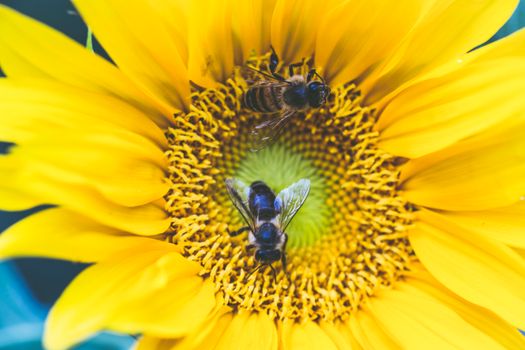
You notice a bee moving from flower to flower and may assume the science behind it is simply beekeeping. In fact, researchers study everything from bee anatomy and genetics to nesting behavior, disease, pollination, and environmental threats. This specialized field is called melittology, and it affects agriculture, biodiversity, medicine, and even the food available at your local grocery store.
What is melittology?
Melittology is the scientific study of bees. It is a branch of entomology, the broader study of insects, and includes both managed bees and wild species. A scientist who specializes in this field may be called a melittologist.
Although honey bees receive considerable attention, melittology is not limited to them. Scientists have described more than 20,000 bee species worldwide, including bumble bees, carpenter bees, mining bees, mason bees, leafcutter bees, and many others. Most bee species are solitary rather than members of large colonies. In solitary species, individual females typically build and supply their own nests.
Melittology is sometimes called apiology or apicology. However, those terms are often associated more closely with honey bees, while melittology generally refers to the study of all bees. Apiculture, meanwhile, means the management of bee colonies for purposes such as honey production, breeding, or crop pollination. A beekeeper practices apiculture, but does not necessarily conduct scientific research.
What do melittologists study?
Bee research draws on biology, chemistry, ecology, agriculture, and environmental science. The specific questions a melittologist investigates depend on the workplace and area of specialization.
- Behavior: How bees communicate, locate flowers, select nesting sites, and care for offspring.
- Ecology: How bees interact with plants, predators, parasites, microbes, and changing habitats.
- Pollination: Which bees visit particular crops or wildflowers and how effectively they transfer pollen.
- Taxonomy: How bee species are identified, classified, and distinguished from closely related species.
- Genetics: How inherited traits influence disease resistance, reproduction, behavior, and adaptation.
- Health and disease: How pathogens, parasites, nutrition, pesticides, and other stressors affect bees.
- Conservation: How land use, habitat loss, climate conditions, and management practices influence bee populations.
A research project may involve observing bees in a meadow, collecting specimens, identifying pollen, examining microbes, sequencing genetic material, or analyzing data with statistical software. Some melittologists divide their time between outdoor fieldwork and controlled laboratory experiments.
Why does the study of bees matter?
Bees transfer pollen as they move between flowers. This process allows many flowering plants to reproduce and supports the production of fruits, vegetables, nuts, seeds, and animal forage. Different bees vary in body size, tongue length, seasonal activity, and foraging behavior, so one species may pollinate a particular plant more effectively than another.
Melittology helps farmers and land managers determine which flowers, nesting materials, and habitat conditions support useful pollinators. It also helps conservationists evaluate changes in bee diversity. Rather than treating all bees as one group, researchers examine how individual species respond to local conditions.
The field also affects gardens and neighborhoods. Findings from bee research can guide decisions about planting native flowers, leaving small areas of bare soil for ground-nesting species, reducing unnecessary pesticide exposure, and preserving flowering plants across multiple seasons.
Does melittology include bee stings and allergies?
Bee venom and sting reactions can be relevant to melittology, although human diagnosis and treatment belong to medical specialists. Most stings cause pain, redness, itching, or swelling around the affected area. A honey bee may leave a barbed stinger in the skin, which should be removed promptly without delaying over the method. The area can then be washed with soap and water, and a cold compress may reduce discomfort and swelling.
Some people develop a severe allergic reaction called anaphylaxis. Warning signs may include widespread hives, swelling of the tongue or throat, difficulty breathing, dizziness, fainting, vomiting, or a sudden drop in blood pressure. These symptoms require immediate emergency care. People with a known venom allergy should follow their clinician’s action plan and use prescribed epinephrine as directed. The American Academy of Allergy, Asthma & Immunology guidance on stinging insect allergy explains symptoms, prevention, and when to seek medical help.
Careers related to melittology
“Melittologist” is not always the title shown in a job advertisement. Bee specialists may work under broader titles such as entomologist, pollinator ecologist, research biologist, agricultural scientist, conservation scientist, laboratory technician, or museum collections specialist.
Research scientist
Research scientists study questions involving bee biology, genetics, disease, behavior, or ecology. They may work at universities, government laboratories, botanical gardens, museums, or nonprofit research organizations. Independent research positions commonly require a graduate degree.
Pollinator conservation specialist
These professionals assess bee habitats and help design conservation plans. Their work may involve conducting field surveys, restoring native vegetation, advising landowners, or monitoring threatened species. Employers can include government agencies, environmental consulting firms, and conservation organizations.
Agricultural and extension specialist
Agricultural specialists help farmers understand pollination needs, pesticide risks, crop management, and bee health. Extension professionals translate research into practical recommendations for growers, beekeepers, gardeners, and communities.
Taxonomist or museum specialist
Taxonomists identify and classify bees by studying physical characteristics, genetic information, and evolutionary relationships. Museum professionals preserve specimens and maintain collections that allow researchers to compare bees collected in different places and periods.
Bee health laboratory technician
Technicians support research by preparing samples, identifying parasites, testing for pathogens, maintaining equipment, recording observations, and managing data. Chemistry is particularly useful when studying venom, pesticides, pheromones, nutrients, or environmental contaminants. Students interested in laboratory science can also explore career paths available with a chemistry degree.
Professional beekeeper
Beekeeping is a related applied career rather than the same discipline as melittology. Beekeepers manage honey bee colonies for honey, beeswax, breeding, or pollination services. Their practical knowledge can contribute to research partnerships, colony monitoring, and disease-control programs.
How do you prepare for a career studying bees?
A bachelor’s degree in entomology, biology, zoology, ecology, environmental science, agriculture, or a related subject can provide a strong foundation. Useful coursework includes insect biology, botany, genetics, microbiology, organic chemistry, statistics, geographic information systems, and scientific writing.
Entry-level technician and field assistant positions may be available to graduates with a bachelor’s degree. A master’s degree can support specialized research and project-management roles, while university faculty positions and leadership of independent research projects generally require a doctorate.
Practical experience is equally valuable. Students can volunteer in an insect collection, assist with pollinator surveys, join a university laboratory, complete an internship, or learn specimen preparation and identification. Because bee research often involves large datasets, skills in statistics, programming, photography, mapping, and database management can improve career prospects.
Is melittology the right field for you?
Melittology may be a good fit if you enjoy close observation, outdoor work, laboratory investigation, and solving environmental problems. Patience is important because researchers may spend hours monitoring flowers, examining tiny anatomical features, or checking complex datasets.
The field offers more than an opportunity to work around honey bee hives. It connects insect biology with food production, ecosystem health, conservation, genetics, and public education. By studying how bees live and respond to their surroundings, melittologists provide knowledge that can help people make better decisions for farms, gardens, natural habitats, and human safety.