
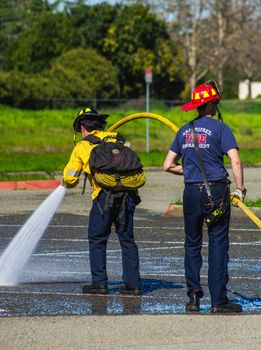
A smoke alarm sounds in an apartment building, and a fire engine arrives within minutes. It is easy to imagine the crew immediately rushing inside with a hose—but firefighting involves much more than extinguishing flames. Firefighters may treat an injured resident, search smoke-filled rooms, shut off utilities, ventilate the building, protect nearby property, and investigate conditions that could cause the fire to spread.
So, what do firefighters do during a typical shift? They prepare for emergencies, respond to fires and medical calls, maintain equipment, train continuously, and help communities prevent dangerous incidents. Their exact responsibilities depend on the department, location, certifications, and type of firefighting work.
What Do Firefighters Do at an Emergency?
Firefighters respond to situations involving threats to people, property, and the environment. Structure fires are only one part of the job. Depending on the department, a crew may respond to vehicle crashes, medical emergencies, gas leaks, hazardous-material incidents, water rescues, natural disasters, and reports of trapped people.
At a building fire, firefighters may perform several coordinated tasks:
- Connect hoses to hydrants and operate pumps that provide water pressure
- Enter buildings to locate and rescue occupants
- Use hoses, extinguishers, and specialized agents to control flames
- Open walls, ceilings, doors, or windows to reach hidden fire and release heat and smoke
- Protect neighboring buildings and areas that have not yet burned
- Provide first aid or emergency medical care
- Search for remaining hot spots after visible flames are extinguished
- Document the response and preserve possible evidence when necessary
Every incident requires teamwork. Firefighters follow an incident command system so that assignments, hazards, and available resources can be managed clearly. They must communicate effectively even when visibility is poor, temperatures are high, and conditions change quickly.
Why Do Firefighters Answer Medical Calls?
Many fire departments are part of the local emergency medical response system. Firefighters with emergency medical technician or paramedic credentials may assess patients, perform CPR, control bleeding, provide oxygen, use automated external defibrillators, stabilize injuries, or assist with childbirth. The care they are permitted to provide depends on their certification level and local rules.
Fire crews are often sent to medical emergencies because stations are distributed throughout a community and may be able to reach a patient quickly. Firefighters can begin care, help move a patient safely, and support the ambulance team. This means anyone considering the career should be comfortable working with sick or injured people—not only fighting fires.
What Happens When There Is No Emergency?
A quiet station does not mean an inactive shift. Firefighters inspect vehicles, hoses, ladders, breathing equipment, protective clothing, medical supplies, and rescue tools so that everything is ready for immediate use. Equipment that fails during an emergency can place both responders and the public at risk.
Crews also practice skills through drills. Training may cover building searches, ladder placement, hose operation, vehicle rescue, hazardous materials, emergency medicine, radio communication, and responses to unusual local risks. Firefighters must remain familiar with streets, hydrants, major buildings, and facilities that may contain hazardous substances.
Other routine responsibilities can include:
- Cleaning the station, vehicles, and equipment
- Completing incident reports and other records
- Studying changes in procedures and safety requirements
- Exercising to maintain strength and endurance
- Inspecting buildings or assisting fire-prevention personnel
- Visiting schools and community events to teach fire safety
- Checking smoke alarms or helping residents develop escape plans
Are All Firefighter Jobs the Same?
Firefighter roles vary considerably. Municipal firefighters commonly handle structure fires, medical calls, crashes, and rescue incidents. Airport firefighters train for aircraft emergencies and fuel fires. Industrial firefighters protect facilities such as refineries or manufacturing plants, while marine firefighters respond to emergencies involving ports, vessels, and waterfront property.
Wildland firefighters work in forests, grasslands, and other outdoor areas. They may clear vegetation, build fire lines, operate pumps, use controlled burning techniques, and remain at remote incidents for extended periods. Some departments also have specialized teams for hazardous materials, technical rope rescue, confined spaces, building collapse, or water rescue.
What Education and Training Do Firefighters Need?
Requirements differ by state and department, but applicants generally need a high school diploma or equivalent and a valid driver’s license. Many departments require or strongly prefer EMT certification. Candidates may also need to pass a written examination, physical ability test, interviews, background checks, drug screening, and a medical evaluation.
New firefighters usually attend a fire academy. Recruits study fire behavior, rescue methods, building construction, hazardous materials, emergency medical procedures, and the operation of hoses, ladders, pumps, breathing apparatus, and hand tools. Academy training includes demanding practical exercises as well as classroom instruction.
Digital simulations, online coursework, and modern training equipment have expanded how emergency personnel learn. These developments reflect broader trends in how technology has changed education, although hands-on practice remains essential in firefighting.
A college degree is not always required for an entry-level position. However, an associate or bachelor’s degree in fire science, emergency management, public administration, or a related subject may support advancement. The U.S. Bureau of Labor Statistics firefighter career profile explains that education, academy training, emergency medical preparation, and credential requirements vary by locality.
What Is the Career Path?
After completing academy training, a new firefighter commonly serves a probationary period under close supervision. With experience, firefighters may qualify to become driver-engineers or apparatus operators. Leadership positions can include lieutenant, captain, battalion chief, deputy chief, and fire chief.
Some firefighters move into prevention, inspection, investigation, training, emergency management, or public education. Others develop expertise in emergency medicine, hazardous materials, rescue operations, or wildland fire. Promotions commonly depend on experience, examinations, performance, certifications, and education.
What Are the Physical and Health Demands?
Firefighting requires strength, cardiovascular endurance, coordination, and the ability to work while wearing heavy protective equipment. Firefighters may climb stairs, carry hoses, move debris, operate tools, or assist people who cannot leave a dangerous area without help.
The occupation can involve exposure to intense heat, smoke, toxic combustion products, loud noise, disrupted sleep, and emotionally difficult events. Occupational research has connected firefighting exposures with increased risks of certain cancers, while heat and strenuous exertion can place substantial stress on the cardiovascular system. Departments reduce risks through protective equipment, breathing apparatus, decontamination, fitness programs, medical monitoring, and safe operating procedures.
Mental readiness matters as well. Firefighters may encounter severe injuries, deaths, frightened families, and unpredictable danger. Healthy coping strategies, peer support, rest, and access to qualified mental health care can be important parts of a sustainable career.
Is Firefighting the Right Career for You?
Firefighting may appeal to people who value teamwork, public service, practical problem-solving, and work that changes from day to day. It also requires discipline, compassion, physical preparation, and a willingness to continue learning throughout a career.
If you are interested, review the hiring standards of local departments because age rules, certifications, testing procedures, and application schedules vary. Volunteering, earning an EMT credential, improving physical fitness, and speaking with working firefighters can help you understand the profession. Ultimately, the answer to “what do firefighters do?” is broad: they prepare for danger, respond when communities need immediate help, and work every day to prevent emergencies from becoming tragedies.

