
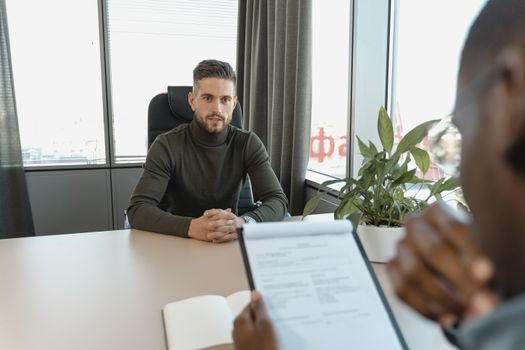
You are halfway to the interview when a worrying thought appears: Did I bring enough copies of my resume? Should I have references, identification or a notebook? Knowing what to take with you on an interview can reduce last-minute stress and help you arrive looking organized rather than overloaded.
For most interviews, bring a small professional folder containing several resumes, the job description, prepared questions, paper and a working pen. Add identification, work samples or other documents when the employer or building requires them. The goal is not to carry everything related to your career. It is to have the few items that help you communicate clearly and handle predictable situations.
Essential documents to bring to a job interview
Several copies of your resume
Bring three to five clean copies of the resume you used to apply, printed on plain white or off-white paper. Although the interviewer may already have it, additional people may join the conversation without copies. Having extras also makes it easier to refer to specific achievements while answering questions.
Review the document before leaving home. Its dates, job titles and qualifications should match the version submitted with your application. If you have updated your resume since applying, bring the newer version but be ready to explain any substantial changes.
The job description
Print the complete job posting or save an accessible copy on your phone. Highlight the main duties, required skills and repeated phrases. Looking at the description shortly before the meeting can remind you which experiences are most relevant. Do not repeatedly read from it during the interview; use it mainly for preparation and reference.
A reference list, if appropriate
You generally do not need to hand over references unless the employer requests them. Still, carrying a separate list can be useful. Include each person’s name, job title, organization, phone number, email address and professional relationship to you.
Ask people for permission before naming them as references. This gives them time to prepare and helps ensure their contact information is current. Do not place sensitive information such as Social Security numbers or copies of identity documents on the reference sheet.
Identification and requested forms
Bring a government-issued photo ID if the office has a security desk or the employer has told you it will be required. Check the invitation for instructions about parking, visitor registration, certifications or application forms.
There is usually no reason to bring a passport, Social Security card, birth certificate or banking information to an initial interview unless the employer has provided a legitimate, clearly explained reason. Employment-eligibility documents are normally handled at the appropriate hiring stage rather than casually collected during a first conversation.
Notes that help you give stronger answers
A one-page preparation sheet can be one of the most valuable things to bring. Keep it concise so that it supports the conversation instead of becoming a script. Consider including:
- Three to five accomplishments relevant to the position
- Short examples of solving problems, working with others or managing deadlines
- Important facts about the organization
- Names and job titles of the people you expect to meet
- Questions you want to ask
- Details you may forget under pressure, such as percentages, project dates or team sizes
Use brief prompts rather than complete answers. Reading prepared paragraphs can make your responses sound unnatural and may prevent you from listening carefully. It is perfectly acceptable to glance at a few notes, particularly when asking your questions near the end.
Questions to ask the interviewer
Prepare at least four thoughtful questions, because some may be answered during the conversation. Ask about priorities for the role, the team’s working style, how performance is evaluated and what the first few months might involve. Avoid asking questions that are answered prominently on the organization’s website.
If you want a more memorable approach, consider using a few lighthearted interview questions that can make professional conversations more engaging. Humor should fit the interviewer’s tone and the workplace culture; it should never replace serious questions about the role.
Portfolio and work samples
Bring work samples when they demonstrate a skill that matters to the position. Depending on your field, these might include writing samples, design projects, reports, lesson plans, sales results, code examples or photographs of completed work.
Select a few strong, relevant examples rather than presenting an entire archive. Be prepared to explain the objective, your personal contribution, the decisions you made and the outcome. Never show confidential information from a current or former employer. Remove client names, private data and internal financial details where necessary.
A tablet can be useful for digital work, but download the files in advance in case Wi-Fi is unavailable. Charge the device fully and silence unrelated notifications.
Practical essentials for interview day
When deciding what to bring with you to an interview, include a few ordinary items that prevent avoidable distractions:
- A professional folder or padfolio
- Two working pens
- A small notebook
- Directions, parking details and the interviewer’s contact information
- A fully charged phone kept on silent
- Water, mints and tissues
- Necessary personal medication
- A compact umbrella when weather may be uncertain
Keep everything in one neat bag that is easy to carry. Avoid arriving with several shopping bags, a large meal or a drink that could spill. If you are attending several interviews over many hours, pack a discreet snack and eat it privately between meetings.
Disability accommodations and health-related items
If you need an adjustment to participate in the interview, contact the employer before the appointment whenever possible. For example, an applicant might request an accessible location, additional time for an assessment, written instructions or a sign-language interpreter. The EEOC guidance for job applicants requesting disability accommodations explains that requests may be made orally or in writing.
Carry any medication or medical device you normally need, but do not assume you must bring your complete medical history. If documentation is required for a requested accommodation, ask the employer what is needed and how it should be submitted securely rather than handing over unnecessary records during the interview.
What not to bring
Leave distracting or inappropriate items behind. These include food with a strong smell, visible political materials unrelated to the role, confidential records, excessive personal belongings and products intended as gifts for the interviewer. Friends and family should not accompany you into the workplace unless an agreed accommodation makes support necessary.
Avoid using your phone during the meeting, even for taking notes, unless you ask permission. Paper notes usually create fewer misunderstandings and make it clear that you are not checking messages.
A quick checklist before you leave
- Resume copies
- Job description
- Reference list, if requested
- Photo identification
- Notebook and two pens
- Prepared questions and achievement notes
- Relevant portfolio samples
- Directions and contact details
- Necessary personal items and medication
Ultimately, what to bring with to an interview depends on the role, location and instructions in the invitation. Confirm special requirements beforehand, organize your materials the night before and carry only what supports a focused professional conversation. Good preparation will not answer the questions for you, but it can help you enter the room calmer, more confident and ready to show why you are a strong candidate.

