
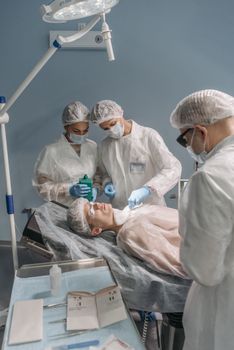
You find a job posting that involves airway management, patient monitoring, and hands-on anesthesia care—but it does not require medical school or a nursing degree. Is it legitimate? In many parts of the United States, the answer is yes. Certified anesthesiologist assistants work in a specialized clinical role that combines advanced science training with direct patient care under the direction of a physician anesthesiologist.
Anesthesiologist assistant jobs can offer meaningful responsibility, strong professional growth, and opportunities in complex surgical environments. However, the profession has specific education, certification, and state authorization requirements. Understanding those requirements before applying can save you time and help you focus on positions for which you are genuinely qualified.
What Does an Anesthesiologist Assistant Do?
A certified anesthesiologist assistant, commonly called a CAA, is an advanced practice professional who works as part of an anesthesia care team. A CAA is not a physician anesthesiologist and does not practice independently. Instead, the CAA helps develop and carry out an anesthesia plan under the direction of a licensed anesthesiologist.
Depending on state law, facility policies, and the anesthesiologist’s delegation, daily responsibilities may include:
- Reviewing a patient’s health history and participating in the pre-anesthesia examination
- Preparing anesthesia equipment, medications, monitoring devices, and intravenous access
- Assisting with the induction, maintenance, and emergence phases of anesthesia
- Managing airways with masks, endotracheal tubes, or other approved devices
- Monitoring and documenting physiological and medication-related changes
- Responding to urgent changes in blood pressure, breathing, heart rhythm, or other vital functions
- Supporting postoperative care and transferring the patient safely to the recovery team
The Centers for Medicare & Medicaid Services outlines the federal qualification and supervision requirements for anesthesiologist assistants, including accredited education and work under an anesthesiologist’s direction.
Where Are Anesthesiologist Assistant Jobs Available?
CAAs commonly work in academic medical centers, community hospitals, trauma centers, ambulatory surgery centers, and specialty facilities. Opportunities may involve general surgery, orthopedics, obstetrics, neurosurgery, cardiac procedures, pediatrics, or outpatient care. The available case mix depends on the employer, clinical privileges, and local regulations.
Location is one of the most important considerations in a CAA job search. As of October 2026, CAAs are authorized to practice in 22 states, Washington, D.C., and Guam. Authorization may take the form of licensure, registration, or another state-approved practice mechanism. The rules can change, so applicants should confirm current requirements with the relevant state medical board before accepting an offer or relocating.
Schedules also vary considerably. An outpatient surgery center may offer mostly weekday hours, while a major hospital may require early starts, overnight shifts, weekends, holidays, or call coverage. Applicants should look beyond the advertised salary and consider how scheduling expectations will affect sleep, family responsibilities, commuting, and long-term job satisfaction.
Education and Certification Requirements
Premedical undergraduate preparation
Prospective CAAs generally begin with a bachelor’s degree and undergraduate science preparation similar to a premedical curriculum. Coursework often includes biology, chemistry, organic chemistry, physics, mathematics, and related laboratory classes. Exact prerequisites, entrance examinations, minimum grades, and observation requirements differ by graduate program.
A nursing degree is not required. This distinguishes the CAA pathway from the certified registered nurse anesthetist pathway, which begins with nursing education and clinical nursing experience.
Accredited graduate education
Candidates must complete a graduate anesthesiologist assistant program accredited by the Commission on Accreditation of Allied Health Education Programs. Current programs typically take approximately 24 to 28 months and award a master’s degree. Education includes medical science, pharmacology, anesthesia equipment, patient monitoring, airway management, emergency response, and supervised clinical training.
Anyone comparing anesthesia careers should also understand that becoming a physician anesthesiologist requires medical school and residency. This overview of the path to becoming an anesthesiologist explains that separate educational route.
National certification and state authorization
Graduates must meet the National Commission for Certification of Anesthesiologist Assistants’ eligibility requirements and pass its certification examination to earn the CAA credential. They must then satisfy the licensing or practice requirements of the state in which they plan to work.
Maintaining certification requires continuing education and periodic assessment. Current NCCAA requirements include 50 hours of continuing medical education every two years, with most hours focused specifically on anesthesia, as well as the Continued Demonstration of Qualifications examination at designated points in the certification cycle.
Employers may also require current life-support credentials, background checks, health screenings, drug testing, professional references, malpractice coverage, and hospital credentialing. These steps can take weeks or months, even after a formal offer has been made.
How to Strengthen Your Application
Confirm eligibility before applying
Read the listing carefully for state licensure, certification, graduation, and experience requirements. New graduates should determine whether the employer accepts candidates awaiting examination results or state approval. Do not assume that authorization in one state automatically transfers to another.
Tailor your clinical résumé
Replace vague statements such as “assisted with anesthesia” with specific, accurate descriptions of your training. Identify your clinical rotations, patient populations, surgical specialties, monitoring experience, airway skills, and exposure to higher-acuity cases. Never claim independent practice or procedures that you have not been trained and authorized to perform.
Prepare a credentialing file
Keep digital copies of your diploma, transcript, certification verification, state authorization, life-support cards, immunization records, clinical case records, references, and identification documents. An organized file helps prevent avoidable credentialing delays.
Show that you work well in a team
CAA interviews often assess communication and judgment as closely as technical knowledge. Be ready to explain how you respond to sudden clinical changes, communicate concerns to an anesthesiologist, manage competing priorities, and receive feedback. Employers need clinicians who recognize their limits and escalate concerns promptly.
Questions to Ask Before Accepting an Offer
- Which hospitals, surgery centers, or satellite locations will I cover?
- What types of patients and procedures make up the usual caseload?
- How are new graduates oriented and supervised?
- Are nights, weekends, holidays, or call shifts required?
- Does the employer pay licensing, certification, continuing education, and malpractice expenses?
- How are breaks, overtime, scheduling changes, and post-call time handled?
- Does the contract contain repayment clauses, restrictive covenants, or minimum service commitments?
Anesthesiologist assistant jobs are best suited to people who enjoy applied science, careful monitoring, hands-on procedures, and close teamwork in high-responsibility settings. The path requires substantial graduate education and ongoing credential maintenance, but it allows qualified professionals to play a direct role in helping patients move safely through surgery and recovery.

