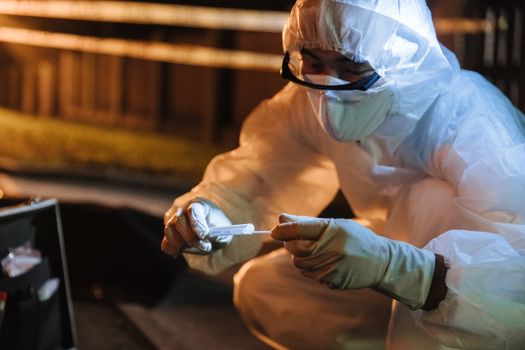
You open two college websites. One promises a “real CSI experience” with dramatic crime-scene photos; the other emphasizes chemistry courses, statistical analysis, evidence documentation, and laboratory quality standards. Which is better? Usually, the less cinematic program is closer to what professional forensic science actually requires.
The best forensic science colleges prepare students to apply reliable scientific methods to evidence, communicate findings clearly, and work within strict legal and ethical boundaries. A strong program should offer more than an interesting major name. It needs rigorous science courses, substantial laboratory experience, qualified faculty, career-relevant training, and transparent student outcomes.
Begin With Accreditation and Academic Legitimacy
First, confirm that the college holds recognized institutional accreditation. Then investigate whether the forensic science program has specialized accreditation from the Forensic Science Education Programs Accreditation Commission. The Forensic Science Education Programs Accreditation Commission, commonly called FEPAC, evaluates qualifying bachelor’s and master’s programs in forensic science and related natural or computer sciences with forensic concentrations.
FEPAC accreditation is a valuable quality indicator, but its absence does not automatically make a program weak. Some reputable programs have not pursued specialized accreditation. If a school is not FEPAC-accredited, compare its curriculum, faculty, facilities, and graduation outcomes with those of accredited programs. Also verify the accreditation status directly rather than relying only on admissions materials.
Look for a Serious Science Curriculum
Television often makes forensic work look like rapid detective work supported by futuristic equipment. In practice, laboratory positions depend heavily on biology, chemistry, mathematics, documentation, and careful interpretation. The best colleges for forensic science build their programs on these subjects rather than offering mostly criminal justice courses.
A strong undergraduate curriculum commonly includes:
- General and organic chemistry
- Biology, genetics, and biochemistry
- Physics and quantitative analysis
- Calculus or other college-level mathematics
- Statistics and data interpretation
- Instrumental or analytical chemistry
- Evidence collection and chain-of-custody procedures
- Laboratory quality assurance and quality control
- Scientific writing, ethics, and courtroom testimony
Criminal law and investigation courses can provide useful context, but they should not replace core laboratory sciences. Students interested in DNA analysis, drug chemistry, toxicology, or trace evidence may be more competitive when their transcripts show substantial chemistry and biology coursework.
Prioritize Hands-On Laboratory Training
Reading about chromatography, microscopy, DNA analysis, or evidence preservation is not the same as performing procedures and evaluating results. Strong programs give undergraduates repeated opportunities to work in teaching or research laboratories, follow written protocols, maintain records, analyze data, and explain uncertainty.
When visiting a campus, ask to see the laboratories used by undergraduates. Find out whether students operate instruments themselves or mainly watch demonstrations. Modern-looking equipment is helpful only when it is maintained, incorporated into coursework, and available often enough for students to develop practical competence.
Capstone projects can be especially valuable. A well-designed project requires students to form a research question, select appropriate methods, document their work, interpret findings, and present defensible conclusions. Those habits are directly relevant to laboratory employment and graduate study.
Examine Faculty Experience and Availability
Faculty members shape both the scientific quality of a program and the opportunities available to students. Look for professors with advanced training in chemistry, biology, forensic science, computer science, statistics, or another relevant discipline. Professional laboratory, research, legal, or quality-management experience can also enrich classroom instruction.
Credentials are only part of the picture. Ask whether faculty regularly teach undergraduates, supervise research, help students locate internships, and provide career mentoring. A famous professor offers limited benefit if students rarely interact with that person.
Also consider class and laboratory sizes. Smaller laboratory sections may provide more direct feedback on technique, recordkeeping, and report writing. These details can matter more than a college’s overall enrollment or name recognition.
Match the Program to Your Intended Career
“Forensic science” includes several distinct career paths. Crime-scene personnel document scenes and collect evidence, while laboratory scientists may specialize in biological evidence, controlled substances, toxicology, firearms, trace materials, or other areas. Digital forensics focuses more heavily on computers, networks, cybersecurity, and data recovery.
Before comparing the best schools for forensic science, identify which type of work interests you. A chemistry-heavy program may be an excellent choice for drug analysis but a poor match for someone seeking digital forensics. Similarly, a crime-scene investigation concentration may not provide enough advanced laboratory science for certain analyst positions.
Review required courses rather than relying on concentration titles. Ask where recent graduates work and whether additional education is typically needed for the roles you want. If you are still exploring fields, choose a program with a strong scientific foundation that preserves multiple career and graduate-school options.
Investigate Internships and Professional Connections
Internships can introduce students to real workplace expectations, including confidentiality, safety procedures, documentation, turnaround times, and professional conduct. Useful partners may include government laboratories, medical examiner or coroner offices, law-enforcement agencies, research facilities, private testing laboratories, and cybersecurity organizations.
However, an internship should never be assumed. Some placements are limited, competitive, or subject to background checks and other eligibility requirements. Ask how many students obtain internships, whether the positions are paid, who arranges them, and whether participation delays graduation.
Programs with advisory boards or active relationships with working professionals may also update their courses more effectively as methods and employer expectations change.
Demand Clear Evidence of Student Outcomes
Marketing claims such as “career-ready” or “industry-leading” are difficult to evaluate without supporting information. The best forensic science colleges should be willing to discuss graduation rates, time to degree, internship participation, graduate-school admission, and employment related to the major.
Ask whether employment figures count only permanent forensic positions or include unrelated jobs. Find out how many graduates responded to the school’s survey and what period the data covers. Small programs may have fluctuating results, so several years of information are more useful than one unusually successful class.
Cost also belongs in this comparison. Laboratory fees, housing, transportation, and an additional semester can change the total price considerably. Students evaluating overall academic fit may find that the same principles used in choosing strong college programs in psychology also apply here: examine faculty access, experiential learning, outcomes, affordability, and personal fit rather than reputation alone.
Questions to Ask Before Enrolling
- Is the institution accredited, and is the specific forensic program FEPAC-accredited?
- How many required credits are in chemistry, biology, mathematics, and statistics?
- Which instruments and laboratory methods do undergraduates use directly?
- Are research projects, internships, or capstones required?
- What are the faculty members’ scientific and professional backgrounds?
- Where have recent graduates found employment or continued their education?
- Does the curriculum qualify students for the specialty they intend to pursue?
- What is the complete cost after laboratory fees, housing, and financial aid?
Choose Substance Over the CSI Image
The best colleges for forensic science are not necessarily the schools with the most dramatic simulations or the largest collection of crime-scene props. They are the programs that teach students to work carefully, question assumptions, protect evidence integrity, understand limitations, and communicate conclusions without overstating what the science can prove.
Build your shortlist around accreditation, scientific depth, laboratory access, faculty support, specialization options, professional experience, outcomes, and affordability. A program that performs well across those areas can provide a stronger foundation than one selected primarily for its title, advertising, or television-inspired appeal.