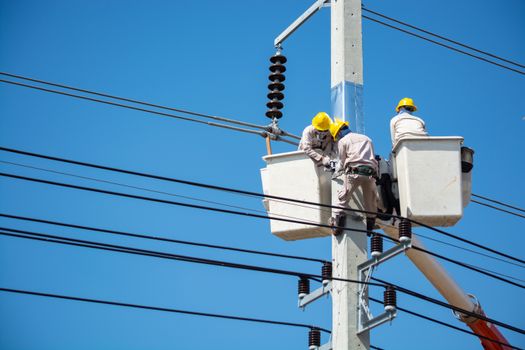
You search “electrician schools near me,” open several tabs, and quickly discover that every program seems to promise hands-on training and a fast path to employment. Yet tuition, course length, credentials, and admission requirements may differ dramatically. The right choice is not necessarily the closest school or the program with the most polished website. It is the one that fits your state’s requirements, provides useful practical training, and offers a realistic path into an apprenticeship or entry-level job.
Start With Your State and Local Requirements
Before comparing schools, determine what your state or municipality requires electricians to complete. Licensing rules vary. Depending on where you live, becoming licensed may require classroom education, supervised work experience, an apprenticeship, an examination, or a combination of these steps.
A school certificate alone does not necessarily qualify you to work independently as a licensed electrician. In many areas, technical school is preparation for an apprenticeship rather than a replacement for one. Contact your state electrical licensing board, labor department, or local building authority and ask:
- Is formal schooling required before beginning an apprenticeship?
- Does classroom training count toward licensing requirements?
- How many supervised work hours are required?
- Does the state recognize this specific program?
- Are separate licenses required for residential, commercial, or low-voltage work?
Confirming these details first can prevent you from paying for coursework that does not advance you toward your intended credential.
Understand the Different Training Paths
Programs appearing in a search for electrician schools near me may include community colleges, private trade schools, union training centers, employer-sponsored programs, and pre-apprenticeships. They do not all lead to the same outcome.
Certificate or diploma programs
These programs commonly teach electrical theory, circuitry, blueprint reading, safety practices, tools, and basic installation techniques. They may help you qualify for entry-level employment or become a stronger apprenticeship candidate. Ask whether the program provides academic credit, preparation for a recognized credential, or documented hours that apply toward licensing.
Associate degree programs
An associate degree usually includes technical courses plus general education. This path may take longer, but it can be useful for students interested in electrical technology, industrial maintenance, management, or continuing their education later.
Registered apprenticeships
Apprenticeships combine technical instruction with paid, supervised work. They may be offered through electrical contractors, unions, trade associations, or partnerships with community colleges. Because apprenticeships are jobs as well as training programs, admission can be competitive and may involve an aptitude test, interview, driver’s license, or drug screening.
If you are unsure how classroom education fits into the overall process, review this guide to electrician school length and the path to becoming an electrician.
Questions to Ask Every Electrician School
Do not rely only on an admissions presentation. Request written answers and program documents so you can compare options accurately.
Is the school properly approved and accredited?
State authorization and accreditation are different. State approval generally allows an institution to operate, while accreditation involves an outside review of educational quality. Accreditation may also affect eligibility for federal financial aid and the ability to transfer credits. You can check the U.S. Department of Education’s college accreditation resources rather than accepting an admissions representative’s claim without verification.
How much hands-on training is included?
Electrical work cannot be learned entirely through videos or lectures. Ask how many hours you will spend in a lab working with wiring, conduit, panels, test equipment, motors, and troubleshooting exercises. Tour the lab if possible. Look for current equipment, appropriate protective gear, organized work areas, and instructors who actively supervise students.
Who teaches the courses?
Ask whether instructors have recent field experience and hold relevant licenses or credentials. An experienced electrician can connect theory to the conditions students may encounter in homes, commercial buildings, and industrial settings. Also ask about class size and how much individual feedback students receive.
What is the complete cost?
Request an itemized estimate that includes tuition, registration fees, books, tools, safety equipment, uniforms, laboratory charges, testing fees, and transportation. A short program with numerous additional fees may cost more than a longer community college option.
Does the school help students enter apprenticeships?
Ask for the names of employers, unions, or apprenticeship sponsors that regularly accept graduates. Find out whether the school arranges interviews, provides aptitude-test preparation, or offers help with applications. “Career assistance” may mean little more than access to an online job board, so request specific details.
What are the completion and placement rates?
Ask how the school defines job placement. A meaningful rate should reflect graduates working in electrical or closely related occupations, not every graduate who found any type of job. Request the reporting period, number of students included, completion rate, and method used to verify employment.
Red Flags That Should Make You Pause
- The school guarantees employment, a specific salary, or immediate licensing.
- An admissions representative pressures you to enroll or pay a deposit that day.
- The program cannot explain whether its training is recognized by your state or local licensing authority.
- Staff members avoid giving you the full cost in writing.
- The school advertises unusually short training as a complete substitute for supervised field experience.
- Placement statistics are presented without dates, definitions, or supporting documentation.
- You cannot tour the facilities, speak with instructors, or review the curriculum before enrolling.
- The institution claims accreditation but will not identify the accrediting agency.
- Credits are described as transferable, but no receiving colleges are named.
- Most of the conversation focuses on loans rather than training quality and career requirements.
Compare Schools Based on Everyday Practicalities
A strong program still needs to fit your life. Consider commuting time, class schedules, childcare, transportation, and whether you can continue working while enrolled. Evening or hybrid classes may offer flexibility, but verify which skills must be completed in person.
Location also affects access to employers. A nearby school with established relationships among local contractors may offer more useful connections than a distant program with a broader name. Speak with current students and recent graduates about instructor availability, lab access, scheduling problems, and the support they received when applying for work.
Make a Side-by-Side Shortlist
Narrow your search to three or four options and create a simple comparison. Record each program’s total cost, length, accreditation, hands-on hours, instructor qualifications, schedule, apprenticeship relationships, completion rate, and electrical-job placement rate. Note which claims you verified independently.
The best result from a search for electrician schools near me is not simply a convenient campus. It is a transparent program that teaches relevant skills, aligns with licensing requirements, and clearly explains what comes after graduation. Taking time to ask detailed questions now can help you avoid unnecessary debt and choose training that supports a realistic career path.