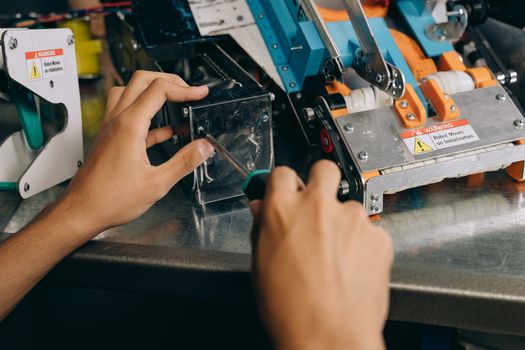
A production line suddenly stops, warning lights appear on a control panel, and every minute of downtime affects the day’s schedule. Who determines whether the problem is a sensor, motor, cable, controller, or programming error? In many workplaces, that responsibility falls to a robotics technician. This career combines hands-on repair work with electronics, mechanical systems, computers, and careful problem-solving.
Robotics technicians help keep automated equipment operating safely and reliably. They may work with robotic arms assembling vehicles, machines packaging consumer products, automated warehouse systems, or specialized equipment used in laboratories and research facilities. Although the job can involve programming, it is not purely a software career. Technicians regularly inspect physical components, use testing instruments, replace parts, and collaborate with engineers and production teams.
What Does a Robotics Technician Do?
A robotics technician builds, installs, tests, maintains, and repairs robots and related automation systems. The exact responsibilities depend on the workplace. A technician in an automotive plant may service welding robots, while someone in a distribution center may support conveyors, sensors, and automated material-handling equipment.
The role often extends beyond the robot itself. Automated systems may include programmable logic controllers, safety devices, motors, pneumatic equipment, cameras, end-of-arm tools, and communication networks. A problem in any one of these areas can affect the entire process.
Common responsibilities include:
- Installing robots, controllers, sensors, cables, and peripheral equipment
- Performing preventive maintenance according to service schedules
- Investigating alarms, unexpected movements, and production interruptions
- Replacing defective circuit boards, motors, encoders, switches, or wiring
- Adjusting robot positions, speeds, tools, and operating sequences
- Testing repaired equipment before returning it to service
- Reading electrical diagrams, mechanical drawings, and technical manuals
- Documenting repairs, test results, parts usage, and recurring problems
- Helping operators understand correct equipment procedures
What Is a Typical Workday Like?
A typical shift may begin with a review of maintenance records and reports from the previous team. The robotics technician might inspect equipment for loose connections, unusual sounds, fluid leaks, excessive vibration, or signs of wear. Scheduled work could include lubricating moving components, checking sensor alignment, backing up controller programs, or testing emergency stops and other safeguards.
Unplanned troubleshooting can quickly change the schedule. If a robotic cell stops working, the technician first gathers information from operators and examines alarms or error logs. The next step is to isolate possible causes systematically. For example, the technician may verify electrical power, inspect cables, test a sensor, check air pressure, or review the controller’s logic.
Once the cause is found, the technician makes or coordinates the repair. The system must then be tested under controlled conditions. Good technicians do not simply clear an alarm and walk away; they confirm that the original problem has been corrected and consider whether another underlying issue could cause it to return.
Work schedules vary. Some technicians have regular daytime hours, while manufacturing and logistics facilities may require evening, overnight, weekend, or rotating shifts. On-call work and overtime may be necessary when essential equipment fails.
Core Skills Employers Look For
Mechanical and Electrical Knowledge
Robots combine moving machinery with electrical and electronic controls. A technician needs to understand gears, bearings, fasteners, motors, wiring, circuit protection, and basic power systems. Knowledge of hydraulics and pneumatics can also be important because automated tools often use pressurized fluid or air.
Troubleshooting
Troubleshooting is one of the job’s most valuable skills. Technicians must separate symptoms from causes and avoid replacing parts without evidence. A structured approach—observing the fault, reviewing available data, testing likely causes, and confirming the repair—reduces downtime and unnecessary expense.
Automation and Programming
Many positions require familiarity with programmable logic controllers, human-machine interfaces, robot controllers, and industrial networks. Technicians may edit operating points, adjust parameters, or make limited changes to ladder logic and robot programs. Advanced software development is not required for every entry-level role, but comfort with computers is essential.
Communication and Documentation
A robotics technician works with operators, engineers, supervisors, parts suppliers, and other maintenance professionals. Clear communication helps the team understand what failed, what was repaired, and whether additional action is needed. Accurate records also reveal patterns that can guide preventive maintenance.
Safety Awareness
Industrial robots can move rapidly, restart unexpectedly, and operate with enough force to cause serious harm. Technicians must follow workplace procedures for controlling hazardous energy and entering guarded areas. They also need to understand interlocks, barriers, presence-sensing devices, and emergency-stop systems. Safety features should never be bypassed merely to finish a repair faster.
Education and Training
Many employers seek applicants with an associate degree or postsecondary certificate in robotics, mechatronics, industrial automation, electronics, or electromechanical technology. Coursework commonly covers electrical circuits, motors, mechanical systems, programmable controllers, technical mathematics, computer-aided design, and industrial safety.
Some people enter through apprenticeships, military technical training, or experience in industrial maintenance. Employers may provide additional instruction for the specific brands of robots and control systems used at their facilities. Because equipment differs between workplaces, the ability to learn new systems is often as important as familiarity with one manufacturer.
The U.S. Bureau of Labor Statistics profile for electro-mechanical and mechatronics technicians identifies an associate degree or postsecondary certificate as the typical entry-level education. The agency reported a median annual wage of $73,900 in May 2025, although robotics technician pay varies by industry, location, shift, experience, and responsibilities.
Where Robotics Technicians Work
Manufacturing remains a major source of jobs, especially in automotive production, electronics, machinery, aerospace, food processing, and consumer goods. Opportunities also exist in engineering services, research organizations, warehouses, utilities, and companies that install or integrate automation equipment.
Most roles involve time on a production floor or at customer sites rather than sitting at a desk all day. The environment may be noisy, and technicians may need to stand, bend, climb, or work around large machinery. Personal protective equipment can include safety glasses, hearing protection, protective footwear, and task-specific electrical protection.
Students comparing technical occupations should consider the work setting as well as the training requirements. Robotics generally centers on automation and industrial equipment, while healthcare technology involves patient-facing environments and clinical procedures. For an example of a different technical path, review this complete guide to becoming an MRI technician.
How Can a Robotics Technician Advance?
Experience can lead to senior technician, maintenance lead, automation specialist, controls technician, field service technician, trainer, or maintenance supervisor positions. Technicians who strengthen their programming and system-design abilities may move into controls engineering or automation engineering support roles, although some positions require a bachelor’s degree.
Advancement is easier when technicians build skills beyond routine repair. Useful areas of development include industrial networking, machine vision, data collection, predictive maintenance, advanced PLC programming, and robot integration. Leadership, project planning, and the ability to train coworkers can prepare technicians for supervisory work.
Is This Career a Good Fit?
Robotics technology may suit you if you enjoy understanding how machines work, solving problems under pressure, and switching between computer-based diagnostics and hands-on repairs. Patience matters because the most visible symptom is not always the true cause. Attention to detail is equally important when a small wiring error or incorrect setting can interrupt an entire process.
The career also requires ongoing learning. Robots, software, sensors, and safety systems continue to evolve, and technicians must keep their knowledge current. For someone who wants practical technical work without spending every day at a desk, becoming a robotics technician can provide a challenging path with opportunities to specialize and advance.