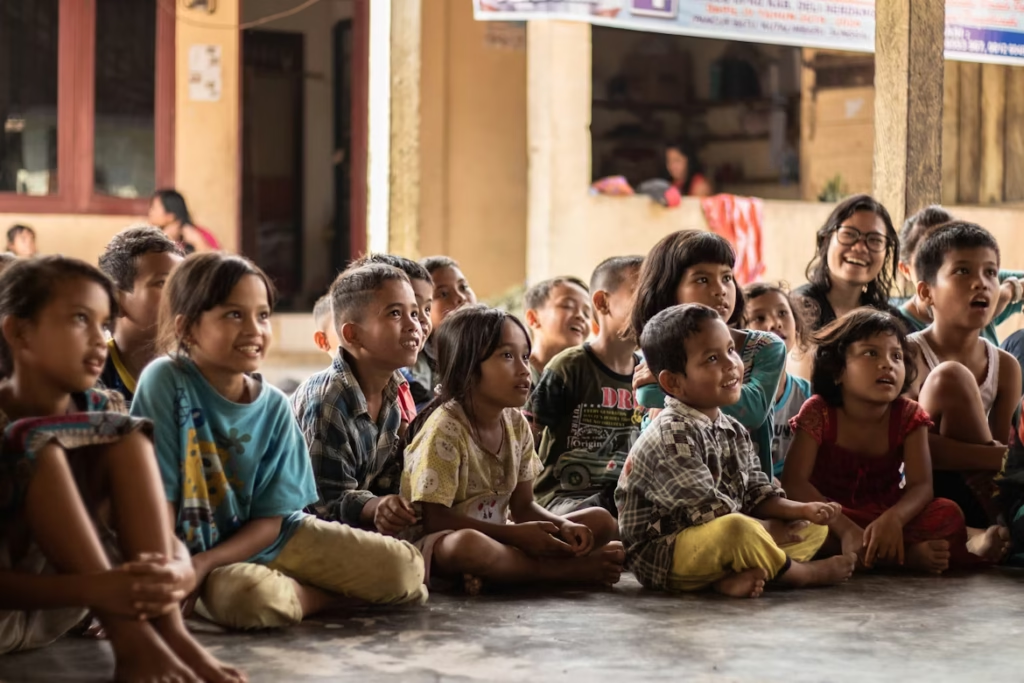
Education, a fundamental right that should be accessible to all individuals irrespective of their socioeconomic background or geographical location, faces significant challenges in underprivileged corners of the world.
Limited resources, systemic inequalities, and a lack of infrastructure hinder educational opportunities, leaving a concerning number of children and young individuals without access to quality education.
Disturbing Statistics on Primary Education around the World
Recent data from UNESCO reveals that as the new academic year begins, a staggering 244 million children and youth between the ages of 6 and 18 worldwide remain out of school, emphasizing the urgent need for interventions to address this educational disparity and ensure equal opportunities for all.
Fortunately, an increasing number of passionate individuals are choosing to pursue advanced degrees, such as the Keuka College online MSW program, after completing their undergraduate studies. Since this degree is available online, even those working in other fields can pursue it without a career gap.
These dedicated professionals with master’s degrees in social work recognize the importance of acquiring specialized knowledge and skills to make a significant impact on underprivileged communities and address the educational gap.
Their unwavering commitment to improving lives and advocating for change is instrumental in creating a brighter and more equitable future for all.
We will now explore how social workers can play a transformative role in changing the educational landscape of underprivileged areas, creating inclusive and empowering learning environments for all.
Identifying Needs and Mobilizing Resources
Social workers possess a remarkable ability to discern the specific needs of underprivileged communities. As per UNESCO, an alarming number of adults worldwide, including a significant proportion from underprivileged areas, lack basic literacy skills, totaling approximately 763 million individuals.
Social workers engage with these local residents, families, and educational institutions, enabling them to understand the obstacles that impede educational access. Moreover, they advocate the significance of education to these communities.
Collaborating with stakeholders, community organizations, and government agencies, social workers mobilize resources and devise innovative solutions. They play a vital role in securing funding for school infrastructure and ensuring the provision of learning materials, ultimately guaranteeing that crucial resources reach those who are in dire need of them.
Advocating for Policy Change
Social workers, as advocates for social justice and equality, have the unique capacity to utilize their expertise to champion policy changes that target systemic issues impacting education in underprivileged areas.
The Global Campaign for Education reveals a stark reality, with over 130 million girls worldwide being denied the fundamental right to education. These girls encounter numerous barriers, including early marriage, cultural norms, and limited resources, that hinder their access to education.
In response to these challenges, social workers engage with policymakers and actively participate in advocacy campaigns. Through their efforts, they influence decision-making processes and drive policies that prioritize equitable access to education, ensure fair distribution of resources, and work towards dismantling the barriers that impede educational opportunities for underprivileged individuals, particularly young girls.
Community Engagement and Empowerment
One of the key strengths of social work is its emphasis on community engagement and empowerment. Social workers excel in working closely with community members to cultivate trust, establish meaningful relationships, and gain a deep understanding of local dynamics.
In underprivileged areas, social workers play a crucial role in empowering communities by actively involving them in decision-making processes. They create platforms and opportunities for community voices to be heard, ensuring that they have a say in shaping educational initiatives.
This approach not only fosters a sense of ownership and commitment within the community but also contributes to more inclusive and sustainable development, as highlighted by the United Nations Development Programme (UNDP). By empowering communities in this way, social workers ensure that education becomes a collective effort, driving positive change and paving the way for a brighter future.
Providing Counseling and Support Services
In underprivileged areas, students encounter a range of challenges that significantly impact their educational journey. One such challenge is the prevalence of mental health conditions among young individuals globally, as estimated by the World Health Organization, with approximately 1 in 7 (14%) individuals between the ages of 10 and 19 experiencing such conditions.
To address these difficulties, social workers play a vital role by offering counseling services, emotional support, and guidance to students, teachers, and families.
By addressing mental health issues, acknowledging and helping heal trauma, and providing psychosocial support, social workers create a nurturing environment that fosters learning and personal growth.
These interventions not only promote overall well-being but also equip individuals with the resilience necessary to overcome obstacles and achieve success in their educational pursuits.
Building Collaborative Networks
Social workers understand the power of collaboration and networking. They can establish partnerships between educational institutions, NGOs, community-based organizations, and governmental agencies to create a comprehensive support system for underprivileged areas.
These collaborative efforts leverage collective expertise, resources, and knowledge-sharing to develop sustainable educational programs, mentorship initiatives, and capacity-building opportunities for educators and students alike.
Conclusion
Social workers have the potential to be change agents in transforming the educational landscape of underprivileged corners of the world. Through their dedication, advocacy, community engagement, and provision of support services, they can break down barriers, mobilize resources, and create empowering educational environments.
By championing equitable access to education and fostering inclusive practices, social workers pave the way for a brighter future, where education becomes a catalyst for social mobility and positive change.