
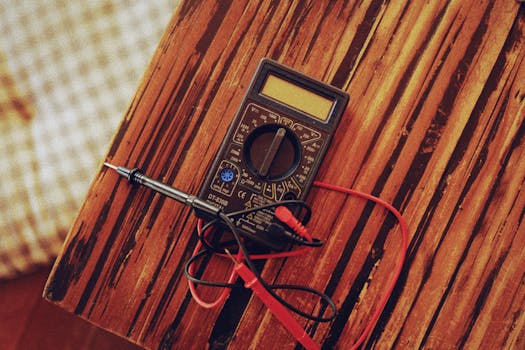
In today’s technologically advanced world, understanding how to test current with a multimeter is a crucial skill for both professionals and hobbyists. This guide will walk you through the process of accurately measuring electric current, detailing the correct usage of a multimeter to help ensure accurate readings. Whether you’re troubleshooting electrical circuits, setting up a DIY project, or interested in learning basic electronics, mastering your multimeter is essential.
How to Test Current with Multimeter
To begin, ensure your multimeter is correctly set up for current measurement. Most multimeters will have a separate port for measuring current, indicated by ‘A’, which stands for amperage. Make sure to turn the dial to the appropriate current range. If you’re unsure about the expected current, start at the highest setting and work downwards to avoid damaging the meter. Additionally, always consult your multimeter’s manual for specific instructions.
Safety Precautions
When learning how to test current with a multimeter, safety is paramount. Always ensure your multimeter and probes are in good condition to avoid electric shocks or damage to equipment. Do not attempt to measure current in a high-voltage setting unless you are qualified to do so. It’s also important to remember that current measurements typically require the circuit to be broken, inserting the multimeter in series, which can impact other measurements.
Step-by-Step Guide
To accurately measure current with a multimeter, follow these detailed steps:
- Turn off power: Ensure the device or circuit is turned off before connecting the multimeter.
- Connect leads: Insert the black lead into the COM port and the red lead into the port labeled for current measurement.
- Select the correct mode: Set the multimeter dial to the correct current range (AC or DC) based on the circuit you are testing.
- Insert in series: Break the circuit at the point where you wish to measure current and insert the multimeter in series.
- Turn on power: Power the circuit back on and observe the multimeter reading, adjusting the range as necessary for precision.
- Record and analyze: Document the current readings and analyze them in the context of your electrical task.
Understanding Multimeter Readings
When you test current with a multimeter, interpreting the readings accurately is crucial. The multimeter display will show the existing current in the circuit at the point of insertion. It’s vital to compare these readings against the manufacturer’s specifications or expected values to comprehend circuit behavior properly. Discrepancies can help identify issues such as short circuits, overloads, or other electrical faults.
Common Applications
Whether you’re learning electronics or need a practical tool in the workplace, understanding how to use a multimeter to measure current can apply to numerous fields. Common applications include:
- DIY Projects: Ensure your hobby projects operate within safe current levels.
- Troubleshooting: Diagnose electrical problems in your household appliances or vehicles.
- Educational Purposes: Study electric circuits and their behavior in science and engineering courses.
- Professionally: Many careers in technology and engineering require the ability to troubleshoot and understand circuits using these tools.
Further Learning Opportunities
For women returning to the workforce, understanding multimeter usage can provide a competitive edge. Consider exploring courses or programs tailored for skill development, such as the Google Return to Work Program, which focuses on equipping women with technical skills.
Concluding Remarks
Mastering the art of using a multimeter doesn’t end here. Continue practicing and exploring more advanced functionalities, such as measuring resistance or voltage. For comprehensive information, visiting credible sources like the Wikipedia Education page can enhance your knowledge about further educational opportunities available in electronics and electrical engineering.
Understanding how to test current with a multimeter can open up new avenues for personal and professional growth. Whether it’s ensuring a safe DIY project, troubleshooting a problem, or advancing your career, the multimeter is an indispensable tool.
- Always start with a high current setting to avoid damage.
- Ensure your multimeter and probes are in good working condition for safety.
- Break the circuit to insert the multimeter in series for accurate readings.
- Compare readings to expected values to identify potential issues.
- Explore educational opportunities to improve your technical skills.
FAQs
What is the function of a multimeter?
A multimeter is a tool used to measure electrical properties such as current, voltage, and resistance in a circuit.
How can wrongly using a multimeter affect the results?
Incorrect multimeter settings or poor connection can lead to inaccurate readings or damage to the multimeter or circuit.
Is it safe to use a multimeter for high voltage circuits?
High voltage circuit testing should only be performed by experienced individuals using multimeters rated for such use.
How do manufacturers provide expected current values?
Manufacturers usually supply an electrical schematic or specification sheet that includes the expected current values.
Can I use the multimeter for other measurements besides current?
Yes, most multimeters can also measure voltage, resistance, continuity, and in some models, additional properties like temperature and capacitance.

