
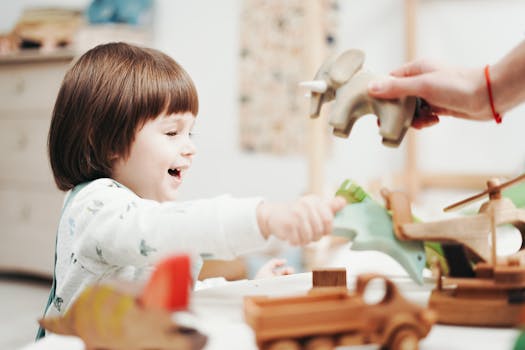
Understanding children’s learning processes is a fascinating field, particularly when it comes to how they explore their environment. One concept that stands out in this area is tertiary circular reactions. These reactions are pivotal in the developmental phase when children start experimenting with new possibilities and actively discover the world around them. By comprehending how these reactions work, parents and educators can better support a child’s development during the crucial early years.
What are Tertiary Circular Reactions?
Tertiary circular reactions are part of Jean Piaget’s theory of cognitive development, which occurs in the sensorimotor stage. This phase typically occurs between the ages of 12 to 18 months. During this period, children begin to engage in trial and error experimentation. They deliberately vary their actions to observe different outcomes, showcasing their emerging cognitive abilities and curiosity.
In contrast, primary circular reactions and secondary circular reactions occur earlier in the sensorimotor stage. Primary circular reactions, which occur between 1 and 4 months of age, involve infants reproducing pleasurable events that initially happened by chance, focusing mostly on their own bodies. Examples include a baby repeatedly sucking on their thumb. As children progress to secondary circular reactions, they shift their focus to the external world, such as shaking a rattle to hear the sound it makes.
By the time tertiary circular reactions emerge, children are not just repeating actions but are experimenting to see how different actions result in different outcomes. This newfound experimental approach is an exciting time in child development, characterized by an explosion of learning and discovery.
Examples of Tertiary Circular Reactions
During the tertiary circular reactions stage, children start to experiment with actions in various ways. For example, a child might drop different objects from a height to see how they fall, or they might deliberately push objects over to observe what happens. This experimentation is a critical part of how they learn and understand their environment.
At this stage, infants also begin to tackle simple problems, like figuring out how to get a toy that is out of reach by using a stick to drag it closer. Such sensorimotor stage examples show the child’s emerging problem-solving skills and their ability to use tools to achieve a goal.
The Role of Educators and Caregivers
The role of educators and caregivers becomes crucial during this phase of a child’s development. By providing a safe and stimulating environment, adults can encourage further exploration and discovery. Activities that challenge a child’s thinking, such as puzzles and building blocks, can facilitate cognitive growth.
Understanding the concept of tertiary circular reactions also prepares educators and caregivers to better support children in their educational journeys. It’s important to provide opportunities for safe exploration while maintaining guidance and support. For those interested in working closely with children during such formative years, there are many opportunities in early childhood education. You might want to explore how to land a high-paying position in early childhood education and contribute to this critical stage of development.
The Importance of Tertiary Circular Reactions in Development
These reactions are not just about physical exploration but also about cognitive and emotional growth. As children experiment, they learn about cause and effect, develop problem-solving skills, and build a basic understanding of physics and the world around them. This stage lays the groundwork for more complex learning and intellectual development.
Additionally, tertiary circular reactions encourage children to engage with their environment actively. This kind of engagement is essential for developing an intrinsic love for learning, a trait that will benefit them throughout their educational careers and beyond.
Encouraging Positive Development
While the natural curiosity and experimentation of children are powerful drivers of learning, they need the right environment to thrive. Encouraging curiosity through interactive play, asking open-ended questions, and providing varied experiences can significantly enhance children’s abilities to think creatively and solve problems.
Moreover, allowing children to experience the natural consequences of their actions in a safe setting helps solidify their understanding of cause and effect and improves their decision-making skills. For more detailed guidelines and information, you can visit this Wikipedia article on education.
In conclusion, tertiary circular reactions are a vital step in a child’s cognitive development. By understanding and supporting these natural behaviors, caregivers and educators can foster an environment that stimulates a child’s desire to learn and explore.
- Tertiary circular reactions occur in the sensorimotor stage, typically between 12 and 18 months.
- These reactions involve experimentation and problem-solving.
- They differ from primary and secondary circular reactions, which are more about repetition of known actions.
- Parents and educators can support this stage by providing a stimulating environment.
- Understanding tertiary circular reactions can enhance teaching methods in early childhood education.
FAQ
What are primary circular reactions?
Primary circular reactions occur early in the sensorimotor stage, usually between 1 and 4 months of age. They involve infants repeating actions that are inherently pleasurable, focused mostly on their own bodies.
How do tertiary circular reactions differ from secondary circular reactions?
While secondary circular reactions are focused on interactions with the environment, tertiary circular reactions involve deliberate experimentation to achieve new outcomes, allowing for cognitive growth.
What age do tertiary circular reactions typically start?
Tertiary circular reactions usually begin around 12 months and can continue until around 18 months as the child explores and learns through trial and error.
How can caregivers support tertiary circular reactions?
Caregivers can support this stage by providing a safe environment for exploration, offering toys and activities that promote problem-solving, and encouraging curiosity through positive reinforcement.
Why are tertiary circular reactions important?
These reactions are important because they lay the foundation for cognitive development, helping children understand cause and effect, and fostering a lifelong love of learning.

