
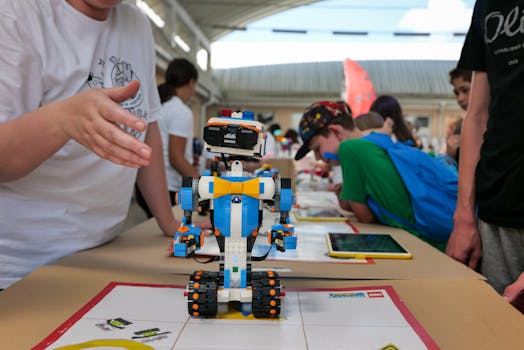
Physics science fair projects can be an exciting way to explore the natural world and ignite a passion for learning among students. These projects not only demonstrate fundamental principles of physics but also foster critical thinking and problem-solving skills. By choosing engaging and challenging topics, young scientists can showcase their creativity and scientific knowledge while discovering the wonders of physics.
Engaging Physics Science Fair Projects for Students
When selecting a topic, consider areas that align with current educational standards and pique student interest. Here are a few ideas for innovative physics science fair projects that can inspire budding scientists:
- Electromagnetism: Experiment with magnetic fields and electricity. A project could involve creating a simple electromagnet and exploring its strength under different conditions.
- Kinematics: Study the motion of objects and forces acting upon them. Students can build different ramps and track rolling speeds of various objects to learn about friction and gradient effects.
- Optics and Light: Investigate how light travels and how lenses focus light. A project could focus on constructing a basic telescope or discovering how different lenses affect image clarity.
- Energy Transformation: Dive into renewable energy by constructing a simple solar oven or a wind turbine model to examine efficiency and practical applications.
- Acoustics: Explore sound waves and vibrations. Building a basic musical instrument or studying resonance and pitch can provide insight into the science behind music.
Diverse Physics Science Fair Topics
It’s important for projects to not only fit the student’s skill level but also offer room for creativity and personalization. Here are some diverse physics related science fair topics:
- Gravity vs. Magnetic Force: Compare the effects of gravity and magnetism using pendulums or levitation setups.
- Heat Transfer: Examine the efficiency of different materials in conducting and retaining heat.
- Buoyancy: Investigate the principles of buoyancy by designing and testing different shapes and materials for floating devices.
- Newton’s Laws of Motion: Demonstrate these fundamental laws using everyday objects like toy cars, rockets, or balls.
- Lunar Phases and Tides: Model how the moon’s position affects tide levels, linking astronomy and physics.
How to Choose an Effective Physics Related Science Fair Project
Selecting the right project involves understanding the interests and strengths of the students. Consider these factors when choosing physics related science projects:
- Interest and Engagement: Choose a topic that the student finds compelling; enthusiasm can drive deeper learning.
- Complexity and Resources: Ensure the project is manageable with the available materials and fits the student’s skill level.
- Scientific Method Application: Look for projects that allow students to practice forming hypotheses, conducting experiments, and analyzing data.
- Real-World Connection: Projects should relate theoretical concepts to real-world applications, enhancing understanding and relevance.
- Future Exploration: A well-chosen topic can serve as a gateway to advanced study, encouraging students to explore subjects like astrophysics and quantum science.
Preparing for Physics Science Fair Projects: Tips and Strategies
Successful execution of physics science fair projects requires careful preparation. Here are some tips to guide students through the process:
- Research Thoroughly: Use library resources, academic journals, and reputable websites to gather information.
- Plan Methodically: Draft a detailed plan outlining the materials needed, experiment steps, and safety precautions.
- Document Process: Keep a detailed log of hypotheses, procedures, and observations to create a comprehensive project report.
- Practice Presentation: Rehearse explaining the project to ensure a confident and clear presentation during the science fair.
- Seek Feedback: Ask teachers or mentors for input and incorporate suggestions for improvement.
Conclusion: Impact of Physics Science Fair Projects
Pursuing physics science fair projects gives students the chance to explore scientific concepts and develop valuable skills. These projects create a platform for discovery and can spark lifelong interest in science and technology. Engaging with physics-related science projects is not only educationally enriching but also personally rewarding. Students are encouraged to explore further and consider advanced topics in physics. For more information on educational topics, visit Wikipedia’s article on Education.
- Physics projects can range from simple to complex, matching various skill levels.
- Projects should connect theory with practical application.
- Thorough preparation is crucial for success.
- Presenting findings helps build communication skills.
- Projects can inspire further study in the sciences.
What are physics science fair projects?
Physics science fair projects are educational experiments that involve physical concepts and principles, aimed at engaging students in scientific inquiry and understanding the material world.
Why are physics-related science projects important?
These projects are important because they help students learn to apply scientific theories to real-world situations, fostering analytical skills, and inspiring interest in STEM fields.
How can students choose a suitable project?
Students should choose projects based on their interests and the materials available, ensuring the project complexity matches their understanding and capabilities.
How should students prepare for their science fair?
Students should thoroughly research their topic, plan their experiments carefully, document their process, and practice presenting their findings clearly and confidently.
Where can additional resources about physics projects be found?
Additional resources can be found in libraries, educational websites, and online courses, such as those offered by universities or educational platforms focused on science education.

