
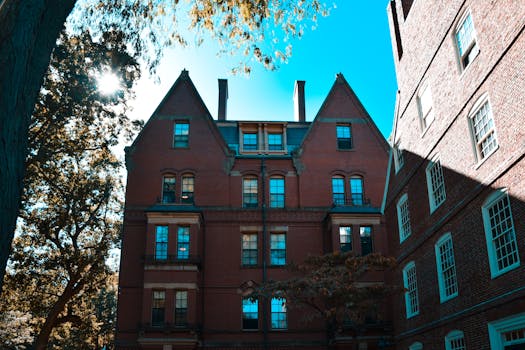
When discussing prestigious educational institutions, the term Ivy List often comes to mind. This revered group of universities represents academic excellence, elite reputations, and rigorous admissions criteria. But what exactly is the Ivy List, and how does it shape the landscape of higher education in the United States?
The Ivy List: An Overview
The Ivy List traditionally encompasses eight private colleges located in the Northeastern United States, known for their significant history and contribution to higher education. These institutions include Harvard, Yale, Princeton, Columbia, Dartmouth, Brown, Cornell, and the University of Pennsylvania. Their collective legacy is one of distinction in education, offering unparalleled academic resources and research opportunities.
The Historical Significance of Ivy League Schools
Drawing their historical roots from the establishment of the oldest institutions in America, the Ivy League schools have long set the standard for liberal arts education. They offer extensive programs across various disciplines, making them a prestigious destination for students worldwide. Their influence extends beyond academics, impacting socio-economic trends and cultural developments.
Not Just Tradition, But Innovation
While rooted in tradition, these schools are equally dedicated to innovation. Many have introduced trailblazing programs and research initiatives that address contemporary issues. The dedication to maintaining a balance between tradition and innovation is evident in the way they adapt to global educational needs.
The Newest Ivy League School Consideration
In recent years, there has been discussion about the newest Ivy League school attributes. Though no new school has been officially added to the Ivy League, several universities across the country demonstrate the qualities emblematic of those on the Ivy List. Institutions like Stanford, MIT, and the University of Chicago have earned comparable respect and recognition, enhancing the educational landscape further.
Some argue that growing academic collaborations and global expansion strategies of these schools might lead to an evolution of the Ivy League definition. However, the historical exclusivity and unique standing of the existing Ivy League institutions remain unchanged for now.
Unpacking the Modern Ivy List Trends
The modern interpretation of the Ivy List reflects broader educational and societal shifts. Contemporary trends in Ivy League education focus on inclusivity, technology integration, and sustainability. Many schools are enhancing diversity in their student body and faculty, ensuring a richer educational experience for all.
The Rise of STEM and Interdisciplinary Studies
One of the most significant trends is the emphasis on STEM (Science, Technology, Engineering, and Mathematics) education and interdisciplinary studies. Many Ivy League schools have expanded their curriculums to include cutting-edge courses that blend engineering with humanities, technology with ethics, and more.
Diversity and Inclusion Efforts
Diversity and inclusion initiatives are gaining prominence. These schools are committed to creating environments where students from all backgrounds can excel. These efforts are evident in targeted scholarships, mentorship programs, and partnerships designed to support underrepresented groups.
Perhaps your academic journey could begin with exploring options beyond the Ivy League, such as the best art schools in Europe, which offer extraordinary educational opportunities globally.
Technology Integration in Education
Technology integration within curricula is another trend reshaping the Ivy List schools. With online learning platforms and cutting-edge research facilities, they continue to push boundaries in enhancing educational methodologies.
Conclusion: The Future of Ivy League Education
The Ivy List stands as a testament to centuries of educational excellence. As these schools continue to evolve in response to societal shifts, they remain leaders in shaping future generations of thinkers, leaders, and innovators. Whether it’s integrating new technologies or fostering inclusive learning environments, their commitment to high-quality education endures.
For more detailed information on the academic credentials and history of Ivy League schools, you can visit this Wikipedia page.
- The Ivy List comprises eight elite institutions known for their academic excellence.
- Newer schools challenging the League’s prominence include Stanford and MIT.
- Trends include STEM education growth and increased diversity efforts.
- Ivy League schools continually work to balance tradition with modern needs.
- Technology in education is a significant focus for these institutions.
FAQ
What schools are on the Ivy List?
The Ivy List includes Harvard, Yale, Princeton, Columbia, Dartmouth, Brown, Cornell, and the University of Pennsylvania.
Is there an official “newest Ivy League school”?
No new schools have been added to the original Ivy League, but several universities are often compared to them in academic stature.
Why are these schools called the Ivy League?
The term “Ivy League” originally referenced the intercollegiate athletic conference and now symbolizes educational excellence.
How is technology influencing Ivy League education?
Ivy League schools utilize technology to enhance learning through online platforms, innovative teaching tools, and research facilities.
How do Ivy League schools promote diversity?
They implement scholarships, mentorship programs, and initiatives to support a diverse and inclusive student environment.

