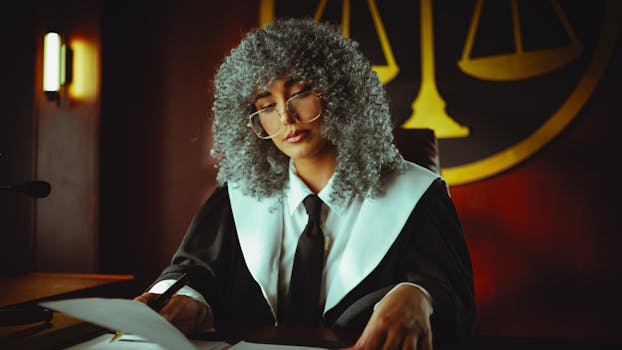
Courtroom artists play a unique and important role in the legal system. They capture pivotal moments in legal proceedings through their artistic skills, often providing the only visual documentation in cases where cameras are not allowed. Understanding the contributions and challenges faced by courtroom artists sheds light on their essential function within the judiciary process.
The Role of Courtroom Artists in Legal Proceedings
Courtroom artists are tasked with creating visual narratives that depict the events within a courtroom. Their work goes beyond mere illustration; it is an interpretation that portrays the nuance and emotion present during trials. Artists must work quickly and unobtrusively, capturing essential elements such as a witness’s demeanor or an attorney’s argument. These drawings often form historical records of legal proceedings and can be used by media outlets to disseminate information to the public.
History of Courtroom Art
The tradition of courtroom art dates back centuries, with roots in court sketching from the 19th century. Before modern technology, artists were the primary means of visually communicating what occurred inside courtrooms. Despite the advent of photography and video, courtroom artists remain relevant today, providing nuanced depictions that technology cannot always capture. The subtlety and artistry involved offer viewers insights into the courtroom’s human drama.
The Artist’s Process in the Courtroom
Sketch artists in the courtroom must possess a keen eye for detail and a quick hand. Their work begins with understanding the mood and key players in the trial. During proceedings, an artist selects evocative scenes to sketch, ensuring they maintain accuracy while expressing the scene’s energy. This often requires extensive prep work and familiarity with legal environments.
With prohibitions on photography or video in some cases, these skills ensure courtroom artists preserve the trial’s visual narrative. They must be discreet, as drawing in a courtroom requires a balance between accuracy and perception.
Challenges Faced by Courtroom Artists
Artists encounter numerous challenges, from time constraints to the need for discretion in contentious environments. The rapid pace of trials means that an artist must immediately decide which scenes to preserve. Capturing the likeness and emotion of individuals without them posing or pausing for the artist adds a layer of complexity. Moreover, the expectation to remain impartial while ensuring their art reflects court realities adds to their task’s demands.
Impact on Public Perception
Courtroom paintings often influence public perceptions of legal proceedings. The artwork represents more than just the trial’s events; it conveys the atmosphere, the gravity, and sometimes the tension within the courtroom. Given the widespread distribution through media, the accuracy and style of these depictions can shape public opinions on high-profile cases.
Preserving History Through Art
Many pieces of courtroom art become important historical documents. They preserve moments from significant trials, offering insights into events that have shaped legal precedents. Future generations receive visual records that portray more than written or spoken accounts can, emphasizing courtroom art’s ongoing relevance.
For those interested in aspiring to become courtroom artists, various educational resources and scholarships are available. For example, prospective students might explore different scholarship opportunities for art students, fostering talent in this specialized field.
The Future of Courtroom Art in the Digital Era
As technology continues to evolve, courtroom artists face questions about their future roles. Digital art tools offer advantages but cannot replicate the immediacy and tactile nature of traditional sketching. There remains a unique demand for the personal touch courtroom art provides, suggesting a sustained presence in legal documentation.
While digital techniques can offer quick distribution of courtroom depictions, the nuanced understanding of human emotion will preserve the relevance of traditional sketches. The intersection of human creativity and legal documentation promises an enduring impact on future courtroom art development.
Conclusion
Courtroom artists play an essential role in documenting legal proceedings, offering valuable insights into the judicial process. While technological advances present new challenges and opportunities, the blend of artistic representation and legal interpretation remains indispensable. As traditional and digital methodologies coexist, courtroom art will continue to evolve, reflecting both contemporary and timeless legal narratives.
For more in-depth exploration of courtroom art and its significant impact, consider this detailed history oncourtroom art.
- Courtroom artists play a crucial role in legal proceedings, providing unofficial visual records.
- Their work is an intersection of art and journalism, capturing emotions and pivotal moments.
- Despite technological advances, the unique nuances that traditional courtroom art offers remain valuable.
- Courtroom art’s relevance extends from providing media coverage to becoming part of educational resources.
- Artists continuously adapt to meet the challenges and demands of documenting court legalities.
What is a courtroom artist?
A courtroom artist is an individual who creates visual representations of court proceedings, often capturing moments and individuals’ expressions in the absence of cameras.
Why are courtroom artists still relevant?
Despite modern technology, courtroom artists provide a unique perspective that captures the atmosphere and emotion within the legal setting, offering nuanced insights which videos or photos might lack.
Are courtroom sketches considered legal documents?
While not official legal documents, courtroom sketches serve as important journalistic records and can be used by media to illustrate trials and proceedings.
How do courtroom artists maintain neutrality?
Courtroom artists aim to represent events accurately and impartially, focusing on documenting rather than interpreting, thus maintaining an objective view of proceedings.
Can anyone become a courtroom artist?
Becoming a courtroom artist generally requires artistic skill, familiarity with legal environments, and the ability to work quickly and accurately. Educational programs and scholarships can support developing these skills.