
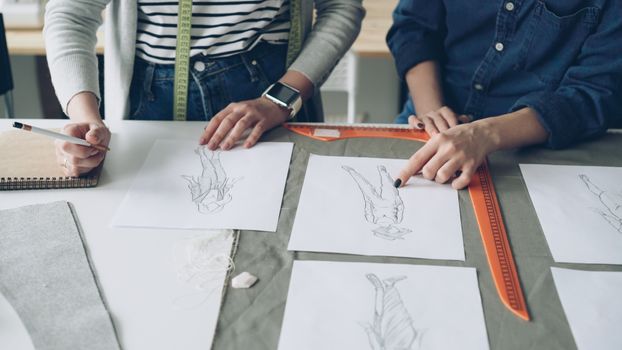
You spot a jacket in a store and immediately think, “The proportions would work better with a shorter hem and different fabric.” If you regularly notice how clothing fits, feels, functions, and communicates a style, you may be well suited to apparel design. But creativity alone does not secure apparel designer jobs. Employers also look for candidates who understand garment construction, production requirements, consumer needs, and the commercial realities of fashion.
Apparel designers develop clothing for specific customers, markets, seasons, and price points. Depending on the employer, they may work on activewear, childrenswear, denim, formal clothing, uniforms, outerwear, intimate apparel, or other product categories. The role combines visual creativity with research, technical documentation, teamwork, and problem-solving.
What does an apparel designer actually do?
An apparel designer helps guide a garment from the initial idea to a product that can be manufactured and sold. Daily responsibilities vary by company size and job level, but commonly include:
- Researching fashion trends, customer preferences, competitors, and retail markets
- Creating mood boards, color stories, sketches, and digital illustrations
- Selecting fabrics, trims, prints, finishes, and construction details
- Preparing technical drawings and specifications for manufacturers
- Collaborating with patternmakers, technical designers, merchandisers, and product developers
- Reviewing prototypes and participating in garment fittings
- Revising designs to improve fit, appearance, cost, or production feasibility
- Presenting collections to creative directors, buyers, clients, or sales teams
The job is not limited to drawing attractive clothes. Designers must consider whether a garment can be produced within budget, whether the fabric performs as intended, and whether customers are likely to buy it. For a broader look at these responsibilities, explore the role of an apparel designer in the fashion industry.
Common career paths in apparel design
Assistant or associate apparel designer
Many professionals begin as design assistants or associate designers. They may update sketches, organize fabric samples, create presentation boards, enter product information, and help prepare technical packages. These jobs offer practical exposure to seasonal calendars, fittings, sourcing, and communication with production teams.
Apparel designer
Mid-level designers usually take responsibility for particular product categories or parts of a collection. They research trends, develop concepts, select materials, create designs, and revise samples. At a smaller company, one designer may handle several categories and participate in both creative and operational decisions.
Technical designer
Technical designers focus on fit, measurements, garment construction, and consistency. They review samples, identify problems, write fitting comments, and communicate corrections to factories. This path can suit someone who enjoys clothing design but is especially interested in precision, patternmaking, and how garments fit different bodies.
Product developer
Product developers help turn design concepts into manufacturable products. Their work can include sourcing materials, requesting samples, tracking costs, managing timelines, and coordinating with vendors. Some apparel designers transition into product development because it combines design knowledge with business and production responsibilities.
Senior designer and design director
Experienced designers may become senior designers, design managers, or creative directors. These professionals establish the collection’s direction, approve designs, mentor team members, and coordinate with merchandising and executive leadership. Advancement generally requires a strong commercial record in addition to creative talent.
Freelance designer or brand founder
Freelancers may create collections, technical drawings, prints, or product specifications for multiple clients. Others launch independent labels. Self-employment provides creative control, but it also requires client management, pricing, marketing, budgeting, sourcing, and an understanding of contracts and intellectual property.
Skills employers want to see
Job advertisements may request different software or product experience, but several abilities appear across apparel designer jobs.
- Design and illustration: You should be able to communicate silhouette, proportion, color, and garment details through hand sketches or digital artwork.
- Garment construction: Knowledge of seams, finishes, patternmaking, draping, and sewing helps you create designs that can be produced successfully.
- Textile knowledge: Designers need to understand fabric weight, stretch, drape, durability, care requirements, and suitability for the intended garment.
- Digital tools: Employers frequently expect familiarity with computer-aided design, illustration, image-editing, and product lifecycle management systems.
- Technical documentation: Clear flats, measurement information, construction notes, color references, and material details reduce production errors.
- Trend and customer research: Strong designers interpret trends for a particular audience rather than copying whatever is currently popular.
- Communication: Apparel development involves frequent feedback from merchandisers, technical designers, suppliers, factories, and managers.
- Time management: Collections follow strict calendars, so designers often balance several styles, revisions, and deadlines at once.
- Commercial awareness: A successful design must match the brand, customer, price point, and sales strategy.
Do you need a fashion design degree?
A bachelor’s degree in fashion design, apparel design, fine arts, or a related discipline is a common entry route. Degree programs can provide structured training in textiles, illustration, patternmaking, sewing, digital design, and portfolio development. Internships may also help students gain experience and professional contacts.
However, employers ultimately need evidence that you can do the work. Candidates from other educational backgrounds may become competitive through specialized courses, technical training, internships, freelance projects, or experience in retail and apparel production. The U.S. Bureau of Labor Statistics overview of fashion designer careers reports that a bachelor’s degree is the typical entry-level education and emphasizes the importance of creativity and technical production knowledge.
How to build a portfolio that gets attention
Your portfolio should demonstrate how you think, not merely display finished illustrations. Tailor it to the position and include projects related to the employer’s market. A useful project can show research, inspiration, color development, fabric choices, initial sketches, final designs, technical flats, and photographs of completed garments.
Quality matters more than volume. A focused selection of strong, clearly presented projects is usually more effective than a large collection of unrelated work. Include enough variety to show versatility while maintaining a recognizable point of view. If you worked on a team, explain your contribution accurately.
A digital portfolio should be easy to navigate on both desktop and mobile devices. Check image quality, spelling, labels, and loading speed before applying. Avoid including confidential work from a previous employer unless you have permission to share it.
Where to find apparel designer jobs
Begin with major employment websites, professional networking platforms, and the career pages of apparel brands, retailers, manufacturers, uniform companies, sporting-goods businesses, and design agencies. Search related titles because employers do not always use “apparel designer.” Useful terms include:
- Assistant fashion designer
- Associate apparel designer
- Technical designer
- Activewear designer
- Product developer
- CAD designer
- Color or print designer
- Private-label designer
- Fashion design contractor
Fashion-focused recruiters and staffing agencies may offer temporary, freelance, and permanent opportunities. Industry events, alumni groups, trade shows, internships, and professional associations can also lead to positions that are not widely advertised. When networking, ask for information and portfolio feedback rather than immediately requesting a job.
How to improve your chances of being hired
Customize your resume and portfolio for every serious application. Use the employer’s terminology when it truthfully describes your skills, and identify the product category, customer, and technical requirements mentioned in the posting. A childrenswear company, for example, will value different portfolio evidence from a luxury eveningwear label.
During interviews, be prepared to explain your decisions, receive criticism, and discuss revisions. Employers want creative thinkers who can collaborate and respond constructively when a design must change because of fit, cost, timing, or manufacturing limitations.
Apparel design can be competitive, but the field offers more routes than the traditional image of a runway designer suggests. By combining a targeted portfolio, practical garment knowledge, digital proficiency, and persistent job searching, you can pursue opportunities that match both your creative interests and technical strengths.

