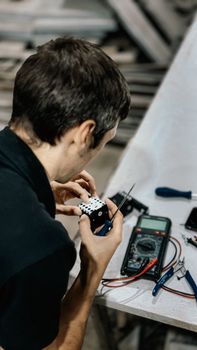
You may have seen a posting for an assembler and wondered whether the job is simply “putting parts together.” In reality, assembly jobs can involve reading diagrams, operating powered tools, inspecting products, recording production data, and working with automated equipment. Some positions are accessible to beginners, while others require technical training and exceptional precision.
These roles are found across manufacturing, from electronics and household appliances to vehicles, aircraft, machinery, and medical equipment. Understanding the work setting, physical demands, required skills, and hiring outlook can help you decide whether an assembly position fits your abilities and career goals.
What do workers in assembly jobs actually do?
Assemblers and fabricators build finished products or the components used in those products. The exact process depends on what the employer manufactures. One worker may connect small electronic components at a seated workstation, while another installs large mechanical parts using hoists and power tools.
Common responsibilities include:
- Reading work orders, blueprints, schematics, or illustrated instructions
- Positioning and aligning parts before fastening them
- Using screwdrivers, drills, soldering irons, rivet guns, or other tools
- Operating or monitoring production machinery
- Measuring parts to confirm that they meet specifications
- Inspecting components for damage, defects, or incorrect assembly
- Documenting completed work and reporting production problems
- Cleaning work areas and maintaining tools
Not every position follows a traditional conveyor-belt model. Team assemblers may rotate among several tasks, giving them broader knowledge of the production process. Experienced workers may also help build prototypes, troubleshoot recurring defects, train new employees, or suggest ways to improve efficiency.
Where do assemblers work?
Most assembly jobs are located in factories and manufacturing plants. Major employment areas include transportation equipment, machinery, fabricated metal products, electronics, and temporary staffing services. Smaller assembly operations may also be found in workshops, warehouses, laboratories, or specialized production facilities.
Working conditions vary considerably. Electronics assembly may take place in a clean, climate-controlled environment where employees handle tiny parts. Metal, automotive, or machinery assembly may involve louder equipment, larger components, protective gear, and more physically demanding work.
Schedules and production pace
Most assemblers work full time. Depending on the facility, shifts may include early mornings, evenings, nights, weekends, or overtime during periods of high demand. Some plants run continuously and assign workers to fixed or rotating shifts.
The pace may be determined by production targets, machine cycles, or the speed of an assembly line. Applicants should ask whether performance is measured by hourly output, product quality, attendance, or a combination of these factors. A job with realistic targets and thorough training may feel very different from one with constant time pressure.
Physical demands and safety
Assembly work can require prolonged sitting or standing, repeated hand movements, bending, reaching, climbing, or lifting materials. Repetitive motions, forceful exertion, and awkward postures are recognized ergonomic risk factors for muscle, tendon, and nerve problems. Proper workstation design, task rotation, lifting equipment, suitable tools, and scheduled breaks can help reduce these risks.
Employers may require safety glasses, gloves, hearing protection, steel-toed footwear, or other personal protective equipment. Workers should follow machine-guarding procedures, lifting instructions, and lockout rules rather than taking shortcuts to meet production goals. New or worsening pain, numbness, tingling, or weakness should be reported promptly under the employer’s safety procedures.
Core skills employers look for
Many entry-level assembly jobs do not require previous manufacturing experience, but employers still look for dependable candidates who can learn standardized processes. The following skills are especially valuable.
- Attention to detail: A loose fastener, reversed component, or damaged wire can affect an entire product.
- Manual dexterity: Workers often need steady hands and coordinated movements to handle tools and small parts.
- Mechanical awareness: Understanding how parts fit and move makes it easier to follow instructions and spot errors.
- Basic math: Assemblers may measure dimensions, count materials, read gauges, or work with fractions and decimals.
- Technical reading: More advanced positions require workers to interpret diagrams, blueprints, manuals, and specifications.
- Quality control: Strong assemblers check their own work rather than assuming every part is acceptable.
- Communication: Workers must clearly report defects, equipment problems, shortages, and safety concerns.
- Reliability: Production teams depend on employees arriving on time and completing assigned work consistently.
Basic computer skills are becoming more important as manufacturers use digital work instructions, barcode scanners, computerized inspection systems, and automated production equipment.
Education, training, and advancement
A high school diploma or equivalent is typically sufficient for many assembly jobs. Employers commonly provide on-the-job training covering tools, product specifications, quality standards, safety procedures, and production records. Training may last from several weeks to several months, depending on the complexity of the product.
Specialized roles in aerospace, electronics, motor vehicles, and precision manufacturing may prefer technical-school coursework, an associate degree, or industry certifications. Soldering, welding, blueprint reading, industrial maintenance, and robotics training can improve access to higher-skilled positions.
Experience can lead to work as a senior assembler, quality inspector, machine operator, maintenance technician, production lead, or supervisor. Workers who understand both manual assembly and automated systems may be particularly well positioned as factories adopt more advanced technology.
Pay and hiring outlook
According to the U.S. Bureau of Labor Statistics overview of assemblers and fabricators, the median annual wage for these workers was $45,450 in May 2025. Actual earnings differ by location, industry, shift, experience, and technical specialization. Aircraft, engine, and structural metal assembly positions often pay more than general assembly work, while temporary positions may pay less.
Overall employment of assemblers and fabricators is projected to grow 1% from 2025 to 2035, which is slower than the average for all occupations. Even with limited overall growth, the agency projects about 177,500 openings per year on average, largely because existing workers will change occupations or leave the workforce.
Automation will continue to handle some repetitive tasks, but it does not eliminate the need for people who can monitor equipment, perform precise work, identify defects, and solve production problems. Opportunities may be stronger in areas such as electronic and electromechanical assembly, including industries producing semiconductors, electric-vehicle components, and energy-storage equipment.
How to evaluate an assembly job posting
Read beyond the job title because “assembler” can describe very different roles. Check the required lifting capacity, shift, line speed, tools, training period, pay structure, and whether the position is temporary or permanent. Look for clear information about protective equipment, breaks, overtime, benefits, and opportunities for advancement.
During an interview, ask what a normal shift looks like, how quality is measured, and whether employees rotate between stations. If you are ready to compare assembly work with other openings, this guide to exploring jobs currently hiring near you can help organize your local search.
Assembly jobs can offer a practical route into manufacturing without requiring a four-year degree. The best candidates combine careful work habits, physical readiness, mechanical curiosity, and a willingness to learn new technology. Choosing a responsible employer with effective training and safety practices is just as important as meeting the job’s qualifications.