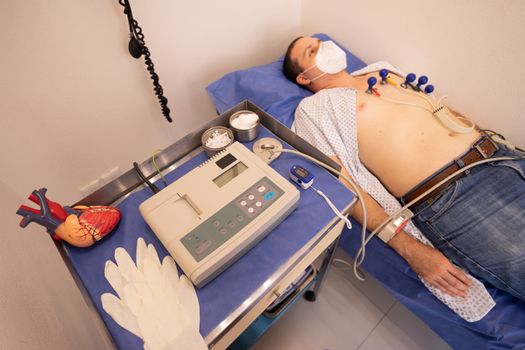
A patient arrives with chest discomfort, and within minutes a cardiovascular technician is placing electrodes, checking the signal and preparing an electrocardiogram for review. In another department, a cardiovascular technologist may be assisting with a cardiac catheterization or capturing ultrasound images of a beating heart. These roles require more than learning how to operate equipment. They demand knowledge of anatomy, careful patient monitoring, technical precision and the ability to remain calm when results appear abnormal.
A cardiovascular technician program prepares students for this work through classroom instruction, laboratory practice and supervised clinical training. However, programs differ significantly by specialty, length and credentialing pathway. Understanding those differences can help you choose training that matches the job you actually want.
What Does a Cardiovascular Technician Program Teach?
Most programs combine medical science with practical training in cardiovascular testing. The curriculum usually begins with foundational subjects before moving into specialized procedures and clinical experience.
Common courses include:
- Human anatomy and physiology
- Cardiovascular anatomy and disease
- Medical terminology
- Electrocardiography and cardiac rhythm interpretation
- Patient care and vital-sign measurement
- Pharmacology basics
- Medical ethics and patient privacy
- Equipment operation, safety and quality control
- Emergency response and cardiopulmonary resuscitation
Students learn how the heart’s electrical system produces a normal rhythm and how conditions such as conduction abnormalities or arrhythmias may change an ECG tracing. They are trained to recognize poor-quality recordings caused by loose electrodes, patient movement or incorrect lead placement. Identifying these problems matters because an inaccurate tracing can interfere with a clinician’s interpretation.
A program may also cover stress testing, ambulatory monitors and telemetry. Students learn to prepare patients, explain procedures in understandable language, obtain technically acceptable recordings and recognize findings that require immediate attention from a nurse or physician. Technicians collect and document diagnostic information, but they generally do not independently diagnose the patient.
Programs May Lead to Different Cardiovascular Careers
The term cardiovascular technician program can refer to several educational tracks. Before applying, examine the concentration rather than relying only on the program’s title.
Electrocardiography
ECG or EKG technician training focuses on resting electrocardiograms, ambulatory monitoring and exercise stress tests. Some certificate programs can be completed in less than a year, although length varies by school. Graduates may work in hospitals, cardiology offices, outpatient clinics or diagnostic testing departments.
Invasive Cardiovascular Technology
This specialty prepares students to assist in cardiac catheterization laboratories. Training may include sterile technique, cardiovascular medications, hemodynamic monitoring, radiation safety and catheter-based procedures. Students must learn to anticipate the needs of the clinical team while closely watching the patient’s heart rhythm, blood pressure and condition.
Cardiac Sonography
Cardiac sonographers use ultrasound equipment to produce images of the heart’s structures, movement and blood flow. The curriculum generally includes ultrasound physics, image acquisition, Doppler techniques and echocardiographic assessment. Because cardiac sonography is an imaging specialty, its education and credentialing requirements may differ from those for ECG technicians.
Vascular Technology
Vascular students learn to use noninvasive ultrasound methods to evaluate blood flow in arteries and veins. Coursework may cover vascular anatomy, blood-flow principles, Doppler imaging and testing for possible obstructions or circulation problems.
How Much Hands-On Training Should You Expect?
Practical experience is a central part of quality cardiovascular education. Students often begin in a skills laboratory, where they can practice electrode placement, equipment setup, patient positioning and infection-control procedures before working with patients.
During clinical rotations, students train under qualified professionals in settings such as hospitals, cardiology practices and diagnostic laboratories. Responsibilities grow as competency improves. Depending on the specialty, hands-on training may include:
- Obtaining accurate ECG recordings
- Measuring blood pressure, pulse and oxygen saturation
- Preparing patients for stress tests or ambulatory monitoring
- Recognizing artifacts and correcting equipment problems
- Monitoring patients during cardiovascular procedures
- Maintaining sterile fields in invasive settings
- Recording observations and procedure details
- Communicating changes promptly to the supervising clinician
Clinical training also develops interpersonal skills. Patients may be frightened, short of breath or uncomfortable. A technician must explain what will happen without making promises about results, preserve privacy and adjust communication for different ages, abilities and language needs.
Certificate or Associate Degree: Which Is Better?
A short certificate may be appropriate for someone pursuing focused ECG work or adding cardiovascular skills to an existing healthcare role. Broader cardiovascular specialties commonly require more extensive education, often through an associate degree or a postsecondary certificate designed for students who already have relevant education.
The U.S. Bureau of Labor Statistics career profile for cardiovascular technologists and technicians states that these professionals typically need formal education such as an associate degree or postsecondary certificate. It also notes that cardiovascular education usually includes supervised clinical experience.
Do not choose a program based on speed alone. Ask whether its curriculum prepares students for the intended specialty, whether clinical placements are arranged by the school and whether graduates meet eligibility requirements for relevant credentialing examinations.
Accreditation, Certification and Licensure Are Not the Same
These terms are easy to confuse. Accreditation evaluates an educational program against established standards. Certification or registration is awarded to an individual who meets a credentialing organization’s requirements, often including education, clinical experience and an examination. Licensure is legal permission from a state to practice a regulated profession.
Common cardiovascular credentials include:
- Certified Cardiographic Technician for ECG, Holter monitoring and stress testing
- Certified Rhythm Analysis Technician for cardiac rhythm monitoring
- Registered Cardiovascular Invasive Specialist for cardiac catheterization work
- Registered Cardiac Sonographer for echocardiography
- Registered Vascular Specialist for vascular ultrasound
Credential eligibility rules are not identical, and they can change. Some employers may require or strongly prefer certification, while state licensing requirements vary. Students should confirm current rules directly with the credentialing organization, state board and prospective employers before enrolling. Basic Life Support or CPR certification may also be required for clinical participation or employment.
How to Evaluate a Program Before Enrolling
Request written answers to practical questions rather than relying only on advertising. Important considerations include:
- The program’s institutional and programmatic accreditation status
- The specific cardiovascular concentration offered
- Credentialing examinations graduates are eligible to take
- Tuition, fees, uniforms, equipment and examination expenses
- Number and location of clinical rotations
- Graduation, credentialing-exam and job-placement outcomes
- Whether classes are offered during the day, evening or online
- Admissions prerequisites and waiting-list policies
Even when lectures are available online, cardiovascular skills cannot be mastered entirely through videos or reading. Confirm how the program provides laboratory instruction and direct clinical practice.
Is This Career Path a Good Fit?
Cardiovascular work may suit you if you enjoy technology but also want regular patient contact. Successful technicians are observant, dependable and comfortable following exact procedures. They may spend long periods standing, help move patients and work evenings, weekends or on-call shifts in facilities that operate around the clock.
The work can also be emotionally demanding. A routine test can quickly reveal a potentially urgent rhythm change, requiring the technician to follow protocol and alert the clinical team without alarming the patient. Attention to detail and emotional control are therefore as important as technical ability.
If you are comparing cardiovascular diagnostics with other technology-centered healthcare careers, this guide to becoming an MRI technician can help you consider differences in equipment, patient care and education.
Preparing for Enrollment
Helpful high school or prerequisite subjects include biology, anatomy, physics and mathematics. Programs may also require immunization records, a physical examination, background checks, drug screening or CPR certification before clinical placement.
A strong cardiovascular technician program should do more than teach students to produce a tracing or operate a machine. It should prepare them to protect patient safety, obtain reliable diagnostic information, communicate with the healthcare team and pursue the credential that fits their chosen specialty. By checking the curriculum, accreditation and credentialing pathway before enrolling, you can avoid costly surprises and enter training with a clear career goal.