Health & Science Courses

How to Become a Clinical Psychologist: Schooling, Credentials and a Realistic Timeline

You may be the person friends turn to when they are overwhelmed, or you may have seen a psychologist help someone manage depression, trauma, or a serious behavioral problem. Then comes the practical question: How long would it take to do that work professionally? Becoming a clinical psychologist is not a quick certification process. In

How to Become a Clinical Psychologist: Schooling, Credentials and a Realistic Timeline Read More »

Hardest Engineering Major: Choosing a Program That Matches Your Goals

You may enjoy math and science, yet still feel uneasy when someone warns you that a particular engineering degree is “the impossible one.” Is chemical engineering harder than electrical engineering? Does aerospace require exceptional math skills? The honest answer is that there is no universally hardest engineering major. Difficulty depends on the curriculum, the school,

Hardest Engineering Major: Choosing a Program That Matches Your Goals Read More »

Free Medical Assistant Training: Program Options and What Employers Expect

You may see an advertisement promising free medical assistant training and wonder, “Can I really start a healthcare career without paying tuition?” Sometimes the answer is yes—but “free” can mean different things. One program may cover every training expense, while another waives tuition but leaves you responsible for textbooks, uniforms, certification exams, or background checks.

Free Medical Assistant Training: Program Options and What Employers Expect Read More »

Family Medicine Residency: Training, Rotations and Career Preparation

You are finishing medical school and can picture yourself treating a child’s ear infection in the morning, adjusting an older adult’s diabetes treatment after lunch, and helping a new parent manage postpartum depression before the day ends. But can one residency truly prepare a physician for that much variety? A family medicine residency is designed

Family Medicine Residency: Training, Rotations and Career Preparation Read More »

Health Occupations: Diverse Career Paths, Training and Work Settings

You may picture a hospital bedside when someone mentions a health career. But what if you enjoy science without wanting direct patient contact, prefer working with technology, or need a training path that does not require eight years of school? Healthcare includes roles for many interests, education levels, personalities, and lifestyles. Understanding these diversified health

Health Occupations: Diverse Career Paths, Training and Work Settings Read More »

Counseling Training Programs: Credentials, Skills and Career Paths

You may be considering a weekend counseling certificate, a master’s degree, or an online course and wondering: Which one can actually prepare me to work with clients? The answer depends on your career goal. Short counseling trainings can strengthen communication or crisis-response skills, but becoming an independently licensed professional counselor generally requires graduate education, supervised

Counseling Training Programs: Credentials, Skills and Career Paths Read More »

Child Psychology Degree: Eligibility, Training and How to Apply

You may enjoy helping children manage big emotions, school stress, family change, or developmental challenges—but does that mean you should look for a child psychology degree? The answer is not always straightforward. In the United States, “child psychology” is usually a specialization within clinical, counseling, developmental, or school psychology rather than the name of one

Child Psychology Degree: Eligibility, Training and How to Apply Read More »

Careers for Biology Majors: Research, Healthcare and Industry Roles

You enjoy biology, but graduation is approaching and one question keeps coming up: “What can I actually do with this degree?” The answer is broader than many students expect. A biology major can lead to laboratory research, patient care, biotechnology, public health, environmental work, education, sales, and regulatory roles. Some positions are available with a

Careers for Biology Majors: Research, Healthcare and Industry Roles Read More »

What Does OB-GYN Stand For? Meaning, Training and Medical Specialty

You may be scheduling a pregnancy visit, looking for help with painful periods, or wondering why your doctor’s office uses both “OB” and “GYN.” If you have searched “what does a obgyn stand for,” the short answer is that OB-GYN stands for obstetrician-gynecologist. The grammatically correct phrase is “an OB-GYN,” and it describes a physician

What Does OB-GYN Stand For? Meaning, Training and Medical Specialty Read More »

Radiation Therapy Degree: Program Options and What Employers Expect

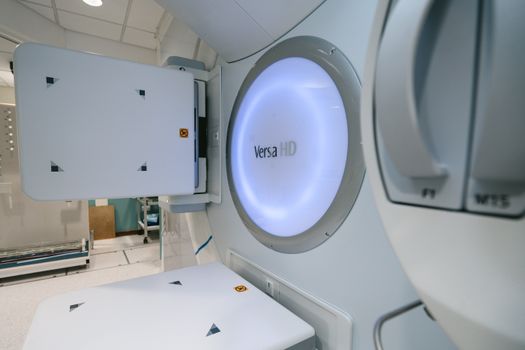
You may picture radiation therapy as a career that requires years of medical school. It does not. Radiation therapists are not physicians, but they do hold a highly technical patient-care role. They operate specialized equipment, position patients accurately, deliver prescribed radiation treatments, monitor reactions, and maintain detailed treatment records. The practical question is not whether

Radiation Therapy Degree: Program Options and What Employers Expect Read More »