You want to help your community, but your schedule is already packed with classes, homework, sports, and family responsibilities. You may also wonder whether shelving books or collecting canned food is genuinely useful—or simply a way to earn required service hours. The best community service ideas for high school students solve a real need while matching a student’s interests, abilities, and available time.
Meaningful service does not have to involve a major organization or a yearlong commitment. A small, well-planned project can have a noticeable impact. It can also help students practice communication, teamwork, leadership, problem-solving, and time management in situations outside the classroom.
What Counts as Community Service?
Community service generally means unpaid work performed to benefit other people, a nonprofit organization, a school, the environment, or the wider community. Schools may have their own rules about which activities qualify, who must supervise them, and how hours should be documented. Students should confirm these requirements before beginning.
Service is usually most meaningful when students understand who needs help and why. Instead of asking only, “How many hours can I earn?” ask, “What problem can I help address?” This shift encourages thoughtful participation rather than completing disconnected tasks.
Volunteering may benefit students as well as the people they serve. A national study examining volunteering and youth well-being found associations between volunteering and several positive health and well-being measures. However, the study was observational, so it could not prove that volunteering directly caused those outcomes.
Community Service Ideas for High School Students
Support Younger Students
- Tutor elementary or middle school students in reading, math, science, or another subject.
- Help children practice conversational English through an approved school or community program.
- Assist with supervised homework clubs, reading groups, or educational activities.
- Create age-appropriate study guides, vocabulary cards, or book discussion questions.
Tutoring strengthens patience, listening, planning, and the ability to explain complicated information clearly. Students should work through established programs that provide appropriate supervision and safeguarding procedures.
Help Older Adults
- Teach basic smartphone, email, video-calling, or internet skills.
- Write letters or make greeting cards for residents of senior living communities.
- Record oral histories with permission and under adult supervision.
- Help with organized social events, games, crafts, or technology workshops.
These projects can reduce social isolation while helping students build empathy and cross-generational communication skills. Because senior communities may have health, privacy, and visitor requirements, always contact the organization before arriving.
Protect the Environment
- Join a supervised park, trail, beach, or neighborhood cleanup.
- Plant native flowers in an approved community space.
- Help maintain a school or community garden.
- Organize a recycling or waste-reduction campaign at school.
- Create educational materials about conserving water or reducing single-use plastics.
Environmental service can be especially appealing to students interested in biology, public policy, agriculture, or sustainability. A strong project goes beyond a one-day cleanup by identifying the source of a problem and considering how to prevent it from returning.
Address Hunger and Basic Needs
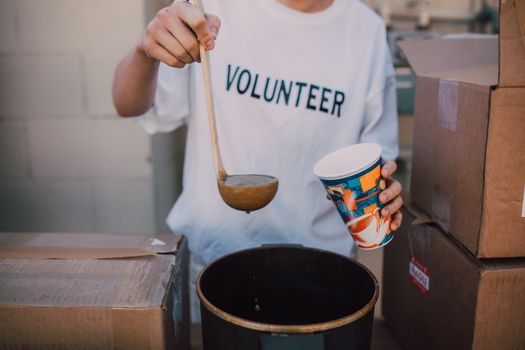
- Sort donations at a food bank, pantry, clothing closet, or hygiene-supply program.
- Collect items specifically requested by a local organization.
- Prepare care kits according to the receiving organization’s guidelines.
- Help maintain inventory or create clearly labeled storage systems.
- Design flyers or social media posts for an approved donation campaign.
Before holding a collection drive, ask the organization what it currently needs. Unrequested products can create extra work, take up storage space, or be unsuitable for distribution. Focused drives are often more useful than collecting a large assortment of items.
Use Creative or Technical Skills
- Design event posters, newsletters, or educational graphics for a nonprofit.
- Photograph an organization’s event with written permission.
- Help update simple website content or organize digital files.
- Perform music at an approved community event or senior center.
- Create art materials for children’s programs.
- Add captions or transcripts to educational videos.
Skills-based service allows students to contribute something they already do well. It may also produce work samples for a portfolio, although the community’s needs—not personal promotion—should remain the project’s priority.
Care for Animals
- Make approved enrichment toys or bedding for an animal shelter.
- Collect specific pet supplies requested by a rescue group.
- Help with adoption events in roles permitted for minors.
- Create educational materials about responsible pet ownership.
Shelters may limit direct animal handling based on age, training, insurance, or safety concerns. Students should never approach unfamiliar animals or perform cleaning, medical, or handling tasks without authorization and supervision.
Serve From Home
- Participate in a verified letter-writing or card-making program.
- Translate approved educational materials if fluent in another language.
- Create digital study resources for younger students.
- Assist a nonprofit with data entry, research, or content organization.
- Coordinate a supply drive with an adult and a recognized organization.
Remote service can work well for students with disabilities, transportation challenges, caregiving duties, or busy schedules. Confirm that the organization accepts virtual volunteers and can verify participation if documentation is required.
How to Choose the Right Project
Begin by listing issues you care about, skills you can offer, and the amount of time you can consistently give. Then contact schools, libraries, parks, food banks, shelters, faith communities, and established nonprofit organizations to ask about current needs and age requirements.
A useful project should be safe, realistic, and specific. “Help the environment” is too broad. “Recruit ten classmates for a supervised monthly cleanup and record the types of litter collected” provides a clearer goal. For additional context, students and families can explore the transformative impact of community service for high school students.
Skills Students Can Develop
- Communication through tutoring, outreach, presentations, and teamwork
- Leadership through planning, delegating, and motivating volunteers
- Organization through scheduling, inventory management, and recordkeeping
- Problem-solving through responding to practical community needs
- Reliability through arriving prepared and completing promised tasks
- Empathy through listening to people with different experiences
- Career awareness through exposure to education, health, environmental, nonprofit, and public-service settings
Students can track these skills in a simple reflection journal. After each activity, note what happened, what was learned, what was difficult, and what should change next time. This makes it easier to describe the experience honestly in scholarship, college, or job applications.
Plan for Safety and Accountability
Minors should involve a parent, guardian, teacher, counselor, or program supervisor when arranging service. Confirm transportation, emergency contacts, supervision, clothing requirements, privacy expectations, and any training that must be completed. Avoid hazardous equipment, unsafe locations, unsupervised home visits, and tasks outside the organization’s approved volunteer role.
Keep an accurate log of dates, hours, responsibilities, and the supervisor’s contact information. Never exaggerate participation. Consistency and responsibility are more meaningful than an inflated total.
Make the Experience Matter
The strongest community service projects are not necessarily the largest or most impressive. They respond to a genuine need, respect the people receiving support, and fit the student’s ability to follow through. A teenager who tutors one child every week may create more value than someone who launches an ambitious event and abandons it halfway through.
Start with one manageable commitment, listen to the organization, and remain open to feedback. Meaningful service grows from reliability, curiosity, and respect—and those qualities continue to matter long after the required hours are complete.