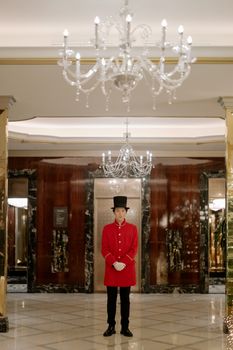
You may have seen a concierge calmly arranging transportation, recommending a restaurant, accepting a delivery, and answering a guest’s questions within the space of a few minutes. It can look effortless, but the work requires organization, local knowledge, discretion, and strong customer service skills. If you are exploring concierge vacancies, understanding what happens behind the desk—and what employers expect—can help you decide whether this career suits you.
What does a concierge actually do?
A concierge helps guests, residents, clients, or employees obtain information and access useful services. The exact responsibilities depend on the workplace. Hotel concierges may make restaurant reservations and arrange sightseeing trips, while residential concierges might coordinate deliveries, admit approved visitors, and report maintenance concerns.
According to the O*NET overview of concierge duties and skills, the occupation may involve providing directions, arranging transportation, making reservations, handling luggage or mail, organizing activities, and assisting people with special requirements.
Common day-to-day duties include:
- Greeting guests, residents, or customers professionally
- Answering questions in person, by telephone, or through email and messaging systems
- Recommending restaurants, attractions, shops, and local services
- Booking tickets, transportation, appointments, or reservations
- Receiving packages, mail, keys, or luggage
- Recording requests and following up to confirm completion
- Coordinating with housekeeping, maintenance, security, drivers, and other teams
- Responding calmly to complaints, delays, and unexpected problems
- Protecting private information and following workplace security procedures
A concierge usually arranges or coordinates services rather than personally providing every service requested. Success therefore depends on knowing whom to contact, communicating the request accurately, and checking that the customer received the expected result.
Where do concierges work?
Hotels and resorts are closely associated with concierge work, but they are not the only employers. Concierge vacancies may also be available in luxury apartment buildings, retirement communities, private clubs, office buildings, hospitals, shopping centers, travel businesses, and event venues.
The setting can significantly change the nature of the role. A corporate concierge may help employees book travel or locate business services. A residential concierge may spend more time managing visitors and deliveries. In a resort, the focus may be entertainment, excursions, dining, and guest experiences.
Some businesses also provide virtual concierge services through telephone, email, live chat, or an app. These positions require the same helpful attitude as face-to-face roles, along with clear written communication and confidence using digital booking and customer management systems.
What skills do employers look for?
Customer service
Concierges interact with people who may be excited, tired, rushed, disappointed, or unfamiliar with the area. Employers want candidates who remain polite and attentive in each situation. Good service means listening carefully, confirming what the person needs, and setting realistic expectations.
Communication
You must be able to explain directions, prices, schedules, and policies without creating confusion. Strong telephone manners and professional writing are also important because many requests arrive through calls, emails, or internal messaging platforms. Speaking another language can be valuable in international hotels and tourism-focused locations, although it is not required for every position.
Organization and attention to detail
A minor mistake can affect someone’s entire day. Booking the wrong date, recording an incorrect room number, or overlooking an accessibility request may cause serious inconvenience. Effective concierges keep accurate notes, prioritize urgent matters, and confirm important details before finalizing an arrangement.
Problem-solving
Plans do not always work as expected. A restaurant may be fully booked, a driver may be delayed, or an event may be canceled. Rather than simply saying that something is unavailable, a capable concierge looks for practical alternatives and explains them clearly.
Local and workplace knowledge
Guests expect useful recommendations, not guesses. Concierges should learn about transportation options, nearby services, popular attractions, building facilities, opening hours, and workplace procedures. This knowledge must be updated regularly because schedules, businesses, and policies can change.
Discretion
Concierges may handle guest names, apartment numbers, travel details, special occasions, and personal requests. Employers therefore value maturity, confidentiality, and sound judgment. Information should only be shared with authorized people and through approved channels.
Do you need qualifications or previous experience?
Many entry-level positions accept applicants with a high school diploma or equivalent. A college degree is not always necessary, although education in hospitality, tourism, business, or communications may be helpful. Requirements vary by employer and by the level of responsibility involved.
Previous experience in a hotel is useful but not the only relevant background. Work in retail, restaurants, reception, call centers, travel services, event coordination, property management, or administrative support can demonstrate transferable skills. Employers are often interested in examples showing that you can assist customers, manage several requests, solve problems, and remain composed under pressure.
Certain employers provide on-the-job training covering reservation software, local recommendations, safety procedures, privacy rules, and service standards. Senior or luxury concierge roles are more likely to require established industry contacts, extensive destination knowledge, or several years of hospitality experience.
How to prepare a strong application
Start by reading the job description carefully. Concierge positions with similar titles can have very different duties, schedules, and customer expectations. Match your application to the specific workplace rather than submitting the same general résumé everywhere.
Your résumé should highlight measurable responsibilities and outcomes where possible. Instead of writing that you “helped customers,” explain that you handled daily inquiries, coordinated reservations, resolved complaints, or maintained visitor and delivery records. Include relevant software, language abilities, knowledge of the local area, and experience handling confidential information.
A short cover letter can explain why you are interested in the employer and how your background fits the role. If you need a broader view of the industry before applying, read this guide to career opportunities in concierge services.
What should you expect at the interview?
Interviewers often use scenario-based questions to see how you think. You might be asked what you would do if a guest requested an unavailable reservation, complained about a delay, or asked for information you were not authorized to disclose.
Prepare examples showing how you have handled a difficult customer, balanced competing priorities, corrected an error, or found an alternative when the original plan failed. Use a clear structure: describe the situation, explain what action you took, and state the result.
Presentation matters because concierges represent the workplace. Arrive on time, dress appropriately for the organization, speak clearly, and treat everyone you meet with courtesy. These details provide direct evidence of how you may interact with customers.
Is concierge work right for you?
This career can suit people who enjoy variety, personal interaction, and practical problem-solving. It may be less suitable if you strongly prefer predictable tasks or find frequent interruptions difficult. Depending on the setting, shifts may include early mornings, evenings, weekends, and holidays. Some roles also involve long periods of standing.
When comparing concierge vacancies, look beyond the job title. Review the duties, training, shift pattern, location, pay structure, uniform requirements, and opportunities for advancement. The best position is one that matches both your service strengths and the type of environment in which you work well.