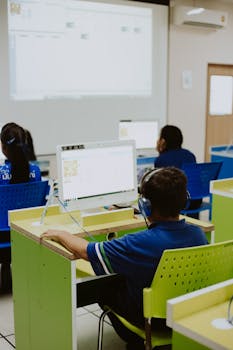
In a world increasingly driven by technology, teaching kids to build computers can be an inspiring and transformative passion project. Not only does it provide practical, hands-on experience with hardware and software, but it also nurtures creativity and problem-solving skills. This project is a unique opportunity for children to engage with technology in a meaningful way, encouraging them to explore their interests and develop a strong foundation in STEM (Science, Technology, Engineering, and Mathematics).
Why Teach Kids to Build Computers Passion Project?
Building a computer from scratch can be a profoundly educational experience. Unlike simply using technology, this passion project allows children to see how technology works from the inside out. It encourages them to ask questions and seek out answers, fostering a sense of curiosity and learning. By dissecting and constructing their own PCs, kids can learn about different components and how they interact, enhancing their understanding of computing systems.
Moreover, this project cultivates technical skills that are crucial in today’s job market. As automation and digital technology become more prevalent, the ability to understand and work with computers is increasingly valuable. By starting young, children can develop confidence in their capabilities, preparing them for advanced studies or careers in technology. For those interested in further education, exploring which computer courses can best prepare for careers in technology might be beneficial. For more information, our article on choosing the best computer course for government job preparation can be a helpful resource.
Nurturing Creativity Through Computer Building
A fundamental aspect of teaching kids to build computers is the enhancement of creativity. When children are given the freedom to choose components, design layouts, and customize features, they exercise their innovative and creative muscles. This practical application of creativity can have long-lasting effects on a child’s academic and personal development. It allows for experimentation, failure, and learning from mistakes—a core part of any creative process.
Creativity also fosters better problem-solving skills. As children build their computers, they may encounter challenges such as compatibility issues, software bugs, or other technical glitches. These hurdles teach resilience and perseverance, encouraging kids to refine their troubleshooting abilities, which are essential skills in any field.
The Educational Benefits
Beyond creativity and technical skills, teaching kids to build computers offers broad educational benefits. It integrates multiple disciplines such as mathematics, physics, and computer science, providing a holistic educational experience. This interdisciplinary approach helps students see the connections between different fields and understand how they complement each other.
Additionally, this project can improve critical thinking and analytical skills. As they figure out how to choose the right parts and assemble them, kids learn to analyze information and make informed decisions. Such skills are valuable not only in technology careers but also in everyday life. To explore more about educational methods, visit this comprehensive resource on education.
Building a Future in Technology
For some children, learning to build a computer can ignite a passion for technology, guiding their future educational and career choices. It provides them with practical skills and a sense of achievement that can motivate them to pursue further learning in technology. As the tech industry continues to grow, having a foundational understanding of computers can be advantageous in a variety of roles, from software development to network engineering.
Engaging in this passion project can also align with modern educational trends that emphasize experiential learning. Schools and educators are increasingly recognizing the importance of hands-on projects that allow students to apply what they have learned in real-world scenarios. This type of learning is dynamic and engaging, keeping pace with technological advancements and preparing students for an ever-changing landscape.
Conclusion: Teach Kids to Build Computers Passion Project
The journey of teaching kids to build computers is about much more than assembling hardware; it’s about sowing the seeds for a lifelong interest in technology and innovation. This passion project is an enriching educational experience that empowers children with critical skills, creativity, and curiosity for future challenges. As they undertake this project, children not only learn about computers but also develop a proactive approach to problem-solving and learning. For those interested in deepening their understanding, exploring further educational resources can be a next step.
- Building computers as a passion project nurtures creativity and problem-solving skills.
- It provides hands-on, interdisciplinary educational benefits.
- Encourages interest in STEM and technology careers.
- Supports critical thinking and real-world application of knowledge.
- Aligns with experiential learning trends in modern education.
FAQ
What age is appropriate to start teaching kids to build computers?
Children as young as 10 years old may begin learning, depending on their level of interest and understanding. Supervised environments are recommended for younger learners.
What components are necessary for building a computer?
Key components include a motherboard, processor (CPU), memory (RAM), storage (HDD or SSD), power supply, and a case. Additional peripherals like a monitor, keyboard, and mouse are also necessary to complete the setup.
How long does it take to build a computer?
The time required can vary based on experience, but typically it can take a few hours to a couple of days, especially if beginners are learning as they go.
Are there any safety concerns when building a computer?
Yes, it is important to handle components with care to avoid static damage. Wearing an anti-static wristband or working on a static-free surface can help mitigate this risk.
Can building a computer save money compared to buying a pre-built one?
In many cases, building a computer can be more cost-effective, allowing for tailored specifications and future upgrades, but this can depend on the specific components chosen and current market prices.