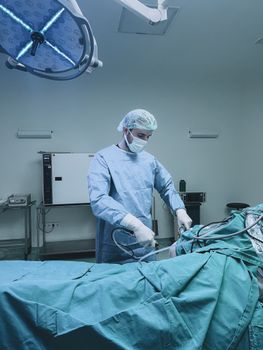
A patient is waiting for a colonoscopy, the physician is preparing to begin, and several pieces of specialized equipment must be ready, functioning, and safe to use. The person helping everything run smoothly may be an endoscopy technician. Although patients may only see this worker briefly, the technician’s preparation before the procedure and equipment care afterward can directly support patient safety.
If you are considering this career, you may wonder whether it involves direct patient care, how much training it requires, and whether you would spend your entire day cleaning instruments. The short answer is that the job commonly combines patient support, procedure-room assistance, technical troubleshooting, inventory management, documentation, and detailed endoscope reprocessing.
What does an endoscopy technician do?
An endoscopy technician supports physicians and nurses during procedures that use an endoscope, a specialized instrument designed to let clinicians view areas inside the body. Endoscopy departments may perform colonoscopies, upper gastrointestinal procedures, bronchoscopies, and other examinations or treatments, depending on the facility.
Exact responsibilities vary by employer. An endoscopy technician may:
- Prepare the procedure room, endoscopes, monitors, accessories, and supplies.
- Confirm that equipment is connected correctly and passes required safety checks.
- Help position or transport patients under the direction of licensed clinical staff.
- Place monitoring equipment, such as blood pressure cuffs or pulse oximeter sensors, when permitted by training and facility policy.
- Pass accessories or assist the physician and nurse during a procedure.
- Label, handle, or transport specimens according to established procedures.
- Clean, inspect, disinfect, sterilize, dry, and store reusable equipment as required.
- Record reprocessing information and maintain supply inventories.
- Report damaged equipment, leaks, missing parts, or irregular test results.
Technicians do not diagnose medical conditions or decide how a patient should be treated. Those responsibilities belong to licensed clinicians. However, technicians need enough knowledge of anatomy, medical terminology, infection prevention, and equipment operation to anticipate the team’s needs and recognize potential problems.
Why equipment reprocessing is a major responsibility
Flexible endoscopes contain long, narrow internal channels that can be difficult to inspect and clean. During a procedure, these instruments may come into contact with blood, tissue, mucus, or other biological material. Simply wiping the outside is not enough.
Reprocessing generally includes immediate pre-cleaning, leak testing when required, manual cleaning, rinsing, visual inspection, high-level disinfection or sterilization, drying, and protected storage. The technician must follow the instructions for the specific endoscope, cleaning product, disinfectant, and automated reprocessor being used. Skipping a step, using an incorrect connector, or allowing debris to remain can interfere with effective disinfection.
The CDC recommendations for endoscope disinfection and sterilization emphasize meticulous cleaning before disinfection, device-specific instructions, leak testing, appropriate protective equipment, and regular competency testing for reprocessing personnel.
This part of the work suits people who are comfortable following detailed procedures without taking shortcuts. It may feel repetitive at times, but every cycle involves equipment that could soon be used for another patient.
What is a typical workday like?
A shift often begins with checking the procedure schedule and confirming that rooms are stocked. The technician may test equipment, prepare accessories, and make sure enough properly processed endoscopes are available.
During procedures, the pace can become fast. A technician may help reposition a patient, manage tubing, prepare a retrieval device, or respond when the team needs another instrument. Between cases, the room must be turned over while contaminated equipment moves safely into the designated reprocessing area.
Much of the day may be spent standing, walking, reaching, bending, and handling delicate equipment. Technicians can encounter unpleasant odors and biological material. Reprocessing also may involve chemical disinfectants that can irritate the skin, eyes, or respiratory system, making ventilation, training, and personal protective equipment essential.
Work schedules depend on the setting. Outpatient centers may offer mostly daytime weekday hours, while hospitals may require early mornings, evenings, weekends, holidays, or on-call coverage for urgent procedures.
Education and training requirements
There is no single path into every endoscopy technician job. Some employers hire applicants with a high school diploma or equivalent and provide extensive on-the-job training. Others prefer candidates who have completed a healthcare certificate, sterile processing program, surgical technology program, or associate degree.
Job postings may also request previous experience as a nursing assistant, medical assistant, sterile processing technician, patient care technician, or surgical technologist. Basic Life Support certification is commonly preferred or required for positions involving patients.
Training should cover subjects such as:
- Medical terminology and basic anatomy.
- Infection prevention and standard precautions.
- Endoscope construction and safe handling.
- Manual cleaning and high-level disinfection.
- Manufacturer instructions for use.
- Hazardous chemical safety.
- Patient privacy and professional communication.
- Documentation and equipment tracking.
Voluntary credentials include Certified Endoscope Reprocessor and Certified Flexible Endoscope Reprocessor certifications. Eligibility rules generally involve an examination and may include documented hands-on experience. Certification requirements can change, so applicants should review current employer, state, and certifying-organization expectations before enrolling in training.
Skills that matter most
Attention to detail is one of the most important qualities in an endoscopy technician. Reprocessing is a sequence-dependent process, and a technician must notice residue, equipment damage, failed leak tests, incorrect connections, or incomplete records.
Manual dexterity is also valuable because endoscopes and accessories contain small, delicate components. The technician needs to work efficiently without forcing, dropping, coiling, or otherwise damaging expensive equipment.
Communication matters just as much as technical ability. Patients may be nervous, uncomfortable, or still affected by sedation. A calm manner can make routine interactions less stressful. Technicians must also communicate clearly with nurses, physicians, sterile processing personnel, and supervisors when a room is ready or an instrument must be removed from service.
Pay and career outlook
Endoscopy technician pay varies by region, experience, certification, shift, and workplace. National wage sources often group these workers with broader healthcare support occupations rather than reporting a salary for endoscopy technicians alone. For that reason, local hospital job postings and regional wage information usually provide a more realistic picture of potential earnings.
Experience can lead to senior technician, lead reprocessor, educator, equipment coordinator, or department supervisor roles. Additional education may open pathways into surgical technology, nursing, sterile processing leadership, or other allied health careers. If you are comparing technical healthcare options, this guide to becoming an MRI technician explains another career centered on patient care and specialized medical equipment.
Is this career a good fit for you?
An endoscopy technician role may be a strong match if you enjoy hands-on healthcare work, precise routines, teamwork, and technical equipment. It can provide meaningful patient contact without requiring the longer education associated with many licensed clinical professions.
The job can also be demanding. You must remain focused during repetitive cleaning tasks, work around bodily fluids, protect yourself from chemical exposure, and keep up when procedures are scheduled closely together. Errors may have serious consequences, so reliability is more important than rushing.
Before choosing a program, review several job listings in your area. Compare required education, certifications, physical demands, schedules, and whether the position focuses primarily on procedures, reprocessing, or both. That research can help you select training that matches the work you actually want to do.