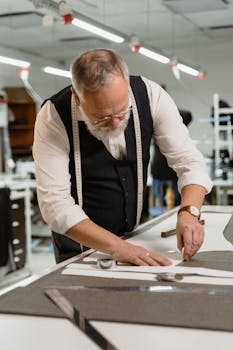
In today’s fashion-forward world, many people find themselves asking, “What does a tailor do?” Tailors play a crucial role in the fashion industry by designing, making, and altering clothing to ensure the perfect fit for their clients. Whether it’s crafting bespoke suits or adjusting a dress for an upcoming event, the skills of a tailor are both artistic and technical. This article will delve into the unique responsibilities of a tailor and highlight the intricacies involved in their craft.
What Does a Tailor Do?
Tailors are skilled artisans who specialize in making and altering garments to achieve an optimal fit. They work with various fabrics and styles, creating custom-fitted clothing for clients. A tailor’s expertise extends beyond simply sewing; they understand fabric types, design trends, and body measurements, allowing them to produce highly personalized garments.
Key Responsibilities of a Tailor
Understanding what tailors do involves recognizing several specific skills and duties. The primary responsibility is garment creation. This includes choosing patterns, cutting the fabric, and sewing pieces together. Each step requires precision and attention to detail. Furthermore, tailors consult with clients to ascertain personal style preferences and take accurate measurements to ensure a perfect fit.
Alterations and Repairs
Another significant aspect of a tailor’s job is garment alteration. Tailors adjust existing attire to improve fit or style, often replacing zippers, buttons, or hems. They are skilled in resizing dresses, suits, and other clothing types to erode fitting issues. Performing repairs such as mending tears or patching worn areas also falls under their competencies, showcasing their versatility in managing various clothing challenges.
Fashion and Design Insight
Tailors must stay informed about the latest fashion trends, which helps them advise clients on designing or selecting suitable styles. They leverage this fashion knowledge to create garments that not only fit perfectly but also align with contemporary trends. For those interested in fashion design, exploring educational opportunities overseas could be beneficial. Check out our guide on studying at the best art schools in Europe for further inspiration.
The Bespoke Tailoring Process
Creating custom garments involves a detailed process known as bespoke tailoring. This process is entirely about personalization, focusing on achieving the perfect garment for each individual. It begins with a consultation, followed by fabric selection and measurements. Afterward, the tailor constructs a basic garment for initial fittings, making adjustments as needed. This iterative process ensures that the final product meets the client’s expectations in terms of fit, comfort, and style.
The Importance of Materials
A crucial element of a tailor’s job is understanding materials. Different fabrics have distinctive properties and require specific handling techniques. Cotton, wool, linen, and silk are among the common materials tailors use. Each material delivers a unique aesthetic and function, influencing how the garment will be constructed and worn. By selecting the right fabric, tailors ensure that a garment will look good and withstand regular wear.
The Modern Tailor
Todays’ tailors often use modern technology alongside traditional methods to craft exceptional clothing. Computer-aided design (CAD) software supports pattern design and precision cutting, while advanced sewing machines offer better efficiency. Some tailors also integrate sustainable practices by sourcing eco-friendly materials and minimizing waste, reflecting a growing trend in the fashion industry toward sustainability.
Overall, understanding what a tailor does reveals their vital role in fashion and design, offering insights into garment crafting from inception to final fitting. Their expertise ensures that clothing is not only functional but also aesthetically pleasing, underscoring the elegance of personalized fashion.
- Tailors specialize in crafting and altering garments for ideal fit and style.
- They work with numerous fabric types and use both traditional and modern techniques.
- Bespoke tailoring involves a personalized process from consultation to final product.
- Understanding materials is key to successful tailoring and satisfying diverse client needs.
- Modern tailors integrate technology and sustainable practices in their craftsmanship.
FAQ
What skills does a tailor need?
Tailors require skills such as fine attention to detail, proficiency in sewing, strong hand-eye coordination, and knowledge of garment construction. Additionally, understanding fashion trends and customer service skills are essential for successful tailoring.
How do tailors ensure a perfect fit?
Tailors ensure a perfect fit by taking precise measurements, engaging in multiple fittings, and making iterative adjustments on the garment until it meets the client’s preferences.
Can a tailor work with any fabric?
While tailors can work with various fabrics, the complexity and handling of each type vary. Tailors are trained to understand the properties of different materials, allowing them to select suitable fabrics for specific designs and functions.
How long does it take to make a custom garment?
The time it takes to make a custom garment depends on the complexity of the design and fabric. Generally, it can range from a few weeks to several months, particularly if multiple fittings or intricate detailing are involved.
Where can I learn more about tailoring and fashion?
For more in-depth information about tailoring and the broader world of fashion, visiting credible educational resources is beneficial. For a general overview, you might find this Wikipedia page on education useful as a starting point.