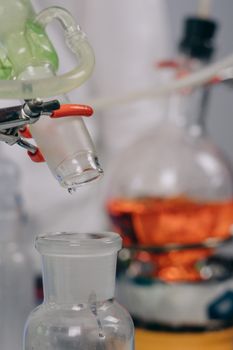
Homogeneous chemistry is a branch of chemistry that deals with reactions involving substances that are mixed uniformly in a single phase. This can be solid, liquid, or gas, but most commonly refers to reactions occurring in a liquid phase. Understanding homogeneous chemistry is essential for industrial applications and academic research, as the uniform composition ensures that reactions occur consistently throughout the solution.
Defining Homogeneous Chemistry
To define homogeneous chemistry, one must first understand what distinguishes it from heterogeneous chemistry. The key characteristic of homogeneous chemistry is the uniformity of all components within a reaction mixture. In contrast, heterogeneous chemistry involves components in different phases, such as a solid catalyst and liquid reactants. In homogeneous systems, the uniform nature of the reactants allows for easier control and optimization of reaction conditions.
The Importance of Homogeneous Chemistry
The predictability and control provided by homogeneous chemistry make it invaluable in both academic and industrial settings. Homogeneous reactions are easier to study and model, which benefits both theoretical understanding and practical implementations. Industries rely on homogeneous chemistry for its precision and efficiency, leading to optimized processes and reduced waste.
Applications of Homogeneous Chemistry
Homogeneous catalysis is one of the most significant areas where homogeneous chemistry is applied. Catalysts, typically soluble in the reaction medium, play a crucial role in speeding up chemical reactions without being consumed. This is widely used in the production of pharmaceuticals, polymers, and fine chemicals. For instance, the synthesis of specific drugs often relies on homogeneous catalytic processes to achieve desired purity and reaction rates.
Apart from catalysis, homogeneous reactions are crucial in academic research, providing insights into reaction mechanisms and kinetics. They are also utilized in environmental applications, such as the reduction of pollutants and the development of new materials.
Challenges in Homogeneous Chemistry
Despite its advantages, homogeneous chemistry presents several challenges. One major concern is the separation of the catalyst from the reaction mixture post-reaction, which can be both costly and technically demanding. This separation is crucial because any catalyst left in the product can affect its quality and the reactor setup can limit scalability in industrial processes.
Another challenge is related to solvent use and recovery. Homogeneous reactions often require specific solvents that must be recycled to minimize environmental impact and reduce costs. Research continues to optimize these processes, developing greener solvents and more efficient recovery methods.
Advancements and Innovations
Recent advancements in homogeneous chemistry focus on improving catalyst selectivity and efficiency. With innovations such as computer modeling, scientists can now predict catalyst behavior and tailor-make catalysts for specific reactions. Additionally, the development of environmental-friendly solvents and the integration of renewable energy sources in reaction processes are setting new standards for sustainable chemistry.
Furthermore, advancements in spectroscopic techniques have enabled real-time monitoring of homogeneous reactions, providing better control and understanding of their dynamics and improving scalability for industrial applications.
For those interested in expanding their knowledge of fields related to homogeneous chemistry, there are numerous online courses available from top universities.
Define Homogeneous Chemistry: Conclusion
In summary, when we define homogeneous chemistry, we recognize its critical role in chemical reactions where uniformity of phase is key. Its applications in catalysis, environmental solutions, and research continue to advance, although challenges remain regarding catalyst separation and solvent management. The field’s evolution promises more efficient and sustainable chemical processes.
- Homogeneous chemistry involves reactions in a single phase.
- Applications include catalysis, environmental processes, and research.
- Main challenges involve catalyst separation and solvent management.
- Innovations focus on catalyst efficiency and sustainable processes.
- Resources for learning include online courses and research articles.
What is the primary advantage of homogeneous chemistry?
The primary advantage of homogeneous chemistry is its uniformity, which allows for easier control of reaction conditions and optimization of processes.
How does homogeneous catalysis differ from heterogeneous catalysis?
Homogeneous catalysis involves catalysts that are in the same phase as reactants, typically in solution, while heterogeneous catalysis involves catalysts in a different phase, like solids in a liquid reaction mixture.
What challenges are faced in homogeneous catalytic reactions?
Challenges include the separation of catalysts from the product and the efficient recycling of solvents used in the reactions.
Why is homogeneous chemistry important in the pharmaceutical industry?
It is important because of its precision and ability to produce high-purity pharmaceuticals essential for medical use.
Where can I learn more about homogeneous chemistry?
More information can be found through educational resources such as online courses and academic articles. For general knowledge, the Wikipedia Education page provides further insights into chemistry and related fields.