
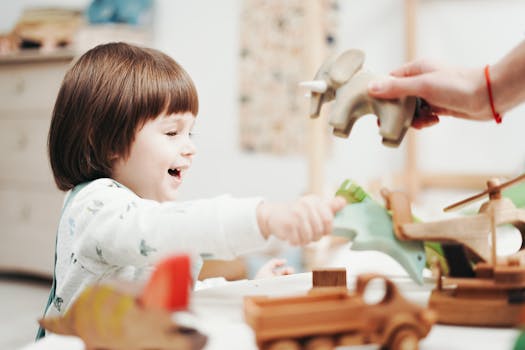
In the realm of child development, understanding the piaget sensorimotor substages offers invaluable insights into how infants learn and interact with their environment in their earliest years. These substages, part of the sensorimotor stage identified by Jean Piaget, lay the foundation for cognitive development during the first two years of life. Piaget’s meticulous research categorized this period into six distinct phases, each representing a unique aspect of a child’s cognitive growth.
Understanding Piaget Sensorimotor Substages
Jean Piaget’s sensorimotor stage of development is a fascinating area of child psychology that delves into how infants transition from reflexive responses to complex, purposeful actions. The sensorimotor stage by Piaget is the first of four developmental stages and is characterized by how children experience and act upon their world through sensory and motor interactions.
The Six Piaget Sensorimotor Substages
Piaget divided the sensorimotor stage into six substages, each showcasing a progression in the child’s cognitive abilities. These substages include:
- Reflexive Schemes (Birth to 1 Month): Newborns interact with the world through automatic reflexes. Actions like sucking and grasping are predominant as they explore their surroundings in a basic way.
- Primary Circular Reactions (1 to 4 Months): This substage focuses on repetitive actions that are pleasurable, such as thumb sucking. Babies begin to coordinate sensations and new schemas.
- Secondary Circular Reactions (4 to 8 Months): Infants start to notice and respond to their external environment with intentional actions. They might shake a rattle deliberately to hear the sound.
- Coordination of Secondary Circular Reactions (8 to 12 Months): Babies use their growing cognitive skills to coordinate different schemas and begin to show goal-directed behaviors. Object permanence, the understanding that objects continue to exist even when they cannot be seen, starts to develop.
- Tertiary Circular Reactions (12 to 18 Months): Curiosity and experimentation become evident as toddlers explore new possibilities of objects, such as testing different actions to get different results from toys.
- Mental Representation (18 to 24 Months): Children begin to develop mental symbols and internalize experiences. Simple imaginative play emerges, and children can mentally visualize events or objects, marking the transition to the preoperational stage.
The Significance of Sensorimotor Stage in Child Development
The sensorimotor stage is pivotal as it sets the groundwork for future cognitive development. During this period, children learn to differ sensations from actions, leading to significant milestones such as crawling, walking, and basic problem-solving skills. Piaget’s framework helps educators and psychologists understand the natural sequence of development and creates a foundation for interventions that enhance cognitive abilities in early childhood.
For those pursuing a career in early childhood education, a deep understanding of these cognitive processes is crucial. Such knowledge aids in developing tailored educational strategies that align with a child’s developmental stage. Exploring career options in this impactful field can be both rewarding and intellectually fulfilling.
Critiques and Modern Perspectives
While Piaget’s theory has profoundly influenced educational psychology, it is not without critiques. Some modern researchers argue that Piaget underestimated children’s cognitive abilities and that in some instances, children can move through these stages at a different pace than posited. Despite this, the sensorimotor stage remains a critical concept, continually used to inform current practices and research in developmental psychology.
Newer studies, aided by technological advancements, continue to explore the nuances within Piaget’s stages, providing further depth and understanding. As knowledge in this domain expands, so does the potential for refined educational approaches and child development strategies.
Practical Applications and Observations
Educators and parents can apply these insights in practical settings to enhance the learning experiences of infants and toddlers. Observing children during play can provide clues about which substage they are in, thereby allowing for supportive interventions that encourage progression through each phase.
The importance of a stimulating environment cannot be overstated. Providing children with opportunities to explore and interact with their surroundings fosters the natural development of their cognitive and motor skills. To learn more about sensorimotor stage psychology definitions and further enhance your understanding, consider exploring additional resources and studies on child development.
If you are interested in delving deeper into how these principles affect educational strategies and child psychology, this article by Wikipedia offers an extensive overview of Piaget’s life and work.
Concluding Thoughts
The piaget sensorimotor substages provide a window into the early cognitive world of infants, allowing educators, psychologists, and parents to appreciate and support the complex processes of early learning. As we continue to build upon Piaget’s foundational theories, we can better appreciate the intricate journey of child development and refine our approaches to nurturing young minds.
- Piaget’s sensorimotor stage is divided into six substages, each critical for understanding early childhood cognitive development.
- These substages illustrate the progression from reflexive actions to deliberate problem-solving.
- Understanding these stages assists parents and educators in providing age-appropriate environments and activities.
- Critiques of Piaget’s model offer ongoing discussions on the pace and sequence of developmental change.
- Current research continues to evolve Piaget’s initial theories to fit modern educational and psychological contexts.
FAQs
What are the Piaget sensorimotor substages?
The Piaget sensorimotor substages are part of Jean Piaget’s theory of cognitive development. They describe the progression of a child’s cognitive abilities from birth to about two years, dividing this period into six distinct phases focused on sensory and motor interactions.
Why is the sensorimotor stage important?
The sensorimotor stage is important because it represents the foundational period where children gain knowledge through sensory experiences and motor activities. This stage is critical for the development of early problem-solving skills and the understanding of the world.
At what age do children complete the sensorimotor stage?
Children typically complete the sensorimotor stage by the age of two. The sensory and motor exploration during this stage generally transitions into the preoperational stage, where more sophisticated mental representations and symbolic play begin.
How does Piaget’s theory apply to modern education?
Piaget’s theory provides guidance on how children think and learn, which can inform teaching methods and curriculum designs in early childhood education. Understanding these stages helps educators create developmentally appropriate learning experiences.
Are there criticisms of Piaget’s sensorimotor stages?
Yes, while Piaget’s work is foundational, some researchers argue that his stages might not account for the variability in children’s cognitive development. Advanced research and observations suggest children may develop some abilities sooner than Piaget proposed.

