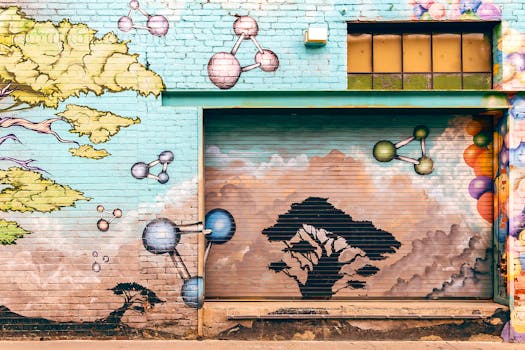
Mural art, often seen as an expressive and expansive form of artistic expression, is more than just large-scale paintings on walls. So, what is mural art? In essence, it is a method of storytelling and communication, painted on public spaces, offering communities a visual narrative that reflects their history, culture, and aspirations. Whether within urban landscapes or rural settings, murals captivate and transform their surroundings, breathing life into otherwise mundane environments.
What is Mural Art?
Mural art is a form of artwork that involves painting or applying artwork directly on a permanent surface, such as a wall or ceiling. These large-scale works are often created by individuals or collaborative teams, showcasing a unique blend of artistic skill, social commentary, and community engagement. Murals have a rich history that dates back to prehistoric times, with evidence found in ancient caves and ruins, evolving through to the Renaissance’s elaborate frescoes, and into modern public art movements.
The Cultural Significance of Mural Art
Murals serve as powerful cultural symbols within communities. They often depict historical events, celebrate cultural heritage, and address social and political issues. By transforming public spaces, mural art helps foster a sense of identity and belonging among residents. Furthermore, murals are instrumental in educating the public, sparking conversations on topics that are important to the community.
Impact on Local Communities
Mural art positively impacts local communities in multiple ways. Economically, murals can attract tourists, boost local business, and rejuvenate neglected areas. This influx often leads to increased foot traffic, providing economic benefits to nearby shops and restaurants. Socially, murals encourage community participation and pride. Projects often involve local artists, and sometimes they invite residents to help in the creation process, which strengthens community bonds.
Educational Outreach and Opportunities
Mural art can also play a vital role in education by providing teachers and students a platform to engage with art outside the conventional classroom setting. Murals often depict diverse themes and subjects, making them excellent tools for teaching history, art, and social studies. For students interested in pursuing art professionally, there are ample scholarships and programs dedicated specifically to nurturing these talents.
Techniques and Styles
The techniques involved in mural art vary widely, from traditional fresco painting to modern graffiti. Artists may use brushes, spray paints, or even digital projections to create their works. Styles can range from realistic depictions to abstract or surreal compositions. Each piece showcases the artist’s personal flair while also resonating with the community’s sensibilities.
Challenges in Creating Murals
Creating mural art involves several challenges, including weather conditions, securing permissions from property owners or municipal authorities, and sometimes, public resistance to particular themes. Artists must often plan meticulously to overcome these obstacles while ensuring the art remains vibrant and intact over time.
Preserving Mural Art
The preservation of mural art is crucial to maintain its visual and cultural impact. Exposure to elements like sunlight, rain, and pollution can degrade murals over time. Techniques such as applying protective coatings and regular maintenance come into play to ensure their longevity. Many communities advocate for the restoration of older murals, preserving them for future generations to enjoy.
For more detailed information on the history and impact of murals, you might find this Wikipedia article on murals informational and revealing.
In conclusion, what is mural art? It’s an ever-evolving form of expression that builds community ties, serves as a canvas for cultural representation, and continues to inspire and educate those who encounter it. As communities grow and change, so too can their murals, continuously offering new stories and perspectives.
- Mural art includes a range of styles and techniques.
- It serves as a cultural and educational tool in communities.
- Murals can enhance the aesthetic and economic value of areas.
- Collaborative mural projects strengthen community connections.
- Preservation and maintenance are vital to protecting this art form.
What materials are used in mural art?
Common materials include acrylic paints, spray paints, and protective coatings. Artists may also use brushes, rollers, and stencils for various effects.
Can anyone create a mural?
While anyone can create a mural with enough passion and practice, professional training or experience can enhance the quality and impact of the work.
How are murals funded?
Mural projects are often funded by local governments, nonprofit organizations, community fundraising, or sponsorships from private businesses.
Why are murals painted on walls?
Murals are painted on walls to transform public spaces, communicate messages, celebrate community identity, and engage the public through visual art.
What is the difference between a mural and graffiti?
While both are forms of public art, murals are typically commissioned and legally sanctioned, whereas graffiti is often unsanctioned and can be seen as vandalism.