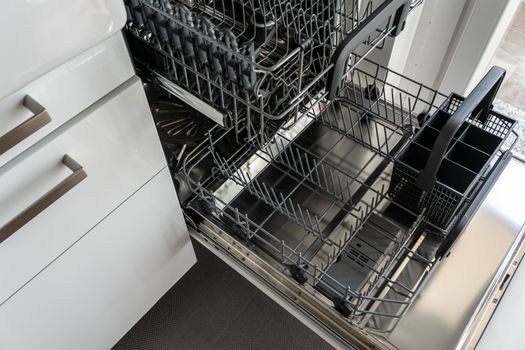
You press Start, hear water rushing for a moment, and then the machine seems to pause—even though the timer says it has two hours left. If you have ever wondered, “Dishwasher: how does it work, and why does it take so long?” the answer involves much more than filling the tub with soapy water. A dishwasher repeatedly circulates a relatively small amount of water, filters out food particles, rinses the load, and then uses heat, airflow, or both to help the dishes dry.
What Happens After You Press Start?
Once the door is securely latched, the dishwasher’s control system begins a programmed sequence. Although the details vary by model and selected cycle, most machines follow the same basic process.
- The drain pump may run briefly to remove water left in the sump.
- The water inlet valve opens and allows hot water into the bottom of the tub.
- A circulation pump pushes the water through the spray arms.
- The spray arms rotate, directing pressurized water and detergent across the dishes.
- The machine drains the dirty water and refills for one or more rinses.
- After the final rinse, the dishwasher begins its drying stage.
A dishwasher does not normally fill to the top like a bathtub. Water collects in a shallow area at the bottom called the sump. The same water is pumped through the spray arms many times during each wash or rinse phase. This recirculation is one reason a modern dishwasher can clean a full load without using a tub full of water.
The Main Dishwasher Components
Water inlet valve
The inlet valve controls water entering from the home’s hot-water supply. The machine may use a timer, flow meter, pressure system, or float switch to determine when enough water has entered. If the valve is clogged or defective, the dishwasher may fill slowly, fail to fill, or overfill.
Circulation pump and motor
The circulation pump is responsible for washing action. Its motor drives an impeller that pressurizes the water and sends it toward the spray arms. Some dishwashers use a separate drain pump, while others use one pump assembly for multiple functions.
Spray arms
Spray arms contain small jets positioned at angles. As water shoots through the jets, the force causes the arms to rotate. Blocked holes, a utensil preventing an arm from turning, or incorrect loading can leave certain dishes dirty even when the pump is working properly.
Filter and sump
The filter helps prevent larger food particles from returning to the dishes or entering the pump. Many modern units have removable filters that require periodic cleaning. The sump beneath the filter collects water so the pump can recirculate or drain it.
Detergent dispenser
The dispenser holds dishwasher detergent until the appropriate point in the cycle. Its door usually opens automatically during the main wash. If a large pan or cutting board blocks the dispenser, detergent may remain trapped inside and cleaning performance can suffer.
Heating and drying system
Depending on the design, the dishwasher may use an exposed heating element, a concealed heater, a condensation-drying system, a fan, or a combination of these. Heat can raise wash and rinse temperatures and may also speed drying. Plastic items often remain wetter than glass or ceramic because plastic does not retain heat as effectively.
Sensors and electronic controls
Modern dishwashers may monitor water temperature, soil levels, water volume, and door position. A soil sensor evaluates how cloudy the circulating water is and may adjust the number or length of wash and rinse stages. The control board coordinates the valves, pumps, dispenser, heater, and display.
How Common Dishwasher Cycles Differ
The names vary among manufacturers, so the owner’s manual is the best guide for a particular appliance. In general, these settings serve different purposes:
- Normal is intended for everyday loads with typical food soil.
- Auto or Sensor changes the cycle according to the condition of the wash water.
- Heavy or Pots and Pans adds time, heat, or stronger washing for dried-on food.
- Quick or Express reduces cycle time but may be less effective on heavily soiled items.
- Delicate uses gentler washing or lower temperatures for suitable fragile items.
- Rinse Only sprays dishes without completing a full detergent wash.
- Sanitize raises the final-rinse temperature when the machine’s instructions and required settings are followed.
For typical use, choose the cycle recommended in the appliance manual rather than selecting Heavy for every load. Readers comparing efficient appliances can review the official ENERGY STAR dishwasher guidance, which also explains features such as soil sensors, filtration, and energy-saving drying options.
Why Can a Dishwasher Run for Several Hours?
A long cycle does not necessarily indicate a problem. Newer dishwashers often use less water and compensate with longer soaking, spraying, heating, and sensing periods. The displayed time may pause or change while the appliance heats cool incoming water or evaluates soil levels.
Selected options also matter. Heated Dry, Sanitize, High Temperature Wash, and similar settings can extend the program. Very cold inlet water, low household water pressure, or repeated interruptions from opening the door may add more time.
Common Problems and What They May Mean
Dishes remain dirty
Check for overloaded racks, blocked spray arms, clogged spray holes, a dirty filter, or detergent that was stored in a damp location. Place large items where they will not obstruct the dispenser or prevent water from reaching other dishes. Scrape away bones, pits, and thick food deposits, but routine pre-rinsing is usually unnecessary for a properly functioning modern machine.
Water remains in the bottom
A small amount of clean water in the sump may be normal. A visible pool can point to a clogged filter, obstructed drain hose, blocked sink connection, jammed drain pump, or household plumbing problem. Turn off power before checking accessible components, and never reach into the sump without watching for broken glass.
Dishes are still wet
Confirm that a drying option was selected and that rinse aid is available if the manufacturer recommends it. Poor loading can create cups or bowls that hold water. Unloading the bottom rack first prevents water from the upper rack from dripping onto dishes below.
The dishwasher leaks
Possible causes include a damaged door gasket, excessive or incorrect detergent, an unlevel appliance, a loose hose, or a cracked component. Dishwasher detergent must be used; ordinary hand-washing liquid can produce enough foam to escape around the door. Stop using the appliance if water is reaching electrical connections or damaging surrounding cabinets and flooring.
Unusual noises occur
Swishing, humming, clicking, and brief drain sounds are usually part of normal operation. Repeated grinding, harsh rattling, or squealing deserves attention. First check whether a utensil is hitting a spray arm. If the noise continues, debris may be caught near the pump or a motor component may require service.
Simple Habits That Improve Performance
- Load dishes so their dirty surfaces face the spray rather than each other.
- Keep tall items from blocking the detergent dispenser or upper spray arm.
- Clean the filter according to the manufacturer’s instructions.
- Use fresh automatic dishwasher detergent in the recommended amount.
- Run full loads without packing dishes so tightly that water cannot circulate.
- Inspect spray-arm openings and remove visible debris carefully.
- Consult the manual before washing wood, cast iron, delicate glassware, or other questionable materials.
Understanding the sequence also makes troubleshooting less mysterious: the valve fills, the pump circulates, the spray arms clean, the filter captures debris, and the drain and drying systems finish the job. People interested in the installation, maintenance, and repair side of these appliances can also explore local opportunities in dishwasher careers. When a problem involves wiring, persistent leaks, a failed pump, or an error that returns after basic cleaning, professional diagnosis is safer than dismantling the machine without the proper training.