
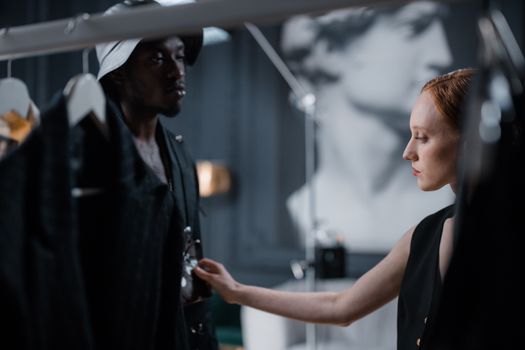
You may picture a fashion designer sketching runway looks in a stylish studio and assume the job always comes with a glamorous salary. The reality is more varied. Some designers earn modest wages while building their portfolios, while experienced designers working for major brands can earn six figures. Location, industry, experience, specialty, and employment type all influence the final paycheck.
How much do fashion designers make?
In the United States, the median annual wage for fashion designers was $80,960 in May 2025, or about $38.92 per hour, according to the U.S. Bureau of Labor Statistics profile for fashion designers. The median is the midpoint: half of designers earned more, and half earned less.
Pay varies considerably across the profession. The lowest-paid 10% earned less than $39,490 per year, while the highest-paid 10% earned more than $146,870. These figures show why a single salary estimate cannot describe every fashion design career.
The average, or mean, annual wage was $91,230 in May 2025. That figure is higher than the median because a smaller group of highly paid designers pulls the average upward. For most people comparing career options, the median provides a more realistic starting point.
Fashion designer salary by industry
The type of employer can make a substantial difference. In May 2025, median annual wages in several major industries were:
- Management of companies and enterprises: $105,350
- Apparel, piece goods, and notions merchant wholesalers: $91,020
- Apparel manufacturing: $79,040
- Retail trade: $43,020
These differences reflect the scope and commercial value of the work. A designer helping direct product strategy across a large company may have greater responsibility than someone designing a limited range for a small retailer. Employers may also pay more for designers who can combine creativity with merchandising, production, consumer research, and leadership skills.
What affects a fashion designer’s pay?
Experience and portfolio quality
Entry-level designers often begin as assistants, technical design employees, or junior designers. Their work may include preparing specification sheets, updating digital drawings, sourcing materials, and supporting fittings. As they demonstrate that their designs can be produced efficiently and sold successfully, they may qualify for better-paid positions.
A strong portfolio can matter as much as years of experience. Employers want evidence that a candidate understands color, fabric, construction, proportion, and the needs of a specific customer. A portfolio that shows commercial thinking and technical accuracy may create more opportunities than sketches alone.
Location
Fashion jobs are concentrated in major design and retail centers, particularly New York and California. Salaries may be higher in these markets, but rent, transportation, and other living expenses can also be significantly higher. When comparing offers, candidates should consider purchasing power rather than focusing only on the advertised salary.
Specialty
Compensation may vary among apparel, accessories, footwear, costume, technical, and textile-related roles. Designers with specialized knowledge—such as performance fabrics, sustainable materials, pattern development, or complex manufacturing processes—may be more competitive for certain positions.
Technical and business skills
Modern fashion design is not limited to drawing. Designers frequently use computer-aided design software, communicate with manufacturers, review samples, manage revisions, and work within strict production budgets. Knowledge of garment construction, fit, sourcing, trend analysis, and product development can increase a designer’s value.
Readers interested in the day-to-day responsibilities can learn more by exploring the role of an apparel designer in the fashion industry.
Do freelance fashion designers earn more?
Freelance designers can sometimes charge more per hour or project than salaried employees earn for equivalent time. However, a freelance rate is not the same as take-home pay. Independent designers may need to cover software, equipment, workspace, marketing, insurance, taxes, unpaid administrative work, and periods without client projects.
Income can also be unpredictable. An established freelancer with repeat clients may earn well above the occupational median, while someone starting out may experience inconsistent cash flow. Clear contracts, deposits, revision limits, and reliable records are essential for protecting earnings.
Designers who launch their own labels face additional uncertainty. A successful collection can produce substantial revenue, but fabric, sampling, manufacturing, shipping, photography, advertising, returns, and unsold inventory can reduce profit. Business revenue should never be confused with the owner’s personal income.
What benefits do fashion designers receive?
Full-time employees may receive benefits in addition to salary. Depending on the employer, these can include:
- Health, dental, and vision insurance
- Paid vacation, sick leave, and holidays
- Retirement plans and employer contributions
- Performance bonuses or profit-sharing
- Employee discounts or clothing allowances
- Education, conference, or software reimbursement
- Flexible or hybrid work arrangements
Benefits can add meaningful value to a compensation package. A lower salary with strong health coverage, paid leave, and retirement contributions may be more valuable than a higher freelance rate without those protections. Designers should compare total compensation, expected work hours, travel requirements, and advancement opportunities before accepting an offer.
Can fashion designers increase their earnings?
Fashion designers may progress from assistant or junior roles to associate designer, senior designer, design director, or creative director. Others move into product development, merchandising, sourcing, brand management, costume design, or entrepreneurship.
Practical ways to strengthen earning potential include:
- Building a focused portfolio for the desired market
- Learning industry-standard design and product-development software
- Developing expertise in fit, construction, textiles, and manufacturing
- Understanding pricing, margins, and consumer demand
- Completing internships and building professional relationships
- Documenting successful products and measurable business results
- Developing leadership and communication skills
Career growth is likely to depend more on replacing departing workers and competing for existing positions than on rapid expansion. Employment is projected to show little or no change from 2025 to 2035, although about 2,500 openings are expected each year on average, largely because workers change careers or leave the labor force.
Is fashion design a financially worthwhile career?
Fashion design can provide a comfortable income, especially for designers who develop strong technical abilities, understand the business side of clothing, and advance into leadership roles. However, success is not automatic, and early-career pay may be considerably below the national median.
Anyone considering the field should balance salary expectations against education costs, local living expenses, work schedules, and the competitive nature of the industry. For people who enjoy solving creative and practical problems—and who are willing to keep learning—fashion design can offer both professional growth and meaningful long-term earning potential.

