Slim Aarons built his reputation on a simple philosophy: photograph attractive people doing attractive things in attractive places. The American photographer’s work from the 1950s through the 1980s captured an era of poolside glamour and jet-set leisure that continues to resonate with collectors and interior designers today. His images—sun-drenched scenes of socialites in Palm Springs, aristocrats on the Italian Riviera, and celebrities at exclusive resorts—have become defining visual documents of mid-century affluence.
The enduring appeal of Aarons’s photography has made framed prints of his work a fixture in contemporary interior design. These aren’t merely decorative objects. They function as cultural artifacts that anchor a room in a specific aesthetic tradition while offering visual sophistication that transcends their historical moment. Understanding why these prints remain relevant requires examining both Aarons’s distinctive approach to photography and how his images interact with modern living spaces.
The Photographer Behind the Prints
George Allen Aarons—who adopted the nickname “Slim” during his military service—began his career as a combat photographer during World War II. After the war, he deliberately pivoted away from conflict imagery. His stated mission became documenting what he called “attractive people who were doing attractive things in attractive places.”
This deceptively simple mandate produced a body of work that has defined an entire era’s visual language of luxury. Aarons gained unprecedented access to private estates, exclusive clubs, and celebrity gatherings. His photographs appeared regularly in publications like Holiday, Town & Country, and Life, shaping public perception of how the wealthy lived.
What distinguishes Aarons’s work from typical celebrity photography is its studied casualness. His subjects rarely acknowledge the camera. The compositions feel spontaneous yet are carefully constructed to emphasize architectural elements, natural light, and the relationship between people and their environments. This approach created images that function equally well as social documentation and as pure aesthetic objects—a duality that explains their continued relevance in interior design.
What Sets These Prints Apart
The market for photographic prints is crowded, but Slim Aarons prints occupy a distinct position. Several characteristics differentiate them from other decorative photography:
- Narrative Density: Each image contains multiple layers of visual information—architectural details, fashion elements, landscape features—that reward sustained viewing rather than quick glances.
- Color Palette: Aarons shot extensively in Kodachrome, which produced saturated yet naturalistic colors that complement both neutral and bold interior schemes.
- Compositional Balance: The photographs typically employ classical compositional techniques that create visual stability, making them effective focal points without overwhelming a space.
- Cultural Recognition: Many of Aarons’s most famous images—”Poolside Gossip,” “Slim Aarons Estate Edition,” “La Dolce Vita”—have achieved iconic status, carrying cultural associations that add conceptual depth to their decorative function.
The framing of these prints significantly impacts their presentation. Museum-quality framing with archival materials protects the image while enhancing its visual impact.
Investment-Grade Photography
Premium Slim Aarons prints represent a convergence of artistic merit and production quality. The distinction between a standard reproduction and a high-end print involves several technical factors:
- Print Method: Archival pigment printing on museum-grade paper ensures color stability and longevity, with properly stored prints maintaining their appearance for over a century.
- Edition Control: Limited edition prints with documented provenance maintain value better than open-edition reproductions.
- Authentication: Prints from authorized sources include certificates of authenticity and proper copyright licensing, protecting both artistic integrity and buyer investment.
- Framing Standards: Conservation framing techniques—UV-protective glazing, acid-free matting, sealed backing—preserve the print while allowing for future reframing if needed.
The financial dimension of art collecting has evolved considerably. Photography has gained significant ground as a collectible medium, with mid-century photographers like Aarons seeing sustained demand. While not every print appreciates in value, properly authenticated limited editions from recognized photographers have demonstrated price stability that mass-market decorative prints cannot match.
For collectors considering premium Slim Aarons prints, the investment extends beyond potential financial returns. These pieces offer aesthetic dividends—the daily experience of living with carefully crafted images that maintain their visual interest over years of viewing.
Integrating Aarons’s Work Into Living Spaces
The versatility of Slim Aarons photography allows it to function across diverse interior styles. Strategic placement and thoughtful curation determine whether these prints enhance or overwhelm a space:
- Minimalist Environments: A single large-format print provides visual warmth and human interest in otherwise austere spaces. The photograph’s internal complexity compensates for the simplicity of surrounding elements.
- Traditional Settings: Aarons’s work bridges classical and contemporary aesthetics. Vintage prints in traditional frames complement antique furniture while preventing spaces from feeling museum-like.
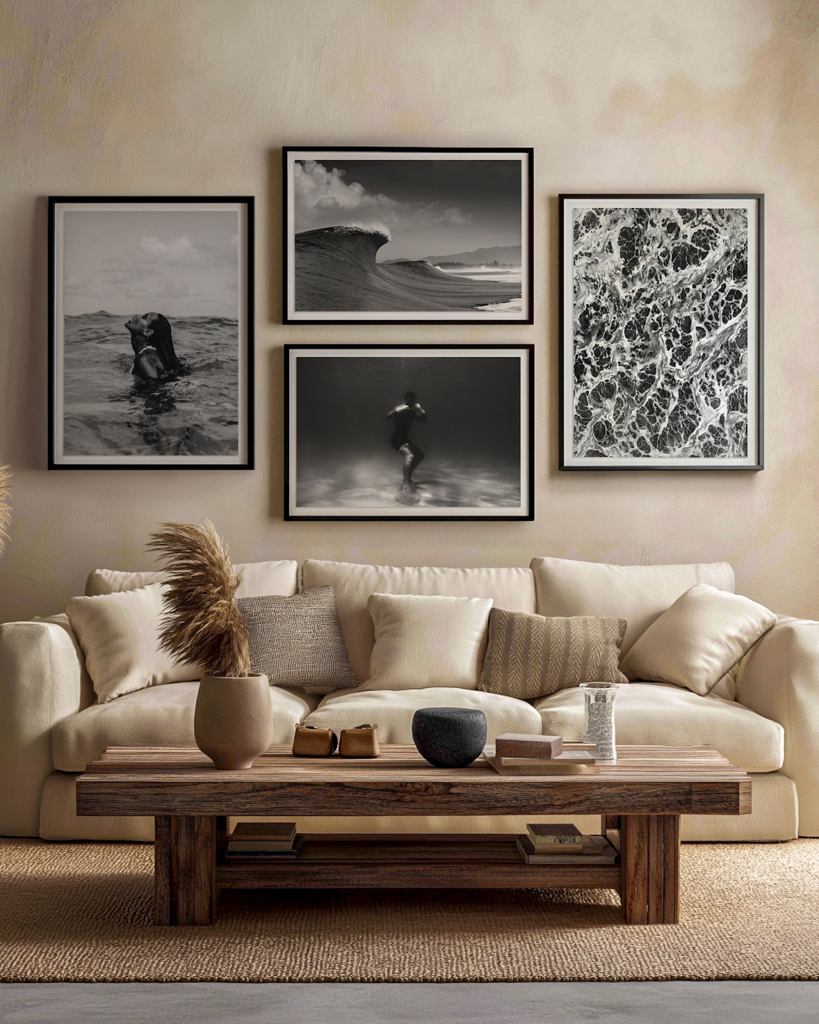
- Eclectic Interiors: Multiple Aarons prints can anchor a gallery wall, providing thematic coherence while allowing for varied frame styles and sizes. The consistent color palette across his work creates visual unity even when mixing different images.
- Commercial Spaces: Hotels, restaurants, and offices frequently use Aarons’s photography to establish an atmosphere of relaxed sophistication. The images signal taste and cultural awareness without the formality of fine art.
Color coordination deserves particular attention. Aarons’s Kodachrome palette—rich blues, warm terracottas, sun-bleached whites—works with both cool and warm interior schemes. Designers often pull accent colors from the prints to inform textile choices, creating visual dialogue between the photography and the broader space.
Why These Images Endure
Slim Aarons framed prints continue to appear in design publications, high-end residential projects, and commercial spaces decades after the photographs were taken. This longevity stems from several factors that transcend temporary design trends.
The images offer aspirational content without crossing into fantasy. Aarons photographed real people in real locations, creating scenes that feel simultaneously glamorous and attainable. This balance allows viewers to project themselves into the images rather than simply admiring them from a distance.
Compositionally, the photographs employ timeless principles—rule of thirds, leading lines, balanced color distribution—that create visual satisfaction regardless of current aesthetic fashions. The images work equally well in a Palm Beach estate or a Brooklyn loft because their underlying structure is sound.
Perhaps most significantly, Aarons’s work captures a specific cultural moment that has gained rather than lost relevance. The mid-century period he documented has become a touchstone for contemporary design, with its emphasis on indoor-outdoor living, clean lines, and casual elegance influencing everything from architecture to fashion. Aarons’s photographs serve as primary source material for this aesthetic, giving them ongoing cultural utility beyond their decorative function.
For those looking to incorporate these elements into their own spaces, the selection process should prioritize personal response over pure investment potential. Retailers such as Leisure Piece, Sonic Editions, and King & McGaw offer curated fine art print collections with enough breadth to support this kind of personally motivated selection process. The most successful placements occur when the image resonates with the inhabitant’s aesthetic sensibilities and the space’s architectural character. A print that generates daily pleasure justifies its presence regardless of market trends or resale value.