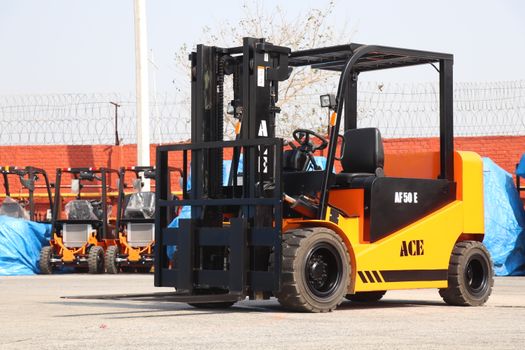
You have found a warehouse job that starts next week, but the posting says “forklift certification required.” Can you complete a quick online course, print a card, and begin driving? Not quite. In the United States, becoming qualified requires instruction, supervised hands-on practice, and an evaluation on the equipment you will operate. The good news is that this process can often be completed quickly when an employer provides training.
What Does Forklift Certified Actually Mean?
“Forklift certified” is common workplace language, but OSHA does not issue a universal forklift license. Instead, an employer must ensure that each operator is trained, evaluated, and competent to operate a powered industrial truck safely. The employer then documents, or certifies, that the required training and evaluation occurred.
The applicable OSHA powered industrial truck standard requires a combination of formal instruction, practical training, and an evaluation of the operator’s workplace performance. A certificate from a training company may demonstrate that you completed part of the process, but it does not automatically authorize you to operate every forklift at every worksite.
Most workers must be at least 18 years old to operate a forklift in nonagricultural employment. Employers may also set additional hiring requirements, such as a high school diploma, a driver’s license, or previous warehouse experience, although those are not universal federal certification requirements.
How to Become Forklift Certified Step by Step
1. Choose the Type of Equipment You Want to Operate
“Forklift” can refer to several kinds of equipment, including counterbalance trucks, reach trucks, order pickers, rough-terrain forklifts, powered pallet trucks, and other powered industrial trucks. Training must be relevant to the vehicle and working conditions you will encounter.
Look at local job advertisements before enrolling in a course. If employers frequently request reach-truck experience, for example, training only on a standard sit-down forklift may not make you ready for those positions.
2. Complete Formal Instruction
The instructional portion may take place in a classroom, through interactive online learning, by video, or with written materials. It commonly covers:
- Controls, instruments, warnings, and operating instructions
- Differences between forklifts and automobiles
- Steering, maneuvering, visibility, and stability
- Load capacity, load handling, and attachments
- Pre-use inspections and basic maintenance precautions
- Pedestrian traffic, ramps, docks, aisles, and surface conditions
- Battery charging or fuel-handling procedures
- Workplace rules and operating limitations
A knowledge quiz may be included, but passing a written or online test alone is not enough. OSHA’s training model is performance-based, meaning you must also demonstrate that you can use the equipment safely.
3. Receive Supervised Hands-On Training
During practical training, a qualified trainer demonstrates safe operation and then supervises you as you practice. You may learn to inspect the truck, enter and exit correctly, travel with and without a load, turn in confined spaces, stack materials, park, and respond to workplace hazards.
Trainees may operate a forklift only under direct supervision and where their practice does not endanger other people. Hands-on training should involve the same type of truck you are expected to use whenever possible.
4. Pass a Workplace Performance Evaluation
A trainer with the knowledge, training, and experience to evaluate operators must observe your performance. The evaluation should confirm that you can control the truck, handle loads, follow safety procedures, and respond appropriately to conditions at the worksite.
This is why an online-only program cannot provide complete workplace qualification. Online instruction can satisfy the educational portion, but practical exercises and an in-person performance evaluation are still required.
5. Make Sure the Training Is Documented
The employer’s certification record must include your name, the training date, the evaluation date, and the identity of the person or people who conducted the training or evaluation. Some employers issue a wallet card, badge, or printed certificate, but the documentation format is less important than completion of the required process.
What Is the Fastest Route to Certification?
The quickest route is usually to apply to an employer that provides forklift training during onboarding. Warehouses, manufacturers, distributors, retailers, and staffing agencies may train new hires because the employer must still evaluate operators on its equipment and under its workplace conditions.
Other practical routes include:
- Completing a vocational-school or community-college program that combines instruction with hands-on practice
- Taking an employer-recognized private course with access to real equipment and an in-person evaluation
- Using an online course for the classroom portion, followed promptly by employer-provided practical training
- Seeking an entry-level warehouse role that offers advancement into equipment operation
Course length varies because OSHA does not establish a single minimum number of classroom hours. A straightforward program may be completed in one day, while training involving multiple truck types, complex attachments, or difficult working environments may require additional time. Be cautious of providers promising “instant OSHA certification” with no practical component.
Skills That Help Forklift Operators Get Hired
Safe forklift operation involves more than moving pallets. Employers value operators who remain alert, communicate clearly, and follow procedures even when work becomes busy. Important skills include:
- Spatial awareness and accurate distance judgment
- Careful load positioning and weight-distribution awareness
- Coordination and smooth control movements
- Attention to pedestrians, blind corners, overhead hazards, and dock edges
- Ability to complete equipment inspections and report defects
- Understanding of warehouse signs, floor markings, and inventory labels
- Dependability, patience, and willingness to stop when conditions are unsafe
Related experience in shipping, receiving, inventory, or supply-chain operations can strengthen your résumé. Workers interested in the broader movement and regulation of goods may also explore career opportunities as a certified customs specialist.
Does Forklift Certification Expire?
OSHA requires an evaluation of each operator’s performance at least once every three years. This is sometimes described as “renewing” certification, although the rule focuses on reevaluation rather than simply replacing a card.
Refresher training is also required when an operator is observed working unsafely, is involved in an accident or near miss, receives an evaluation showing unsafe performance, begins operating a different type of truck, or encounters workplace changes that affect safe operation.
If you change employers, your previous training may help you avoid repeating subjects you already understand. However, the new employer must determine that the earlier training applies and must evaluate your competence under the new workplace conditions before authorizing independent operation.
How to Avoid Weak or Misleading Courses
Before paying for a program, ask whether it includes practical training, what equipment is available, who conducts the evaluation, and what documentation you will receive. A legitimate provider should clearly explain that classroom instruction alone does not complete the entire process.
The best answer to how to become forklift certified is therefore simple: obtain equipment-specific instruction, practice under qualified supervision, pass a workplace evaluation, and have your employer document the results. Choosing employer-sponsored training is often the fastest and least expensive route, while a reputable hands-on course can help you compete for jobs that prefer applicants with previous training.