You enjoy science, notice small details, and like the idea of helping investigators uncover what happened. But does becoming a forensic scientist mean attending medical school, joining the police, or earning a degree specifically in forensic science? Usually, none of those routes is automatically required. The right path depends on whether you want to examine evidence in a laboratory, process crime scenes, investigate digital material, or enter a specialized medical field.
For most laboratory-based positions, the answer to how to become a forensic scientist begins with a bachelor’s degree in a natural science, followed by practical laboratory experience and employer-specific training. Because requirements vary among government agencies and private laboratories, it is important to choose a specialty early and review real job postings before committing to a degree program.
What Does a Forensic Scientist Actually Do?
Forensic scientists apply scientific methods to evidence that may be used in criminal or civil investigations. Depending on their specialty, they may analyze DNA, controlled substances, toxicology samples, fibers, glass, fingerprints, firearms evidence, bodily fluids, digital devices, or fire debris.
The job is not always as dramatic or fast-moving as television suggests. Much of the work involves preparing samples, operating instruments, documenting procedures, checking results, following quality-control standards, and writing reports. Scientists may also explain their findings to investigators, attorneys, judges, or juries.
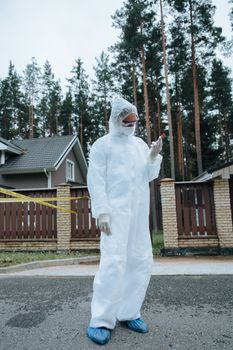
Crime scene work and laboratory analysis are related but different. Crime scene investigators locate, photograph, collect, package, and preserve evidence. Laboratory scientists test and interpret that evidence under controlled conditions. Some smaller agencies combine these responsibilities, while larger organizations usually separate them.
What Qualifications Do You Need?
A relevant bachelor’s degree
Forensic science technicians typically need at least a bachelor’s degree, although some crime scene or technician positions may accept an associate degree. Common majors include:
- Biology or molecular biology
- Chemistry or biochemistry
- Forensic science
- Microbiology
- Physics
- Pharmaceutical science
- Computer science for digital forensics
A broad science degree can be a strong choice because it provides options outside forensic work and may satisfy more laboratory job requirements. A forensic science degree can also be valuable when it includes substantial coursework in chemistry, biology, mathematics, statistics, laboratory methods, and scientific writing.
The U.S. Bureau of Labor Statistics guidance for forensic science technicians identifies a bachelor’s degree as the typical entry-level education and notes that new employees commonly receive on-the-job training before working independently.
Courses that match your intended specialty
Your degree title is only part of the picture. Employers often review transcripts to confirm that applicants have completed particular science courses and laboratory hours. DNA analysis may require genetics, molecular biology, biochemistry, and statistics. Drug chemistry positions commonly emphasize analytical and organic chemistry. Toxicology roles may require pharmacology, physiology, and instrumental analysis.
Read several job advertisements for the specialty you want and record their course requirements. This can help you select electives that make your application stronger.
Advanced education for certain careers
A master’s degree is not required for every forensic scientist position, but it may support advancement, research work, or entry into a competitive specialty. Some roles have entirely different training pathways. For example, forensic pathologists are physicians who complete medical school and specialist residency and fellowship training. Forensic psychologists generally complete graduate-level psychology education and meet applicable licensing requirements. Readers interested in that separate profession can learn more about the role of forensic psychologists in the justice system.
What Experience Helps You Get Hired?
Entry-level advertisements may not always require previous forensic employment, but employers usually want evidence that you can work accurately in a scientific environment. Relevant experience can come from university laboratories, internships, research assistant positions, hospital laboratories, environmental testing facilities, pharmaceutical companies, or quality-control laboratories.
Useful experience includes:
- Preparing and labeling samples without mix-ups
- Using microscopes and analytical instruments
- Maintaining detailed laboratory notes
- Following written procedures exactly
- Applying quality assurance and contamination-control practices
- Analyzing data and recognizing unexpected results
- Writing clear technical reports
- Handling sensitive information confidentially
Evidence must be protected from contamination, loss, or unauthorized access. Work involving blood, tissues, chemicals, or unknown substances can also present biological and chemical hazards. Forensic personnel therefore receive training in personal protective equipment, safe handling procedures, decontamination, waste disposal, and exposure response. Being comfortable with strict safety rules is essential.
Do You Need Certification or a License?
There is no single national license covering every forensic scientist in the United States. Requirements depend on the jurisdiction, employer, discipline, and level of responsibility. Professional certification may be optional for entry-level applicants but preferred or required after they gain suitable training and casework experience.
Certification should not be confused with a short course completion certificate. Reputable professional credentials generally involve defined education and experience standards, an examination, ongoing learning, and periodic renewal. Before paying for any program, confirm that employers in your chosen specialty recognize it.
Applicants may also face a criminal background investigation, drug screening, reference checks, driving-record review, or other suitability assessments. Honesty is critical because forensic employees handle confidential evidence and may testify in court.
Skills That Matter Beyond Science
Strong laboratory ability is only one part of the job. Forensic scientists must remain objective, even when findings do not support an investigator’s theory. They also need patience because repetitive procedures and documentation can occupy much of the working day.
Important professional qualities include attention to detail, critical thinking, time management, integrity, and clear communication. Court testimony requires a scientist to explain complex findings without overstating what the evidence proves. Emotional resilience also matters because some cases involve violence, death, abuse, or disturbing images.
How to Get Started
- Choose a direction. Compare laboratory science, crime scene investigation, digital forensics, toxicology, and other specialties.
- Review current vacancies. Examine education, coursework, technical skills, and screening requirements from several employers.
- Select an appropriate degree. Prioritize a scientifically rigorous program with extensive practical laboratory work.
- Gain hands-on experience. Apply for internships, research projects, laboratory assistant jobs, and relevant volunteer opportunities.
- Build evidence-handling skills. Learn accurate documentation, contamination prevention, chain-of-custody principles, and quality-control procedures.
- Prepare a targeted application. Describe instruments, techniques, research projects, laboratory hours, and report-writing experience rather than listing only course titles.
- Expect continued training. New hires commonly complete supervised training, competency testing, and proficiency assessments before handling cases independently.
Is Forensic Science the Right Career for You?
Forensic science may suit you if you value careful analysis, impartial conclusions, structured procedures, and public service. It can be less suitable if you dislike repetitive documentation, strict rules, exposure to distressing case material, or the possibility of having your work challenged in court.
The most reliable route is to combine a strong scientific education with practical laboratory experience and a clear understanding of your chosen specialty. Start by studying actual employer requirements, then shape your coursework and experience around them. That approach can help you graduate with more than an interesting degree: it can give you the specific qualifications laboratories are looking for.