
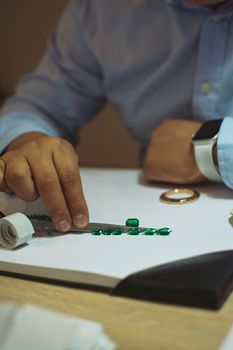
You may love sketching rings, repairing old necklaces or working with small tools, yet still wonder: how do you become a jeweller if you have no industry experience? The encouraging answer is that there is no single required route. Some jewellers attend trade school or complete a degree, while others begin as retail assistants, workshop trainees or apprentices and learn at the bench.
Your best starting point is to decide what kind of jewellery work interests you, then build practical skills, basic technical knowledge and a portfolio that shows what you can do. Formal qualifications can help, but patience, precision and consistent hands-on practice are just as important.
What does a jeweller actually do?
A jeweller may design, make, repair, resize, restore or sell jewellery. The work can include sawing and shaping metal, soldering components, setting stones, polishing surfaces, replacing clasps and discussing custom orders with clients. Some jewellers create one-of-a-kind pieces, while others work on repairs or manufacture designs in larger quantities.
Common career directions include:
- Bench jeweller, making and repairing pieces by hand
- Jewellery designer, developing ideas through drawing or digital software
- Stone setter, securing gemstones in different settings
- Goldsmith or silversmith, specialising in precious-metal work
- Gemologist, identifying and evaluating gemstones
- CAD designer, creating digital models for casting or production
- Retail jeweller, combining product knowledge with customer service
- Independent maker, producing and selling an original collection
Understanding these options matters because each requires a slightly different mix of skills. A designer may need a strong visual portfolio and computer-aided design experience, whereas a repair jeweller needs excellent soldering, sizing, finishing and problem-solving abilities.
Do you need a degree to become a jeweller?
No. A university degree is not normally essential for entry-level jewellery work. According to the U.S. Bureau of Labor Statistics career guide for jewelers, workers typically enter with a high school diploma and develop their skills through long-term on-the-job training. Some complete an apprenticeship or attend a trade school.
A degree can still be useful if you want structured instruction, access to specialist equipment and time to develop a distinctive design style. Relevant subjects include jewellery design, metalsmithing, fine art, product design and craft. Before enrolling, examine the course content carefully. A visually impressive program may not provide enough bench practice, repair experience or technical training for your intended career.
Short courses and vocational programs can be a more direct option. Look for practical instruction in fabrication, soldering, stone setting, casting, polishing, repair and workshop safety. Gemology qualifications are valuable for careers involving gemstone identification, grading, buying or appraisal, but they do not replace hands-on manufacturing skills.
Skills to learn first
Basic bench techniques
Begin with measuring, marking, sawing, filing, drilling, forming, soldering and finishing. These foundational techniques appear in almost every jewellery project. Making a simple ring accurately can teach you more about control and workmanship than attempting an elaborate design before you are ready.
Materials and construction
Learn how metals behave when they are heated, bent, joined and polished. You should understand basic differences among silver, gold, platinum, brass and copper, as well as concepts such as hardness, melting temperature and metal thickness. Knowledge of common gemstone properties is also important because some stones can be damaged by heat, pressure, chemicals or careless handling.
Drawing and digital design
You do not have to be an accomplished illustrator, but you should be able to communicate proportions, settings and construction details. Hand sketching helps you explore ideas quickly. CAD skills become useful when designs will be rendered digitally, printed in wax or resin, or prepared for manufacturing. Readers interested primarily in the creative route can explore this guide to becoming a jewellery designer.
Accuracy and quality control
Jewellery is small, so minor mistakes are highly visible. Develop the habit of checking measurements, symmetry, joins, stone security and surface finish throughout a project. Employers value people who can identify a flaw, understand its cause and correct it without creating further damage.
Customer and business skills
A jeweller often handles items with financial and emotional value. Clear communication, careful recordkeeping and realistic promises are essential. If you plan to work independently, you will also need to understand pricing, material costs, photography, inventory, marketing, taxes and customer service.
Choose a practical training route
An apprenticeship is one of the strongest routes into bench work because it combines instruction with real workshop experience. Apprentices may begin by cleaning, polishing, organising tools or observing repairs before progressing to more technical tasks. Opportunities are not always advertised, so contact independent workshops, manufacturers and repair businesses directly with a short introduction and examples of your work.
Another route is to take a foundation course and apply for junior positions such as polishing assistant, production assistant, repair trainee or jewellery sales associate. Retail employment can provide product knowledge and industry contacts, although you should seek bench practice separately if your goal is manufacturing or repair.
If local opportunities are limited, combine online theory with in-person studio classes. Videos can demonstrate a process, but an instructor can spot unsafe habits, poor tool control or construction problems that are difficult to diagnose by yourself.
Build a portfolio before applying for work
Your portfolio should show skill development rather than only polished glamour photographs. Include a focused selection of completed pieces, close-up images of joins and settings, sketches, digital models and brief notes explaining the materials and techniques used. If a project involved a mistake or design challenge, explain how you solved it.
Quality matters more than quantity. Six well-finished pieces that demonstrate different abilities are usually more convincing than dozens of similar beginner projects. Photograph work against a simple background in even lighting, and make sure details are sharp enough to assess.
Set up your workspace safely
Jewellery making may involve flames, rotating machinery, sharp tools, metal dust, fumes and chemical solutions. Take workshop safety instruction before using torches, acids, polishing equipment or casting machinery. Work in a suitable ventilated area, secure loose clothing and hair, and use the appropriate eye, respiratory or hearing protection for each process.
Avoid buying an entire professional workshop immediately. Start with reliable hand tools for the techniques you are learning, then add equipment as your skills and projects develop. Shared studios can provide supervised access to expensive machinery without the cost and responsibility of maintaining it alone.
What should you do first?
If you are beginning from zero, use this practical sequence:
- Choose whether you are most interested in design, bench work, repair, gemstones, retail or business ownership.
- Take an introductory in-person class to test your interest and learn safe tool use.
- Practise core techniques through several small, affordable projects.
- Research trade programs, apprenticeships and entry-level employers in your area.
- Create a concise portfolio showing both finished work and your process.
- Ask experienced jewellers for specific feedback and continue improving weak areas.
- Apply for trainee roles while continuing to practise independently.
Becoming a competent jeweller takes time because the work combines creativity with engineering, material knowledge and fine motor control. You do not need to master every specialty before seeking experience. Start with strong fundamentals, learn to evaluate your own workmanship and build skills one project at a time. That steady, practical approach is the most dependable way to turn an interest in jewellery into a professional career.

