
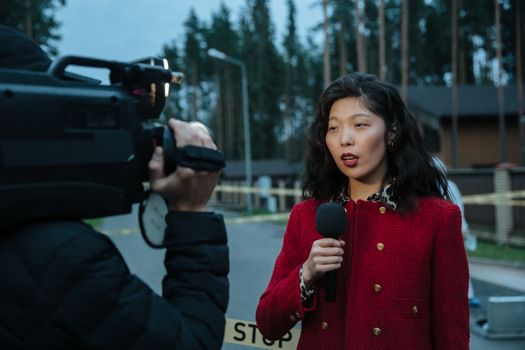
You enjoy asking questions, explaining complicated topics, and noticing details other people miss—but when you look at journalism jobs, nearly every listing seems to ask for experience. How can you get experience if nobody has hired you yet? The answer is to begin reporting before you have the job title. Learning how to become a journalist involves developing practical skills, producing credible work, and gradually building relationships with editors and news organizations.
What does a journalist actually do?
Journalists gather, verify, organize, and communicate information that serves an audience. Depending on the role, they may cover local government, business, education, health, sports, science, entertainment, or community events. Some write articles, while others create videos, record podcasts, analyze data, take photographs, or report live.
The everyday work usually includes researching story ideas, finding reliable sources, conducting interviews, checking claims, requesting documents, meeting deadlines, and revising work with an editor. Journalists must also distinguish reporting from opinion and give people or organizations a reasonable opportunity to respond to criticism.
The job is not simply about writing well. Curiosity, accuracy, persistence, sound judgment, and the ability to listen are equally important. You may need to approach strangers, ask uncomfortable questions, interpret technical information, and correct errors openly.
Do you need a journalism degree?
A degree is not a legal requirement for working as a journalist, but many employers prefer applicants with a bachelor’s degree. Journalism and communications programs can provide structured instruction in reporting, media law, ethics, interviewing, editing, and multimedia production. They may also provide access to student publications, broadcasting equipment, internships, and professional contacts.
English, political science, economics, history, science, and other degrees can also lead to journalism careers. Subject expertise may be especially valuable if you want to cover a specialized field. According to the U.S. Bureau of Labor Statistics career profile for journalists, a bachelor’s degree is the typical entry-level education, while internships and experience with student media may improve a candidate’s preparation.
If a four-year degree is not practical, consider community college classes, certificate programs, workshops, online courses, and supervised newsroom experience. Before paying for a course, compare its cost, instructor credentials, assignments, feedback, and opportunities to produce portfolio work. This guide to the advantages and drawbacks of professional training can help you evaluate whether a program offers meaningful value.
Build the core skills editors expect
Reporting and verification
Strong reporting begins with evidence. Learn how to locate public records, evaluate online sources, confirm names and dates, and trace a claim back to its original source. Whenever possible, verify important information through documents, direct observation, or multiple knowledgeable people rather than repeating another publication’s account.
Interviewing
Prepare questions before an interview, but listen closely enough to ask useful follow-ups. Begin with open-ended questions that encourage detailed answers. Confirm spellings, job titles, figures, and technical terms before ending the conversation. Recording may help with accuracy, but you should understand applicable consent laws and newsroom policies first.
Clear news writing
Journalistic writing is usually direct and economical. Put the most important information near the beginning, use specific language, and remove unnecessary words. Attribute statements clearly so readers know whether information came from a document, eyewitness, expert, official, or other source.
Digital and multimedia skills
Modern journalists often work across several formats. Basic photography, audio editing, video production, social media verification, spreadsheet analysis, and content management skills can make an entry-level applicant more useful. You do not need to master everything immediately. Choose one additional skill that fits your interests and practice it alongside writing and reporting.
Start practicing before you are hired
The best way to understand how to become a journalist is to complete real reporting assignments. Cover a public meeting, interview a local business owner, explain a change in your school district, or investigate an issue affecting your neighborhood. Select topics with genuine public value rather than writing personal essays disguised as news.
Approach each practice story professionally:
- Choose a focused question that can be answered through reporting.
- Review existing coverage and relevant public documents.
- Interview several people with different perspectives.
- Verify factual claims, names, dates, and numbers.
- Ask the subject of criticism for a response.
- Edit for accuracy, clarity, fairness, and unnecessary repetition.
Ask an instructor, working journalist, or experienced editor for specific feedback. Instead of asking whether a story is “good,” ask whether the opening is clear, the evidence supports the conclusion, important voices are missing, or the structure becomes confusing.
Create a portfolio that demonstrates your ability
A portfolio should contain a small selection of your strongest work, not everything you have written. Three to six polished samples may be enough for an initial application. Include pieces that demonstrate reporting, interviewing, fact-checking, and clear organization. If you want to work in broadcast or multimedia journalism, add short audio or video samples.
You can gain publishable experience through a school newspaper, college radio station, community publication, nonprofit newsletter, local website, or independently produced project. Clearly label work that was not published by an established news organization. Never invent quotations, sources, scenes, or credentials to make a sample appear more impressive.
Find your first journalism opportunities
Internships are a common entry point, but they are not the only option. Look for reporting assistant positions, freelance assignments, temporary newsroom work, fact-checking roles, production assistant jobs, and opportunities with small local outlets. Community and trade publications may give beginners more responsibility than major national organizations.
When pitching a freelance story, contact the appropriate editor with a short, specific proposal. Explain the central idea, why it matters to that publication’s audience, whom you plan to interview, and why you are prepared to report it. Review the outlet’s recent coverage first so you do not suggest a story it has already published.
Networking can also create opportunities, but it should be based on genuine professional interest. Attend journalism events, follow reporters whose work you respect, and ask thoughtful questions about their reporting process. A brief request for advice is usually more appropriate than immediately asking a stranger for a job.
Prepare for applications and interviews
Customize your resume and portfolio for each role. A local government reporting position should feature different samples from a social video producer application. In your cover letter, mention the organization’s audience and explain how your experience could support its coverage.
Editors may ask you to complete a writing, editing, research, or news judgment test. Practice working accurately under time limits. During interviews, be prepared to discuss how you verify information, handle corrections, communicate with reluctant sources, prioritize competing deadlines, and respond when reporting contradicts your original assumption.
Keep your expectations realistic
Your first opportunity may not be your ideal beat, location, or format. Early roles often involve routine assignments, irregular schedules, modest freelance fees, or extensive editing. These experiences can still teach you how a newsroom operates and help you develop dependable work habits.
Be cautious with unpaid assignments that offer no supervision, publication credit, or meaningful learning. Before accepting freelance work, confirm the fee, deadline, expected length, rights, editing process, and payment schedule in writing.
A practical path forward
Begin by choosing one subject area and one reporting format. Study basic ethics and news writing, complete several original stories, obtain detailed feedback, and publish or organize your best work in a simple portfolio. Then apply consistently to internships, entry-level positions, and carefully selected freelance assignments.
Becoming a journalist rarely happens through one course or application. It happens through repeated reporting: asking better questions, verifying every important detail, accepting edits, and earning trust one story at a time.

