You see an entry-level HVAC installer job offering paid training, steady hours, and a path to higher earnings—but the listing also asks for mechanical ability, a driver’s license, and familiarity with tools. Do you need trade school before applying? Not always. HVAC installer jobs can be accessible to people beginning a skilled-trades career, although training, certification, and hands-on experience can improve your options.
HVAC installers help put heating, ventilation, air-conditioning, and refrigeration systems into homes and commercial buildings. The work can provide visible results at the end of each day, but it also requires accuracy, physical effort, safety awareness, and a willingness to keep learning as equipment changes.
What Does an HVAC Installer Do?
An HVAC installer sets up equipment that controls temperature, humidity, ventilation, and indoor air quality. Some installers work mainly in new construction, while others replace older systems in occupied homes, offices, schools, hospitals, stores, and industrial buildings.
Typical responsibilities include:
- Reviewing work orders, plans, specifications, and equipment instructions
- Removing old heating or cooling equipment
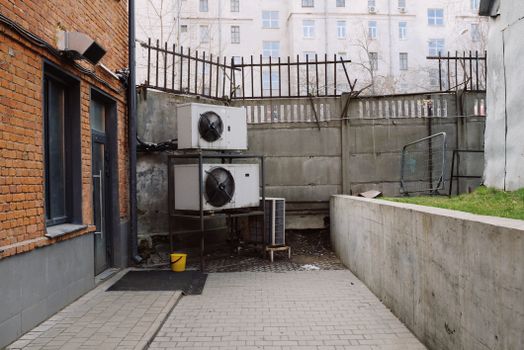
- Positioning furnaces, air handlers, heat pumps, condensers, and related components
- Measuring, cutting, and connecting ductwork, tubing, piping, and drain lines
- Installing controls, thermostats, wiring, and electrical components within the worker’s authorized scope
- Testing airflow, electrical connections, temperatures, pressure, and system operation
- Following building codes, manufacturer requirements, and jobsite safety procedures
- Explaining basic system operation and maintenance to customers
Installation and service duties sometimes overlap. An installer may identify a defective component during startup, while a service technician may replace equipment that cannot be repaired economically. Smaller employers are especially likely to train workers for both roles.
Where Are HVAC Installer Jobs Available?
Most opportunities are with plumbing, heating, and air-conditioning contractors. Jobs may also be available through construction companies, property-management businesses, equipment distributors, school systems, hospitals, manufacturers, and government facilities.
Common job titles include HVAC installer, installation helper, HVAC apprentice, residential installer, commercial HVAC installer, duct installer, sheet metal installer, refrigeration installer, and startup technician. Searching several titles can reveal openings that a search for “HVAC installer jobs” alone may miss.
Demand is supported by new construction, equipment replacement, building renovations, and the continuing need for climate-control systems. According to the U.S. Bureau of Labor Statistics career outlook for HVAC mechanics and installers, employment is projected to grow 11% from 2025 to 2035, with approximately 40,600 openings expected each year on average. These openings include newly created positions and jobs left by workers who retire or change occupations.
What Skills Do Employers Look For?
Mechanical and technical ability
Installers must understand how parts fit together and how an entire system should operate. Basic knowledge of electricity, airflow, refrigeration, piping, and combustion becomes increasingly important as responsibilities grow. Comfort with measurements and practical math is also useful.
Tool skills
Workers may use drills, saws, tubing cutters, gauges, multimeters, vacuum pumps, recovery equipment, ladders, and hand tools. Entry-level applicants are not necessarily expected to master every tool, but they should demonstrate safe habits and an ability to follow instructions.
Physical readiness
The job may involve lifting equipment, climbing ladders, kneeling, crouching, and working in attics, crawl spaces, mechanical rooms, or outdoor conditions. Employers value workers who use proper lifting methods, wear protective equipment, and ask for assistance rather than taking unsafe risks.
Reliability and communication
Installation crews depend on each member arriving on time with the required tools and materials. Because residential installers enter customers’ homes, professionalism matters. Clear communication is also essential when coordinating with electricians, plumbers, construction supervisors, and other tradespeople.
Attention to detail
A poorly sealed connection, incorrect measurement, or wiring mistake can affect safety, comfort, and system efficiency. Successful installers check their work, document what they completed, and follow manufacturer specifications instead of relying on guesswork.
Routes Into the Field
Apply for an installer-helper position
Some contractors hire candidates with a high school diploma or equivalent and train them on the job. Helpers may begin by carrying materials, organizing tools, insulating lines, sealing ducts, and assisting experienced installers. As their skills develop, they can take responsibility for more complex tasks.
Complete a trade-school or community-college program
HVAC certificate programs commonly cover electrical fundamentals, refrigeration cycles, system components, blueprint reading, controls, troubleshooting, and safety. Programs may last from several months to two years. Before enrolling, compare tuition, laboratory time, employer relationships, graduation requirements, and job-placement support.
Enter an apprenticeship
An apprenticeship combines paid work with classroom or technical instruction. Programs may be offered by contractors, trade associations, unions, or labor-management organizations. Apprentices gradually build skills under experienced workers and may receive scheduled wage increases as they meet program requirements.
Move from a related trade
Experience in construction, electrical work, plumbing, maintenance, sheet metal, automotive repair, or appliance service can transfer well to HVAC installation. Applicants should explain how their existing abilities—such as reading diagrams, using tools, or diagnosing mechanical problems—apply to the new role.
If you are weighing technical work against other career directions, exploring career possibilities in artistic fields may help you compare work environments, training routes, and the kinds of skills you most enjoy using.
Certifications and Licensing
Technicians who maintain, service, repair, or dispose of equipment that could release regulated refrigerants generally need EPA Section 608 certification. Candidates earn it by passing an approved examination. Certification types correspond to different categories of equipment, while Universal certification covers all equipment types addressed by the program.
State and local rules vary. Some jurisdictions license HVAC workers or contractors, and certain tasks may require electrical, plumbing, or gas-fitting credentials. A standard driver’s license is also frequently requested because installers travel between a shop, supply houses, and jobsites. Read each posting carefully and verify requirements with the appropriate state or local licensing authority.
What Are the Hours and Working Conditions?
Most positions are full time. Start times may be early, especially on construction sites, and overtime can increase during periods of extreme heat or cold. Installers may work indoors or outdoors in uncomfortable temperatures because the building’s climate system is incomplete or not operating.
The work carries risks, including electrical shock, burns, cuts, falls, chemical exposure, and strains from lifting. Reputable employers provide safety training and expect workers to use appropriate protective equipment. Applicants should ask how a company handles ladder safety, refrigerant procedures, lifting, driving, and jobsite supervision.
How to Become a Stronger Applicant
- Emphasize dependable attendance, safe work habits, and mechanical experience.
- List relevant coursework, certifications, tools, and construction experience.
- Obtain EPA Section 608 certification when appropriate for the positions you want.
- Practice reading a tape measure and performing basic calculations accurately.
- Prepare examples showing teamwork, customer service, and problem-solving.
- Ask whether the employer provides structured training and advancement milestones.
- Confirm whether you must supply tools, uniforms, transportation, or safety equipment.
HVAC installer jobs can offer a practical entry into a skilled occupation without requiring a four-year degree. The strongest candidates combine hands-on ability with reliability, careful workmanship, communication skills, and respect for safety. Whether you begin as a helper, attend trade school, or enter an apprenticeship, consistent learning can lead to advanced installation work, service positions, supervision, estimating, sales, controls specialization, or eventually business ownership.