
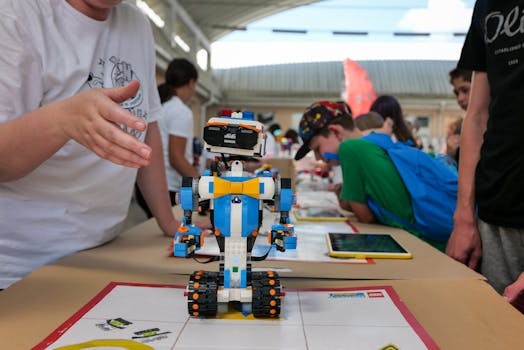
Participating in middle school science fair projects allows students to explore the fascinating world of scientific inquiry and discovery. These projects are not just assignments; they are excellent opportunities for students to delve into subjects that ignite their curiosity and passion. Whether tackling environmental issues or exploring physics, science fairs can be a platform for creativity and innovation, preparing young minds for future scientific endeavors.
Inspirational Middle School Science Fair Projects
When choosing science fair projects, it’s important to find topics that are engaging and accessible yet challenging enough to provide a learning experience. Here are some innovative ideas that will inspire young scientists to reach their potential:
1. Renewable Energy Challenges
Explore the potential of renewable energy sources by designing a solar-powered device. Students can create a simple solar oven or experiment with solar panels to understand their efficiency. This project not only introduces concepts of sustainable energy but also encourages innovation and problem-solving skills.
2. Water Filtration Experiment
Investigating water quality and purification is a vital project topic. Students can test different filtration methods using everyday materials like sand, charcoal, and gravel. This project provides insights into environmental science and can also raise awareness about clean water issues globally.
3. Plant Growth Conditions
Discover how different environmental factors affect plant growth by altering light, water, and soil conditions. By implementing variations and observing changes, students can grasp the complexities of plant biology and ecology.
4. DIY Lava Lamp
Create a homemade lava lamp to explore density and liquid interactions, a popular idea among science fair projects for middle schoolers. Through this visually engaging experiment, students can learn about chemistry and the properties of liquids in a fun way.
5. Simple Machines and Physics
Construct a basic Rube Goldberg machine that performs a simple task. This project involves understanding the mechanics and forces behind simple machines like levers, pulleys, and inclined planes, providing a hands-on approach to exploring the principles of physics.
For more intriguing topics, inspired students can take free online courses in astrophysics and quantum science at top universities, as outlined in this article.
Key Factors for Success in Junior High Science Fair Projects
As students embark on their science fair journeys, they should keep in mind a few factors that can enhance the experience and lead to success:
- Originality: Encourage students to think outside the box and pursue unique project ideas that reflect their interests and curiosity.
- Research Skills: Teach students how to gather and analyze data effectively, a crucial component of any scientific inquiry.
- Presentation: Focus on the clear and concise presentation of their project, both visually and verbally, to engage the audience and judges.
- Perseverance: Foster resilience through challenges, emphasizing that trial and error are integral parts of the scientific process.
- Documentation: Encourage thorough documentation of the process, results, and learnings for better evaluation and reflection.
Science Fair Ideas for Middle Schoolers: Practical Considerations
While brainstorming science project ideas for middle schoolers, practical aspects like materials, complexity, and time constraints are important considerations. Ensure projects are manageable and adhere to safety guidelines while allowing for creative exploration. Projects should be scaled to the students’ understanding and skill levels, providing a balance between challenge and accessibility.
How to Choose a Theme for Your Science Fair Project
Deciding on a theme for junior high science project ideas can feel overwhelming, but breaking down the process helps. Start by identifying a broad topic of interest, such as chemistry, physics, or biology. Then, narrow it down by considering its real-world applications or current issues. Engage students in discussions about what excites them, ensuring their projects align with personal interests and curriculum standards.
Collaborative vs. Individual Projects
Science fair projects for middle schoolers can be pursued individually or collaboratively. Collaborative projects foster teamwork and collective problem-solving, while individual projects allow for deep personal engagement and responsibility. Weigh the benefits and limitations of each approach and align with the student’s learning style and preferences.
Assessing and Reflecting on Project Outcomes
After completing their projects, students should assess and reflect on their outcomes. What were the successes, and what areas could be improved? Encouraging critical reflection helps students gain valuable insights into their learning process and promotes a growth mindset. Such analysis also enriches their understanding and prepares them for future scientific endeavors.
For ongoing learning about educational methodologies and science topics, check out resources from this article on education, providing valuable insights into teaching and learning approaches.
In conclusion, middle school science fair projects provide a platform for young students to explore, discover, and innovate. By choosing engaging projects and focusing on the scientific process, students can experience the thrill of inquiry and the satisfaction of finding solutions to intriguing questions.
- Science fair projects allow for hands-on learning and exploration.
- Choosing projects that align with personal interests enhances engagement.
- Encourage originality, persistence, and clarity in presenting ideas.
- Both individual and collaborative projects have unique advantages.
- Reflecting on project outcomes fosters a growth mindset and deeper understanding.
Frequently Asked Questions
What are some easy science fair projects for beginners?
Simple projects like making a volcano at home, testing paper towel strength, or evaluating household cleaner effectiveness are great for beginners, allowing them to explore scientific principles with minimal complexity.
How do I make my science fair project stand out?
Focus on originality, robust research, and a compelling presentation. In-depth understanding and a passionate delivery can distinguish your project from others at the science fair.
Can a science fair project be done collaboratively?
Yes, collaborative projects can be very successful as they promote teamwork and collective problem-solving. Setting clear roles and responsibilities ensures smooth collaboration.
What resources can help with project ideas?
Online platforms, library books, and science magazines are excellent resources for finding inspiration and detailed instructions on a wide range of science project topics.
How important is the hypothesis in a science fair project?
The hypothesis is a critical component that forms the basis of your experiment, guiding the research and offering a foundation for analysis and conclusions. A well-thought-out hypothesis can enhance the quality and focus of the project.

