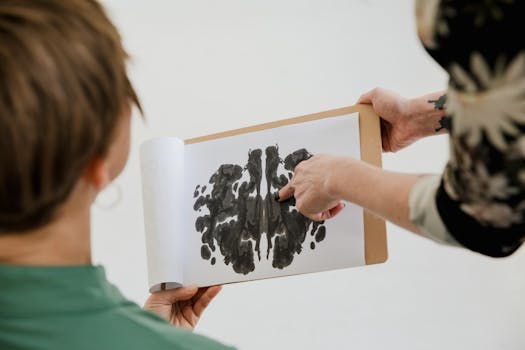
Psychology experiment ideas are a crucial aspect of developing engaging learning experiences that bring theoretical concepts to life. These experiments allow students to interact directly with psychological phenomena, enriching their understanding of human behavior, cognition, and emotion. Whether you’re a teacher looking to inspire your students or a student seeking an intriguing project, exploring innovative experiment ideas can be both enlightening and fun.
Psychology Experiment Ideas for the Classroom
Designing a psychology experiment doesn’t have to be daunting. Here are some creative ideas that can be executed in educational settings:
- The Stroop Effect: This classic experiment demonstrates the conflict between automatic and controlled processes. Participants read color words printed in non-matching colors and experience delayed response times. This can be an excellent way to discuss cognitive interference and attention.
- Memory Recall Tests: Explore how different factors, such as context or emotional content, affect memory recall. You can test short-term versus long-term memory and see which conditions lead to better retention.
- Group Influence on Decision Making: Study conformity by asking participants to make decisions individually and then in groups. Analyze how peer pressure and group dynamics affect choices.
- Facial Expressions and Emotion Recognition: Investigate whether people from different cultures interpret facial expressions similarly. This can lead to discussions on universal emotions and cultural differences.
- Reaction Time Experiments: Test how different stimuli (e.g., audio vs. visual) affect reaction times. This simple yet engaging experiment can lead to discussions on sensory processing and neural pathways.
Delving Deeper into Cognitive Psychology
Cognitive psychology offers a wealth of experiment ideas focused on processes like perception, memory, and problem-solving:
- Misinformation Effect: Explore how post-event information can alter participants’ memories of an event. This can lead to discussions on the reliability of eyewitness testimony.
- Change Blindness: Participants try to detect changes in visual scenes. This experiment highlights the limitations of our attention and can be a vivid demonstration of cognitive gaps.
- Problem-Solving Tasks: Examine how individuals approach complex problems. Present puzzles or logic problems and analyze different solution strategies.
Social Psychology Experiments to Try
Social psychology experiments provide insights into how individuals’ thoughts, feelings, and behaviors are influenced by the social environment:
- The Bystander Effect: Simulate situations where participants must decide whether to help others, exploring how the presence of other people affects their willingness to act.
- Social Norms Experiment: Investigate how breaking social norms impacts behavior and social interactions. This can lead to fascinating discussions about societal expectations.
- In-group vs. Out-group Dynamics: Explore how people behave differently toward those they consider part of their group versus outsiders. This can be tied into studies on prejudice and discrimination.
Psychology Experiment Ideas in Health and Development
Health and developmental psychology experiments can offer insights into emotional and physical well-being:
- Sleep and Cognitive Function: Conduct experiments to see how different sleep patterns affect attention and memory tasks. This can link to topics on sleep cycles and brain function.
- Attachment Styles in Children: Observe how different parenting styles and attachment types affect children’s reactions in different scenarios.
- Mindfulness Practices: Analyze the impact of mindfulness and meditation on stress reduction and attention span. This can support discussions on psychological interventions.
For more in-depth ideas on how psychology interacts with career exploration, read our article on Holland Code Quiz Pros and Cons.
While planning your experiments, remember that clear hypotheses, ethical considerations, and thorough analysis are crucial for credible results. The psychology experiment ideas not only enhance understanding but also foster critical thinking and creativity. Consider consulting external resources, such as Education on Wikipedia, for additional background information.
- Experiment ideas can make learning more interactive and engaging.
- Different psychology branches offer diverse experimental opportunities.
- Ethical considerations are essential in experiment design.
- Experiments should encourage critical thinking and hypothesis testing.
- Cross-referencing external credible resources enhances research depth.
What are some easy psychology experiments for beginners?
Beginner-friendly experiments include the Stroop Effect, simple memory recall tests, and reaction time measurements. These do not require complex setups and can be easily executed in a classroom environment.
Why are ethics important in psychology experiments?
Ethics ensure participant safety and integrity of research. Adhering to ethical guidelines helps protect participants from harm and maintains trust in psychological research.
Can psychology experiments be done without a lab?
Yes, many psychological experiments can be carried out in classroom or everyday settings. Creativity in using available resources can still yield meaningful results.
How can I incorporate technology into psychology experiments?
Technology can enhance data collection and analysis, using tools such as online surveys, software for cognitive testing, or apps for monitoring physiological responses in real-time.
What is the role of hypothesis in psychology experiments?
A hypothesis guides the experiment by providing a focused research question or prediction that the experiment seeks to support or refute. It’s a crucial element in scientific investigations.