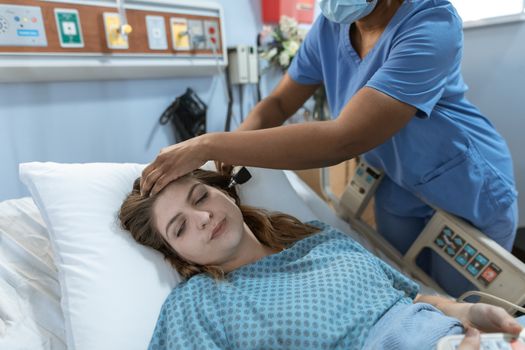
The delivery room can shift from quiet encouragement to urgent action in seconds. One moment, a nurse may be helping a patient breathe through contractions; the next, the nurse may notice a concerning fetal heart rate pattern and quickly alert the obstetric team. If you are considering this career, you may wonder what an L&D nurse actually does, how stressful the job is, and what training it requires.
An L&D nurse is a registered nurse who cares for patients before, during, and immediately after childbirth. The role combines hands-on clinical care, continuous assessment, patient education, emotional support, and emergency response. Although birth can be joyful, labor and delivery nursing also involves caring for families facing complications, unexpected surgery, pregnancy loss, or a newborn who needs specialized treatment.
What Does an L&D Nurse Do?
Labor and delivery nurses typically work in hospital maternity units, obstetric triage areas, operating rooms used for cesarean births, and recovery rooms. Their responsibilities vary according to the hospital, the patient’s condition, and whether the pregnancy is considered low-risk or high-risk.
Unlike an obstetrician or certified nurse-midwife, an L&D nurse does not independently diagnose conditions or deliver medical care outside the scope of registered nursing practice. Instead, the nurse closely monitors the patient and baby, carries out the care plan, communicates changes, administers ordered treatments, and helps coordinate the entire birth experience.
Assessing Patients and Monitoring Labor
When a patient arrives, the nurse gathers a health history, reviews prenatal information, checks vital signs, assesses pain, and asks about contractions, bleeding, fluid leakage, and fetal movement. The nurse may help determine whether the patient is in labor or needs additional evaluation by the obstetric provider.
During labor, one of the nurse’s most important duties is monitoring the fetal heart rate and uterine contractions. Electronic fetal monitoring creates an ongoing record that helps the care team evaluate how the baby is responding to labor. The American College of Obstetricians and Gynecologists’ guide to fetal heart rate monitoring explains that changes in the heart rate pattern may lead the team to investigate and address an underlying problem.
The nurse also regularly evaluates the laboring patient’s blood pressure, pulse, temperature, oxygen level, pain, coping ability, and labor progress. Accurate documentation is essential because the clinical situation can change quickly.
Providing Treatments and Comfort Measures
An L&D nurse carries out treatments ordered by the obstetric provider. Depending on the situation, daily tasks may include:
- Starting and managing intravenous lines
- Administering medications and fluids
- Preparing patients for labor induction
- Positioning patients for comfort or clinical reasons
- Assisting with epidural placement and monitoring afterward
- Collecting blood, urine, or other specimens
- Explaining procedures and answering questions
- Helping patients use breathing, movement, and relaxation techniques
Support is not limited to physical care. Labor can involve fear, exhaustion, uncertainty, and loss of control. Nurses help patients understand their options, communicate preferences, and feel heard while keeping safety at the center of care.
Assisting During Birth and Recovery
During a vaginal birth, the nurse prepares the room and equipment, assists the delivering clinician, coaches the patient, documents events, and anticipates possible complications. If a cesarean birth becomes necessary, the nurse may prepare the patient for surgery, complete safety checks, provide medications as ordered, and care for the patient before or after the procedure.
Following delivery, the nurse watches closely for excessive bleeding, abnormal vital signs, uncontrolled pain, or other signs of complications. Responsibilities may also include assessing the uterus, checking the placenta according to facility procedures, supporting skin-to-skin contact, assisting with feeding, and helping evaluate the newborn’s transition after birth. Newborn care may transfer to a mother-baby or neonatal nursing team, depending on the hospital.
What Skills Does an L&D Nurse Need?
Clinical knowledge is essential, but technical ability alone does not make an effective labor and delivery nurse. The strongest nurses combine careful observation with calm, respectful communication.
- Rapid assessment: Nurses must recognize subtle changes in maternal or fetal condition and determine when immediate action is needed.
- Communication: Clear updates help obstetricians, midwives, anesthesia professionals, neonatal teams, patients, and families work together.
- Emotional resilience: The work includes joyful births as well as emergencies, serious illness, and grief.
- Attention to detail: Medication doses, fetal monitoring patterns, documentation, and safety checks require accuracy.
- Adaptability: A routine labor can become an emergency with little warning.
- Physical stamina: Nurses may spend long shifts standing, repositioning patients, and moving equipment.
- Cultural sensitivity: Respectful care requires listening to each family’s values, language needs, preferences, and concerns.
Good L&D nurses also know how to remain reassuring without making promises. They explain what is happening in plain language while acknowledging that birth does not always follow the original plan.
Education and Certification Requirements
The usual first step is completing an approved associate degree, bachelor’s degree, or qualifying nursing diploma program. Graduates must then meet their state board’s requirements and pass the licensing examination to become registered nurses.
Some hospitals hire new graduates directly into labor and delivery, while others prefer applicants with experience in medical-surgical nursing, emergency care, postpartum care, or another acute-care specialty. A bachelor’s degree may improve employment options, particularly at larger hospitals.
Employers commonly require life-support training and unit-specific education. Nurses may also receive training in electronic fetal monitoring, obstetric emergencies, neonatal resuscitation, and surgical procedures. With sufficient specialty experience, an RN may pursue voluntary certification in inpatient obstetric nursing.
Labor and delivery nursing remains an RN specialty rather than an advanced practice role. Nurses interested in greater diagnostic or prescribing responsibility may eventually become nurse practitioners or certified nurse-midwives. This comparison of nurse practitioners and registered nurses explains how their education, authority, and career paths differ.
Schedule, Stress, and Work Environment
Because babies arrive around the clock, hospital-based L&D nurses often work 8- or 12-hour shifts that may include nights, weekends, and holidays. Staffing needs, emergency admissions, and lengthy births can make shifts unpredictable.
The job can be emotionally and physically demanding. Nurses must manage competing priorities, exposure to bodily fluids, urgent procedures, and difficult family situations. However, many find the role meaningful because they provide care during one of the most significant experiences in a family’s life.
Salary and Career Outlook
Federal employment data generally groups L&D nurses with registered nurses rather than reporting the specialty separately. According to the U.S. Bureau of Labor Statistics, the median annual wage for registered nurses was $97,550 in May 2025. RN employment is projected to grow 6 percent from 2025 through 2035, with about 180,800 openings expected each year on average.
Actual earnings depend on location, education, experience, shift differentials, certification, overtime, and employer type. Nurses working nights, weekends, or in high-cost metropolitan areas may earn more than the national median.
Is Labor and Delivery Nursing Right for You?
An L&D nurse career may suit you if you enjoy fast-paced clinical work, close patient interaction, teamwork, and situations that require both compassion and decisive action. It may be less suitable if you strongly prefer predictable routines or find rapidly changing, emotionally intense situations difficult to manage.
The role is not simply about witnessing births. It involves protecting two patients, recognizing complications, supporting informed decisions, and remaining steady when plans change. For nurses who value both technical skill and human connection, labor and delivery can offer a challenging and deeply rewarding career.