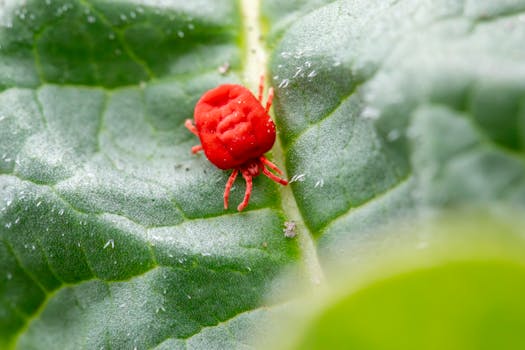
Managing pests effectively is crucial for the health and well-being of both plants and humans. One of the methods implemented today is the mites application, which serves as a natural solution to control pest populations. This application utilizes beneficial mites to target and reduce harmful pests such as spider mites and other destructive agricultural parasites.
Mites Application: An Eco-Friendly Approach
The mites application is an environmentally friendly pest control method that integrates various species of predatory mites to manage pest populations in agricultural settings. This technique is gaining popularity due to its sustainable nature and effectiveness in mitigating infestations without relying on chemical pesticides.
The strategic use of predatory mites can significantly reduce the need for chemicals in agriculture, promoting a healthier ecosystem. These mites prey on specific pests, maintaining a balance that protects crops while preserving biodiversity. Such practices are increasingly important in the context of modern agriculture’s shift toward sustainability.
How Does Mites Application Work?
The process of applying mites to crops involves identifying the pest population, selecting the appropriate predatory mite species, and releasing them into the affected area. This method requires a thorough understanding of the ecosystem to ensure that the beneficial mites can establish themselves and control the pest population effectively.
Depending on the pest species and the extent of the infestation, different mite species may be selected. Each species has specific prey preferences and environmental needs, making expert consultation essential. Additionally, factors such as temperature, humidity, and crop type are taken into account to enhance the effectiveness of the mites application.
Advantages of Using Mites for Pest Management
One of the primary benefits of mites application is its role in reducing chemical pesticide use. This not only contributes to safer agricultural practices but also fosters a healthier environment for workers and consumers. With fewer chemical residues on produce, there is less risk of exposure to harmful substances.
Predatory mites also contribute to increased crop yields. By naturally managing pest populations, these mites allow plants to grow healthier and more productive. Furthermore, they support long-term pest management strategies by reducing the likelihood of pests developing resistance, a common issue with chemical pesticides.
Considerations for Successful Mites Application
Implementing mites application successfully requires attention to several factors. Careful monitoring of pest and mite populations is essential to assess the effectiveness and make necessary adjustments. Moreover, understanding the lifecycle and behavior of both pests and predatory mites is crucial in designing an effective management plan.
Collaboration with agricultural experts and researchers can enhance understanding and correct application techniques. For further professional guidance, check out our resources on effective agricultural practices on ScholarsHub.net.
Challenges and Solutions in Implementing Mites Application
Despite its benefits, the mites application faces challenges such as initial cost, application technique, and environmental conditions. Costs may vary depending on the scale of the operation and the species of mites required. To address these issues, many growers turn to innovative funding models and government grants for support.
Correct application technique is vital, as improper distribution of predatory mites can reduce effectiveness. Training programs and demonstrations can assist in building the necessary skills for implementing mites application successfully. Furthermore, adapting to environmental changes, such as fluctuations in temperature and humidity, is essential for maintaining the health and efficacy of predatory mites.
The Future of Mites Application in Pest Management
The future of mites application looks promising. With advancements in research and technology, new mite species with enhanced pest control capabilities are being discovered. As the demand for sustainable agriculture continues to rise, mites application is likely to become an integral part of integrated pest management (IPM) strategies globally.
For more information on sustainable agricultural practices, you may refer to detailed articles on Biological Pest Control. These resources provide an in-depth understanding of how natural pest management techniques, like mites application, are shaping the future of food production.
As we continue to face challenges in food security and environmental health, mites application presents a viable ecological alternative. By promoting balanced ecosystems and reducing dependency on chemical controls, this approach aligns with global sustainability goals.
- Mites application utilizes beneficial mites to control pest populations.
- It reduces chemical pesticide use, promoting environmental safety.
- Successful implementation requires expert knowledge and favorable conditions.
- Challenges include cost, technique, and environmental adaptations.
- The method aligns with sustainable agriculture and IPM strategies.
What are the primary benefits of mites application?
Mites application reduces the need for chemical pesticides, supports sustainable farming practices, enhances crop yields, and reduces the risk of pests developing resistance to chemicals.
How is mites application implemented?
The process involves selecting and releasing suitable predatory mites into the target area, monitoring pest populations, and adjusting environmental conditions to support mite effectiveness.
Are there challenges associated with mites application?
Yes, challenges include costs, technique precision, and environmental adaptability. Successful implementation requires specialized knowledge and ongoing monitoring.
What future trends are expected in mites application?
Future trends involve the discovery of new mite species, technological advancements, and incorporation into global IPM strategies for sustainable agriculture.
Can mites application be combined with other pest management strategies?
Absolutely. Mites application can complement other integrated pest management strategies, enhancing overall effectiveness and sustainability in agricultural production.