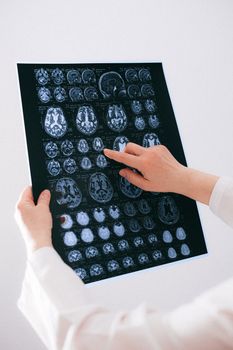
You develop recurring migraines, numbness in one hand, or unexplained dizziness. Should you see a neurologist, contact a neuroscientist, or search for a “brain specialist”? The terms sound similar because both involve the nervous system, but they describe different professions. In the simplest comparison of neurology vs neuroscience, neurology focuses on diagnosing and treating patients, while neuroscience investigates how the brain, spinal cord, and nerves work.
What Is the Main Difference Between Neurology and Neuroscience?
Neurology is a medical specialty. Neurologists are physicians who evaluate, diagnose, treat, and manage disorders affecting the brain, spinal cord, peripheral nerves, and, in some cases, muscles. They work directly with patients and can prescribe medication, order medical tests, and coordinate treatment.
Neuroscience is the scientific study of the nervous system. Neuroscientists explore subjects ranging from genes and individual nerve cells to memory, movement, emotion, behavior, and neurological disease. Their work may involve laboratory experiments, brain imaging, computer modeling, clinical research, or analysis of large datasets.
The distinction is not absolute. Some neurologists conduct neuroscience research, and some neuroscientists hold medical degrees. However, a neuroscientist is not automatically a physician and generally cannot provide medical care unless separately trained and licensed to do so.
What Does a Neurologist Do?
A neurologist begins by listening to a patient’s symptoms and medical history. The doctor may then perform a neurological examination that evaluates memory, speech, vision, sensation, reflexes, muscle strength, coordination, balance, and walking.
Depending on the findings, the neurologist may order blood tests, magnetic resonance imaging, computed tomography, electroencephalography, electromyography, nerve-conduction studies, genetic testing, or an analysis of cerebrospinal fluid. The National Institute of Neurological Disorders and Stroke provides an authoritative overview of neurological diagnostic tests and procedures.
Neurologists commonly care for people with conditions such as:
- Migraine and other headache disorders
- Epilepsy and seizures
- Stroke and related blood-vessel disorders
- Multiple sclerosis
- Parkinson’s disease and other movement disorders
- Alzheimer’s disease and other forms of dementia
- Peripheral neuropathy and nerve injuries
- Neuromuscular diseases
- Sleep disorders with neurological causes
- Brain or spinal cord injuries
Most neurologists do not perform brain or spinal surgery. When an operation may be necessary, they often refer the patient to a neurosurgeon while remaining involved in diagnosis and ongoing care. Treatment may include medication, rehabilitation, lifestyle recommendations, injections, medical procedures, or collaboration with physical therapists, speech-language pathologists, psychiatrists, pain specialists, and other professionals.
What Does a Neuroscientist Do?
A neuroscientist asks research questions rather than primarily treating individual patients. For example, a neuroscientist might study how neurons communicate, why certain brain cells deteriorate in Parkinson’s disease, how sleep affects memory, or whether a potential treatment changes nervous-system activity.
Neuroscience is highly interdisciplinary. Researchers may come from biology, psychology, chemistry, medicine, engineering, physics, mathematics, pharmacology, or computer science. Common branches include cognitive neuroscience, cellular neuroscience, behavioral neuroscience, computational neuroscience, neuroimaging, neuropharmacology, and developmental neuroscience.
Neuroscientists may work in:
- Universities and teaching hospitals
- Government research agencies
- Pharmaceutical and biotechnology companies
- Medical-device and neurotechnology organizations
- Clinical research centers
- Data science, public policy, education, or scientific communication
Their daily responsibilities vary. One researcher may spend much of the day conducting laboratory experiments, while another writes computer code to model neural networks. Others design studies involving human participants, analyze brain scans, prepare research papers, teach students, or manage research teams.
How Do Education and Training Differ?
Training to Become a Neurologist
In the United States, neurologists first complete an undergraduate degree followed by medical school, earning an MD or DO degree. They then complete postgraduate clinical training that includes a neurology residency. Some pursue additional fellowship training in areas such as epilepsy, movement disorders, headache medicine, vascular neurology, sleep medicine, neuromuscular medicine, or child neurology.
Because neurologists provide patient care, they must meet medical licensing requirements. They may also pursue board certification. Their education emphasizes anatomy, disease recognition, clinical decision-making, medication management, medical ethics, and direct patient care.
Training to Become a Neuroscientist
Neuroscientists typically begin with a bachelor’s degree in neuroscience or a related field. Some research support and technical positions are available with undergraduate or master’s-level education. Leading independent research usually requires a PhD, and many researchers complete postdoctoral training after earning the doctorate.
Graduate neuroscience programs commonly emphasize experimental design, statistics, laboratory methods, data analysis, and scientific writing. When comparing programs, students should consider research facilities, faculty interests, mentorship, funding, and program leadership. Learning about the responsibilities and skills of an effective training director can also help prospective students understand how academic training is organized and supported.
Which Professional Should You See for Symptoms?
If you need a medical diagnosis or treatment, the appropriate professional is a physician, not a research scientist. A primary care provider may evaluate common symptoms first and refer you to a neurologist when a nervous-system disorder is suspected.
Possible reasons for a neurological evaluation include recurring or severe headaches, unexplained numbness, persistent tingling, tremors, muscle weakness, memory changes, repeated fainting, balance problems, seizures, or unusual changes in movement. These symptoms do not always indicate a neurological disease, but they deserve medical attention when they are persistent, worsening, or interfering with daily activities.
Sudden symptoms require special caution. Call 911 for sudden weakness or numbness on one side, facial drooping, difficulty speaking, severe unexplained headache, sudden vision problems, or abrupt loss of balance. These can be warning signs of a stroke, and rapid treatment matters.
How to Choose Between Neurology and Neuroscience as a Career
Choose neurology if you want to practice medicine, work directly with patients, make diagnoses, prescribe treatment, and manage complex health conditions. The path is lengthy and includes demanding clinical training, but it may suit people who value long-term patient relationships and practical medical problem-solving.
Choose neuroscience if you are more interested in experiments, theories, technology, or discovering how the nervous system functions. This path offers flexibility across laboratory, computational, academic, industry, and policy settings. Your education should match the type of work you hope to perform, since not every neuroscience position requires the same degree.
Consider these questions before deciding:
- Do I want direct responsibility for patient care?
- Would I rather diagnose existing problems or investigate unanswered questions?
- Do I enjoy clinical environments, laboratories, computer-based analysis, or teaching?
- Am I prepared for medical school and residency, or would research-focused graduate study fit me better?
- Which daily activities would keep me engaged over the long term?
Can You Combine Both Fields?
Yes. Physician-scientists combine clinical neurology with neuroscience research. Some earn both medical and doctoral degrees, while others develop research expertise during or after medical training. They may study questions inspired by patient care and help move discoveries from the laboratory into clinical testing.
Ultimately, the neurology vs neuroscience decision depends on your goal. If you need care, look for a licensed neurologist or begin with your primary care provider. If you want to study the nervous system and contribute to future discoveries, neuroscience may be the better academic and professional path. Both fields improve understanding of the brain and nerves, but they do so from different sides of the clinical and scientific partnership.