
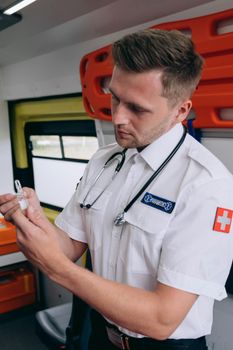
A family member suddenly develops chest pain, someone is injured in a car crash, or a child has trouble breathing. When help arrives, the clinician stepping out of the ambulance must quickly assess the situation, begin treatment, communicate with the patient, and decide what care is needed next. That work is a central part of paramedicine—and it involves far more than driving an ambulance.
Paramedicine is a healthcare profession focused on assessing and treating patients in emergency, urgent, and sometimes non-urgent situations. Although paramedics are best known for providing care before and during transport to a hospital, their skills are also used in emergency departments, air medical services, community health programs, industrial settings, and other clinical environments.
What Does a Paramedic Do?
Paramedics provide advanced emergency care under state laws, clinical protocols, and medical oversight. They may respond to heart attacks, strokes, breathing problems, traumatic injuries, medication emergencies, seizures, childbirth complications, behavioral health crises, and many other situations.
At the scene, a paramedic gathers information, performs a physical assessment, checks vital signs, and identifies immediate threats to life. Depending on the patient’s condition and the paramedic’s authorized scope of practice, treatment may include:
- Managing the airway and assisting breathing
- Performing cardiopulmonary resuscitation and defibrillation
- Monitoring and interpreting electrocardiograms
- Starting intravenous or intraosseous access
- Administering approved emergency medications
- Controlling bleeding and stabilizing injuries
- Treating shock, allergic reactions, or low blood sugar
- Supporting patients during childbirth or psychiatric emergencies
Paramedics also determine how urgently a patient needs transport and which medical facility is most appropriate. Throughout the call, they document findings and communicate with dispatchers, physicians, nurses, firefighters, police officers, and other members of the healthcare team.
EMR, EMT, AEMT, and Paramedic Roles
People sometimes use “EMT” and “paramedic” interchangeably, but they represent different levels of education and clinical responsibility. The nationally recognized EMS levels are emergency medical responder, emergency medical technician, advanced emergency medical technician, and paramedic.
- Emergency medical responders provide immediate lifesaving assistance while additional EMS resources are on the way.
- EMTs assess patients, provide basic emergency treatment, manage common airway problems, and assist with transportation.
- Advanced EMTs receive additional training in areas such as vascular access, medication administration, and advanced airway support.
- Paramedics complete the most extensive entry-level education and can provide a wider range of advanced assessments and treatments.
The federal overview of EMS clinician levels and responsibilities explains how these roles fit into the emergency care system. Exact duties still vary because each state determines the legal scope of practice, while local agencies and medical directors decide which approved skills a clinician may perform.
Education Needed for a Paramedicine Career
The usual path begins with a high school diploma or equivalent, CPR training, and completion of an approved EMT program. A prospective paramedic generally must hold EMT certification or licensure before entering paramedic education. Some schools or employers also expect applicants to gain field experience as EMTs first.
Paramedic programs are offered by community colleges, universities, technical schools, hospitals, and EMS training organizations. Depending on the institution, a program may award a certificate, diploma, associate degree, or bachelor’s degree. Students seeking National Registry paramedic certification should confirm that a program meets current accreditation and eligibility requirements before enrolling.
Coursework commonly covers anatomy, physiology, pharmacology, cardiology, airway management, medical emergencies, trauma, obstetrics, pediatrics, behavioral health, and EMS operations. Students practice procedures in laboratories and simulation exercises before completing supervised clinical and field experiences with actual patients.
The workload can be demanding. Paramedicine students must learn substantial medical content while developing hands-on skills, communication abilities, and sound decision-making under pressure. Comparing curricula, accreditation, tuition, clinical opportunities, and graduate outcomes can help applicants select an appropriate program. Students exploring other technical healthcare pathways may also find it useful to review how a medical technology certificate can support a healthcare career.
Certification Is Not the Same as Licensure
After graduating from an eligible program, many candidates take the National Registry paramedic certification examination. National certification shows that an individual has met established competency requirements, but it does not independently grant permission to practice.
A paramedic must receive authorization from the state in which they plan to work. State requirements may include National Registry certification, an application, fees, a background check, proof of education, and additional state testing. Some jurisdictions use the term “certification” for their authorization process, but candidates should still distinguish that state-issued authority from a private national credential.
Employment may involve another step called credentialing. An EMS agency and its medical director verify that the paramedic is prepared to work within that organization’s protocols. Paramedics must then maintain required credentials through continuing education, skills verification, or periodic examinations. Renewal rules and deadlines differ among national, state, and employer requirements.
Where Paramedics Work
Ambulance services and fire departments employ many paramedics, but they are not the only options. Paramedicine careers may be available in:
- Municipal and private EMS systems
- Hospital emergency departments
- Ground and air medical transport
- Industrial sites and remote workplaces
- Special-event medical teams
- Disaster response organizations
- Community paramedicine programs
- Training, quality improvement, and EMS administration
Flight and critical-care transport positions generally require significant experience and additional education or specialty credentials. Community paramedicine programs may involve home visits, follow-up assessments, chronic disease support, and connections to local services. The available role depends on state rules, employer policies, and the needs of the community.
Is Paramedicine a Good Career Fit?
Successful paramedics need more than technical knowledge. They must communicate calmly with frightened patients, recognize changing symptoms, solve problems with limited information, and work effectively as part of a team. Compassion and cultural awareness are important because emergencies affect people of every age and background.
The work can also be physically and emotionally demanding. Paramedics may lift and move patients, kneel in confined spaces, work outdoors in poor weather, and face exposure to infectious disease or hazardous scenes. Schedules often include nights, weekends, holidays, and extended shifts. Strong safety habits, healthy coping strategies, and access to peer or professional support are valuable throughout a career.
Building a Long-Term Career
Paramedicine can be a lasting profession or a foundation for further advancement. Experienced paramedics may become field training officers, supervisors, educators, quality specialists, critical-care clinicians, or EMS administrators. Others pursue additional education in nursing, physician assistant studies, emergency management, public health, or related fields.
For someone who wants hands-on patient care, meaningful responsibility, and a job in which no two shifts are exactly alike, paramedicine can offer a challenging path. The best first step is to review local EMT programs and contact the state EMS office to confirm current education, examination, and licensing requirements before committing time or tuition.

