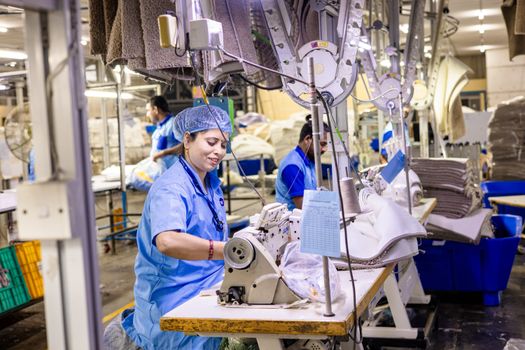
You arrive for an early shift, put on protective equipment, review the day’s production target, and take your place beside a machine or assembly line. Within minutes, you may be checking materials, operating equipment, assembling parts, or inspecting finished goods. If you are considering work as a production worker, you may wonder whether the job is physically demanding, what skills employers expect, and whether an entry-level position can lead to a long-term career.
The answers depend on the workplace, but production jobs generally suit people who value practical work, clear procedures, teamwork, and visible results. Understanding the daily responsibilities and advancement options can help you decide whether this career matches your strengths.
What Does a Production Worker Do?
A production worker helps manufacture, assemble, process, package, or inspect products. Production workers are employed in industries such as food processing, automotive manufacturing, electronics, pharmaceuticals, plastics, metal fabrication, furniture, and consumer goods.
The exact role varies considerably. One worker might place components into an automated machine, while another assembles products with hand tools. Others monitor control panels, package finished items, move materials, or inspect products for defects. Despite these differences, the overall goal is consistent: produce goods safely, accurately, and efficiently.
Typical Day-to-Day Tasks
Most shifts begin with a safety briefing, equipment inspection, production schedule, or handoff from the previous team. A supervisor may explain the day’s priorities, product specifications, and any machinery or quality concerns.
Common responsibilities include:
- Reading work orders, diagrams, recipes, or assembly instructions
- Measuring, sorting, or preparing raw materials
- Loading materials into machines or production lines
- Operating equipment according to established procedures
- Assembling components with manual, power, or pneumatic tools
- Watching gauges, control panels, and warning indicators
- Inspecting products for damage, incorrect dimensions, or other defects
- Recording output, rejected items, downtime, or material usage
- Packaging, labeling, stacking, or preparing goods for shipment
- Cleaning workstations and completing basic equipment care
- Reporting hazards, malfunctions, shortages, and quality problems
Production work often follows a set pace. Employees must meet reasonable output expectations without ignoring safety or quality requirements. Depending on the facility, schedules may include daytime, evening, overnight, weekend, or rotating shifts.
Core Skills Employers Look For
Attention to Detail
A small mistake can result in a defective item, wasted material, equipment problems, or an unsafe product. A dependable production worker notices incorrect labels, unusual machine sounds, damaged parts, measurement differences, and other signs that something is wrong.
Safety Awareness
Workers must follow procedures for machinery, chemicals, lifting, sanitation, and protective equipment. Safety awareness includes keeping guards in place, maintaining an orderly workspace, understanding warning signs, and stopping work when a serious hazard appears. Employers want people who treat safety as part of the job rather than an obstacle to working quickly.
Mechanical and Technical Ability
Not every position requires advanced technical knowledge, but basic mechanical confidence is valuable. Workers may need to adjust settings, change materials, identify minor equipment problems, use digital tracking systems, or perform routine inspections. More technical roles can require blueprint reading, precision measurement, computerized equipment operation, or specialized certifications.
Communication and Teamwork
Production depends on coordination. A delay at one station can affect everyone farther down the line. Workers need to communicate clearly about missing materials, machine stoppages, defective products, and changing instructions. Listening carefully during shift handoffs is equally important.
Reliability and Time Management
Manufacturing schedules rely on employees arriving on time and remaining focused throughout the shift. Reliability includes following attendance policies, completing documentation accurately, and preparing the workstation for the next person or team.
Adaptability
Production needs can change. A worker may rotate between stations, learn new equipment, handle a different product, or adjust to updated quality standards. Employees who learn quickly and respond calmly to change are often considered for additional responsibilities.
Physical Demands and Workplace Safety
A production worker may spend long periods standing or sitting and may frequently reach, bend, grip, push, pull, or lift. Some jobs involve repetitive movements, noise, vibration, heat, cold, dust, or strong odors. The working environment should be explained during hiring and safety training.
Repeated forceful movements, awkward positions, vibration, and heavy lifting can contribute to muscle fatigue and work-related musculoskeletal problems. Employers can reduce these risks through workstation design, suitable tools, lifting equipment, task rotation, rest breaks, and training. The Occupational Safety and Health Administration provides information about ways workplaces can control ergonomic hazards.
Workers should use required protective equipment and follow their employer’s procedures rather than improvising. Depending on the role, protective equipment may include safety glasses, hearing protection, gloves, protective footwear, face shields, respirators, or specialized clothing. Gloves should only be worn around machinery when workplace procedures permit them, because loose materials can create entanglement hazards.
Persistent pain, numbness, tingling, weakness, swelling, or reduced movement should not simply be accepted as part of production work. Report symptoms and equipment-related concerns promptly through the workplace’s established process. Early reporting gives the employer an opportunity to examine the task, equipment, and workstation before the problem becomes more serious.
Education and Training Requirements
Many entry-level jobs require a high school diploma or equivalent, although requirements differ by employer and industry. New employees commonly receive on-the-job instruction covering equipment operation, emergency procedures, quality standards, documentation, and workplace safety.
Some positions require additional preparation. Food and pharmaceutical facilities may emphasize sanitation and contamination controls. Metalworking roles may require measurement, machining, or welding skills. Electronics assembly may involve soldering, color identification, and detailed diagrams. Automated plants may prefer candidates familiar with computerized machinery, robotics, or industrial maintenance.
How Production Workers Can Advance
An entry-level position can provide a foundation for several career paths. Experienced employees may become line leads, machine operators, quality inspectors, setup technicians, maintenance technicians, warehouse coordinators, trainers, or production supervisors.
Advancement usually depends on attendance, safety performance, quality, technical ability, and willingness to learn. Workers can improve their opportunities by volunteering for cross-training, learning to read technical documents, developing basic computer skills, and understanding how the entire production process works.
Certificates or community college courses in industrial maintenance, machining, welding, automation, supply chain operations, or quality control may support movement into specialized roles. Before paying for training, check local job postings and ask employers which credentials they actually value. You can also explore ways to identify local opportunities in production careers and compare the skills requested by nearby employers.
Is This Career a Good Fit?
Production work may be a strong match if you enjoy hands-on tasks, measurable goals, predictable procedures, and working as part of a coordinated team. It can also appeal to people who prefer learning through demonstration and practice rather than spending most of the day at a desk.
Before accepting a position, ask about shift schedules, overtime, lifting expectations, training, protective equipment, break policies, advancement, and how performance is measured. If possible, request a workplace tour. Seeing the environment can help you evaluate the noise level, pace, cleanliness, equipment, and physical demands.
A successful production worker does more than complete repetitive tasks. The role requires judgment, consistency, safety awareness, and a commitment to quality. By developing technical skills and learning how production systems operate, an employee can turn an entry-level job into a pathway toward skilled technical work or leadership.