
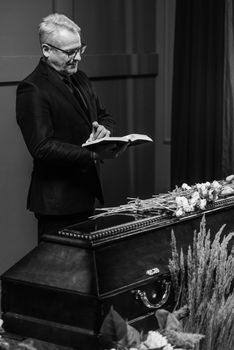
When a family walks into a funeral home after a death, they may have only a few days to make dozens of emotional, practical and legal decisions. The person guiding them may be called a mortician, funeral director, undertaker or funeral arranger. But what do morticians do beyond organizing the funeral? Their work combines care of the deceased, support for grieving families, legal documentation, event planning and business administration.
What does a mortician do?
A mortician helps families care for and make final arrangements for a person who has died. Depending on state licensing rules and the structure of the funeral home, the mortician may arrange services, prepare the body, coordinate burial or cremation, complete required paperwork and supervise the funeral itself.
The terms used in this profession can be confusing. “Mortician” and “funeral director” are often used interchangeably, while an embalmer specializes in preparing and preserving bodies. In some states, funeral directing and embalming require separate licenses. At a smaller funeral home, one licensed professional may perform nearly every task. Larger organizations are more likely to divide responsibilities among arrangers, embalmers, crematory operators, drivers and administrative staff.
Daily duties of a mortician
Meeting with families
Much of a mortician’s work involves listening. During an arrangement conference, the mortician asks about the family’s wishes, religious or cultural traditions, budget and plans for burial, cremation or another form of disposition. The mortician then explains available services and helps the family make decisions without adding unnecessary pressure.
These conversations may cover visitation hours, transportation, flowers, music, readings, obituary notices, clergy participation and cemetery arrangements. Morticians also explain prices and provide itemized information about the goods and services being considered.
Transferring and caring for the deceased
After receiving authorization, funeral home staff arrange transportation of the deceased from a home, hospital, nursing facility, medical examiner’s office or other location. The mortician verifies identity and records personal belongings before beginning any authorized preparation.
Basic care may include washing the body, closing the eyes and mouth, dressing the person, arranging the hair and applying cosmetics. If embalming has been selected and permitted, a qualified practitioner uses chemical solutions and other techniques to temporarily slow decomposition and prepare the body for viewing. Embalming does not preserve a body indefinitely, and it is not automatically required for every funeral.
In the United States, federal law does not require embalming. State or local requirements may apply in limited circumstances, and individual funeral homes may have policies for certain types of public viewing. Families can often choose options such as refrigeration, direct cremation or immediate burial instead.
Following health and safety procedures
Morticians may encounter blood, body fluids, sharp instruments and chemicals used during preparation. They follow standard infection-control practices, including hand hygiene, surface disinfection and appropriate use of gloves, protective clothing, eye protection or face protection when exposure is possible.
Embalming can involve formaldehyde, which is an occupational hazard requiring proper ventilation, exposure controls and safe handling procedures. Morticians are trained to treat every body respectfully while following workplace rules for bloodborne pathogens, chemicals and potentially infectious conditions.
Completing legal documents
Funeral services involve extensive paperwork. A mortician may gather information for the death certificate, obtain permits, secure authorizations and submit records to government agencies. The medical portion of a death certificate is generally completed by an authorized physician, medical examiner or coroner rather than by the mortician.
The mortician may also coordinate documents needed for cremation, burial, transit across state lines or transportation to another country. Accuracy matters because mistakes can delay services, insurance claims, estate matters and access to certified death certificates.
Coordinating the funeral or memorial
On the day of a service, the mortician functions much like an event director. Duties can include preparing the viewing room, arranging flowers and photographs, checking audiovisual equipment, directing pallbearers, organizing the procession and communicating with clergy, cemetery employees or crematory staff.
The mortician must stay calm when plans change. A late delivery, transportation problem or unexpectedly large attendance may require an immediate solution that does not place additional stress on the family.
Managing the business
Morticians who own or manage funeral homes also handle staffing, scheduling, inventory, budgeting, building maintenance and regulatory compliance. They may oversee prearranged funeral plans, purchase supplies, train apprentices and maintain preparation facilities and vehicles. Some spend significant time answering calls, updating records and coordinating several cases at once.
What is a mortician’s schedule like?
Death does not follow business hours, so morticians are frequently on call at night, on weekends and during holidays. A workday may change suddenly when a funeral home receives a new call. Full-time schedules can exceed 40 hours, particularly in small establishments where fewer employees share on-call responsibilities.
The job also has physical demands. Morticians may stand for long periods, move equipment and help transfer bodies safely. Team lifting and mechanical equipment are important because attempting to move a body alone can cause injury.
Education, training and licensing
An associate degree in funeral service or mortuary science is the typical entry-level education, although bachelor’s degree programs are also available. Coursework commonly covers anatomy, pathology, microbiology, chemistry, embalming, restorative art, grief counseling, ethics, business law and funeral home management.
Most states require a combination of approved education, supervised practical training and examinations. An internship or apprenticeship may last one to three years, depending on the jurisdiction. Continuing education may also be required to renew a license. Because requirements differ considerably, students should check the licensing board in the state where they intend to work before choosing a program.
Prospective students may also want to consider the advantages and drawbacks of professional training, including tuition, licensing obligations, hands-on learning and how specialized credentials may affect career flexibility.
Skills needed to succeed
- Compassion and the ability to communicate with grieving people
- Close attention to legal documents and identification procedures
- Emotional steadiness around death, trauma and family conflict
- Respect for different religions, cultures and personal preferences
- Time-management skills for handling several cases simultaneously
- Practical knowledge of health, safety and preparation procedures
- Business and customer-service skills
Emotional resilience is especially important. Morticians regularly witness grief and may encounter deaths involving children, accidents or other distressing circumstances. Healthy boundaries, supportive coworkers, rest and access to mental health care can help reduce cumulative stress.
Salary and career outlook
According to the U.S. Bureau of Labor Statistics career profile for funeral service workers, the median annual wage for morticians, undertakers and funeral arrangers was $55,010 in May 2025. Overall employment of funeral service workers is projected to grow 4 percent from 2025 through 2035, with openings also arising as experienced workers retire or leave the occupation.
Actual earnings depend on location, experience, licensing, responsibilities and whether the person owns or manages a funeral home. Candidates who can perform multiple functions—such as arranging services, embalming, operating a crematory and managing staff—may have broader employment options.
Is mortuary work the right career for you?
Mortuary work can be meaningful for someone who is compassionate, organized and comfortable handling sensitive responsibilities. It is not limited to working with bodies, nor is it simply event planning. Morticians help families understand their choices, protect important legal details and create an orderly experience during an often overwhelming time.
The irregular hours, physical duties and emotional strain can be challenging. For the right person, however, the career offers an unusual combination of science, service, craftsmanship and human connection. Observing a funeral home, speaking with licensed professionals and reviewing state education requirements can provide a realistic picture before committing to training.

