
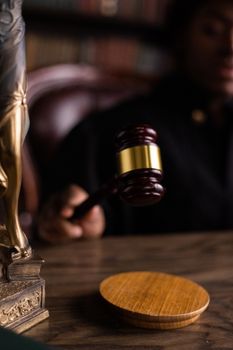
You may picture a judge listening to lawyers, striking a gavel, and announcing a verdict. In reality, much of a judge’s work happens before or after anyone enters the courtroom. Judges review documents, research legal questions, manage hearings, rule on evidence, and explain how the law applies to a case. If you have searched “what do a judge do,” the short answer is that a judge oversees legal proceedings, protects the rights of the people involved, and makes impartial decisions based on the law and the facts.
What does a judge do in court?
A judge’s central responsibility is to make sure court proceedings are lawful, fair, and orderly. The exact duties depend on the court, the type of case, and whether a jury is involved.
During a typical hearing or trial, a judge may:
- Listen to arguments from attorneys and self-represented parties
- Review motions, legal briefs, testimony, and other evidence
- Decide whether evidence may be presented in court
- Explain courtroom procedures and applicable law
- Rule on objections raised by attorneys
- Protect the legal rights of defendants, witnesses, victims, and other parties
- Give instructions to jurors before they deliberate
- Issue orders, judgments, or written opinions
- Determine an appropriate sentence after a criminal conviction
Judges must remain neutral. They are not supposed to help one side win, conduct the prosecutor’s case, or act as a defense attorney. Their role is to apply the law impartially, even when a decision may be unpopular.
Does the judge decide who wins?
Sometimes. In a bench trial, there is no jury, so the judge evaluates the evidence, determines the relevant facts, and decides the outcome. In a jury trial, jurors generally decide disputed facts and return a verdict. The judge supervises the trial, rules on legal issues, and instructs the jury about the law it must follow.
In criminal cases, a judge may decide whether there is a lawful basis to keep a defendant in custody before trial or whether release conditions should be imposed. If the defendant is convicted, the judge usually determines the sentence within the limits established by law.
In civil cases, judges may resolve disputes involving contracts, injuries, property, employment, or other legal rights. Family court judges may handle divorce, child custody, support, or adoption matters, while probate judges may oversee wills and estates. The cases assigned to each court vary by state and jurisdiction.
What authority does a judge have?
A judge has significant authority, but that power is not unlimited. Judges may issue court orders, approve certain warrants, rule on motions, control courtroom proceedings, and impose remedies or sentences permitted by law. They may also address contempt of court when someone seriously disrupts proceedings or disobeys a lawful order.
However, judges must operate within constitutional requirements, statutes, procedural rules, ethical standards, and the jurisdiction of their court. A traffic court judge, for example, cannot ordinarily take over a major federal criminal case. Decisions can also be reviewed by an appellate court when a party claims that an important legal error occurred.
Judges may need to step away from cases in which their impartiality could reasonably be questioned, such as when they have a personal or financial interest in the outcome. These safeguards help prevent judicial power from becoming purely personal or arbitrary.
What work happens outside the courtroom?
Courtroom proceedings are only one part of the job. Judges often spend substantial time reading case files, researching statutes and earlier court decisions, preparing for hearings, and writing orders or opinions. A written opinion may explain the facts, identify the controlling law, and show how the judge reached the decision.
Judges also manage schedules and deadlines so that cases move through the system efficiently. Some participate in settlement conferences, supervise court personnel, serve on judicial committees, or handle emergency requests for protective orders and warrants. Depending on the position, a judge may occasionally work evenings or weekends.
The work requires careful attention because judicial decisions can affect a person’s liberty, finances, family relationships, property, or access to government benefits. Judges must separate personal reactions from legal analysis and give each matter appropriate consideration.
Are all judges the same?
No. Trial judges conduct hearings and trials, while appellate judges review lower-court decisions for significant legal errors. Appellate judges generally do not hear witnesses or retry the entire case. Instead, they study the record, consider written and oral arguments, and decide whether the law was applied correctly.
Federal and state judges also serve different court systems. Federal courts hear matters involving federal law and certain other categories established by the Constitution and Congress. State courts handle a large share of everyday legal matters, including most criminal prosecutions, family disputes, probate cases, personal injury claims, and contract disputes.
Administrative law judges and hearing officers decide disputes involving government programs or agencies. Their work may concern disability benefits, employment issues, licensing, regulatory violations, or workers’ compensation, depending on the agency and jurisdiction.
How do you become a judge?
Requirements vary, but most judges first build substantial experience as lawyers. A common career path includes:
- Earning a bachelor’s degree
- Completing law school and receiving a Juris Doctor degree
- Passing a state bar examination and meeting licensing requirements
- Working as an attorney, prosecutor, public defender, legal adviser, or lower-level judicial officer
- Seeking appointment or election to a judicial position
- Completing required judicial orientation and continuing education
Some local judicial positions may have different legal-education requirements, but candidates generally benefit from extensive knowledge of the law and courtroom procedure. According to the Bureau of Labor Statistics career profile for judges and hearing officers, these professionals typically need a law degree and prior experience as a lawyer.
Selection methods differ considerably. Some judges are elected by voters, some are appointed for fixed terms, and others face retention elections after appointment. Federal Article III judges are nominated by the president and confirmed by the Senate, generally serving during good behavior.
What skills make someone an effective judge?
Strong judges need more than legal knowledge. They must be able to analyze complicated information, communicate clearly, manage conflict, and make difficult decisions without rushing. Integrity, patience, emotional control, and respect for every participant are essential.
The career path can be long and competitive, so aspiring judges must be willing to improve through years of legal practice. Taking steady professional steps can matter more than waiting for perfect confidence, a principle also reflected in how imperfect action can build a stronger identity.
A judge ultimately serves as a neutral decision-maker within a larger justice system. Although popular culture emphasizes dramatic verdicts, the everyday job is usually quieter and more demanding: reading closely, listening carefully, applying legal rules, protecting due process, and explaining decisions that may significantly affect people’s lives.

