
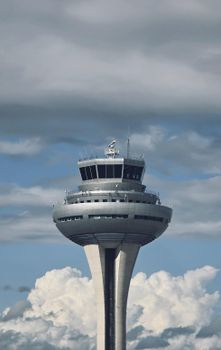
Deciding on a career path is a significant step in anyone’s life journey. For those with a keen interest in aviation, you may find yourself asking, “how do you become an air traffic controller?” Air traffic controllers play a crucial role in maintaining the efficiency and safety of air travel by directing aircraft at airports and in-flight. This article will guide you through the essential steps to turn your aviation passion into a rewarding career.
How Do You Become an Air Traffic Controller?
Becoming an air traffic controller requires a combination of education, training, and licensing. Let’s explore the key steps involved in this process.
Educational Requirements
To qualify as an air traffic controller, candidates typically need at least an associate’s degree. Many emphasize the importance of obtaining a degree in aviation-related fields, but branches such as engineering or mathematics are also valuable. One alternative route is to start your journey with the Federal Aviation Administration’s (FAA) Air Traffic Collegiate Training Initiative (AT-CTI) program, which partners with colleges to offer academic courses tailored to air traffic control.
For more insights on funding your education, check out 10 easy no-essay scholarships that can help ease the financial burden.
Initial Training
Following your academic preparation, prospective air traffic controllers must complete specialized training. In the United States, this is conducted at the FAA Academy located in Oklahoma City. Here, you’ll receive practical training on how to become an air traffic controller through simulations and hands-on exercises designed to prepare you for the fast-paced environment.
Obtaining Certification
After completing your training, the next step involves obtaining certification. The FAA requires all aspiring controllers to pass the Air Traffic Standardized Aptitude Test (AT-SAT). Scoring well on this multidimensional test showcases your potential to handle real-world scenarios effectively. Once passed, you’ll progress to on-the-job training at your designated facility where you’ll need to demonstrate proficiency to earn full certification.
Gaining Experience
Experience is vital in the air traffic control field. New controllers typically start at smaller facilities or work under supervision before handling more complex situations. This progression builds confidence, expertise, and decision-making skills. As you accumulate experience, opportunities to work with busier or more advanced environments become accessible.
Potential Challenges and Rewards
The demanding nature of air traffic control requires strong teamwork, communication, and stress management skills. Controllers regularly face pressure as they ensure the safe passage of aircraft. However, the career is rewarding, providing intrinsic satisfaction in keeping the skies safe and passengers secure.
Career Advancement Opportunities
After gaining several years of experience, you may seek advancement. Opportunities to become a supervisor or manager arise, as well as specializations in areas such as traffic management or training coordination. Keeping abreast of technology and ongoing education will bolster your prospects for career progression.
Staying Informed and Updated
In an ever-evolving industry, staying informed about current aviation regulations, technologies, and best practices is crucial. Participation in seminars, workshops, and continued professional development activities ensures controllers remain proficient and responsive to changing industry demands.
For more comprehensive information about the profession and its requirements, the U.S. Bureau of Labor Statistics provides invaluable resources and statistics.
How do you become an air traffic controller? By following these outlined steps, you embark on your journey into a dynamic and essential sector of the aviation world. Your ability to safely navigate a complex airspace promises a fulfilling professional path.
Takeaways
- A minimum of an associate’s degree is required to start your career as an air traffic controller.
- Specialized training at the FAA Academy is essential.
- Certification through AT-SAT is necessary to proceed further.
- Experience enhances proficiency and career advancement opportunities.
- Lifelong learning and adaptation are integral to staying relevant in the field.
FAQ
Do I need a degree to become an air traffic controller?
While not always mandatory, having an associate’s or bachelor’s degree in a related field significantly enhances your preparedness and competitiveness in the job market.
How long does it take to become certified?
The duration varies. Initial education takes a couple of years, followed by several months of FAA training and certification, typically leading to full qualification within 2–4 years.
Is the AT-SAT difficult?
The AT-SAT is comprehensive, testing various skills. Preparation through study and practice can improve your chances of success.
What does on-the-job training involve?
On-the-job training involves practical, supervised work where you’ll apply your learning in real-world scenarios, gradually increasing responsibility under guidance.
What qualities make a successful air traffic controller?
Successful controllers excel in communication, problem-solving, and decision-making under pressure. They maintain composure, are detail-oriented and have excellent spatial awareness.

